That distinctive springtime smell: Asparagus pee
Perhaps you've noticed something unusual in the bathroom after you consume this healthy spring vegetable. A Speed Read explains there's two parts to the stinky puzzle: production and perception.

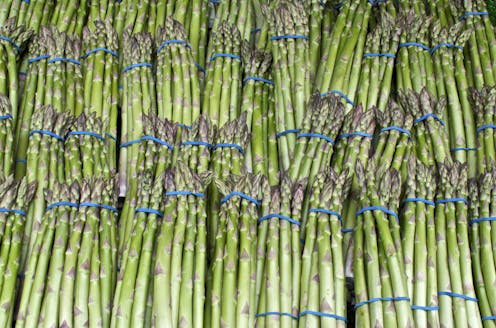
Along with many other delights, springtime brings the beginning of the asparagus growing season. Regardless of whether you prefer the green, purple or white variety, asparagus provides a rich source of vitamins and minerals, and its consumption as part of a healthy diet may reduce risk of cancer and cardiovascular-related diseases.
Despite the nutritional benefits of asparagus, many are opposed to eating the vegetable due to its pungent aftereffects. As Benjamin Franklin wrote in 1781, “A few stems of asparagus eaten, shall give our urine a disagreable odour.” This odor has become so well known that post-consumption urine is now often referred to as “asparagus pee.”
Scientists believe the odor in question is due to two chemicals: methanethiol and S-methyl thioester. When enzymes in the human digestive tract break down the asparagusic acid that’s naturally present in the vegetable, these volatile compounds are created. When voided from the body, they become foul-smelling gas, wafting up from your asparagus pee.

And just because you don’t smell it doesn’t mean you’re not making it. Two studies have shown that people who are unable to smell the odor in their own urine also don’t detect it in the urine of known producers. Yes, volunteers sniffed samples of other people’s asparagus pee. Though most everyone probably produces the scent to some degree, it seems not everyone’s noses pick up on it.
In fact, a study my colleagues and I conducted last year found that only 40 percent of those surveyed reported detecting the odor in their urine. A lower proportion of women were able to detect the odor, compared to men, despite women being thought to have a more keen sense of smell.
We asked almost 7,000 participants from two large cohort studies to respond to the prompt “After eating asparagus, you notice a strong characteristic odor in your urine.” By linking the questionnaire data with genetic data, we were able to show that the ability to smell or not to smell depends on a person’s genetic makeup. Hundreds of variants in the DNA sequence across multiple genes involved in sense of smell are strongly associated with the ability to detect asparagus metabolites in urine.
Asparagus isn’t the only food that has genetically linked controversial smell or taste effects. Some people avoid eating cilantro because they claim it has a “soapy” aftertaste. A study using data from almost 30,000 users of 23andMe found genetic variants in olfactory receptors linked to people’s perception of this adverse taste.
Maybe you can conduct your own survey at the next family meal that includes a platter of asparagus – or soon after.
Sarah Coseo Markt receives funding from the National Institutes of Health.
Read These Next

Does your sleep tracker get it right? A Pittsburgh neuroscientist weighs in
Can a sensor on your wrist really tell how your brain slept? Here’s what happens when sleep trackers…

Florida’s limited ban on Flock cameras only scratches the surface of widespread surveillance concern
The sudden proliferation of Flock cameras and abuses has led to a response from Florida lawmakers, but…

Criminal conspiracy to steal used cooking oil shows how trash can become treasure
No longer viewed only as waste, used cooking oil is a common ingredient in biofuels.