Immersive shopping has survived the demise of the metaverse – but its appeal depends on how it’s des
The kind of shopper you are – weigh-your-options or grab-what-you-want – could determine whether immersive shopping tech such as virtual fitting rooms will work for you.

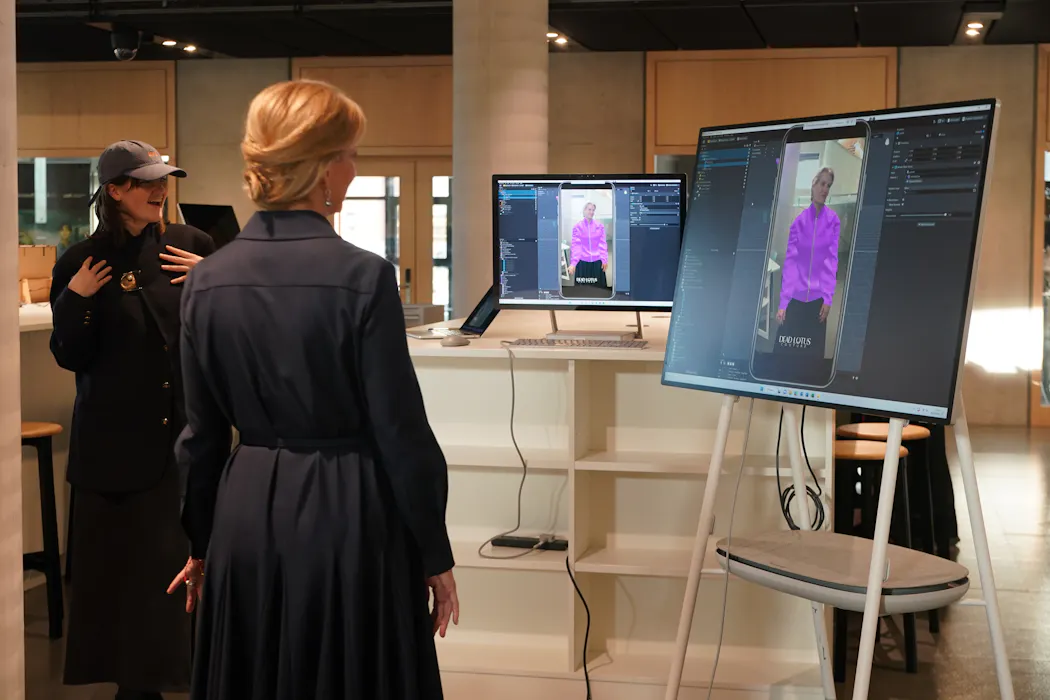
In 2021 and 2022, major retailers and fashion brands were racing into the metaverse, opening virtual stores, creating digital products and inviting consumers to explore branded worlds through avatars. Much of that excitement has since faded. But the technologies behind those experiments are far from disappearing.
Today, shoppers can try on clothes virtually, see how furniture would look in their homes and explore branded worlds on gaming platforms. Rather than building entirely new virtual universes, retailers are finding ways to integrate immersive technologies into familiar shopping experiences.
A 2025 global survey found that 53% of surveyed retail professionals focused on virtual fitting rooms, while 46% said they were building augmented reality and virtual reality experiences. On the consumer side, a 2024 survey of more than 2,200 U.S. shoppers found that 49% of respondents would buy more clothing if a great virtual try-on experience were available. Meanwhile, a separate survey found that only 4.5% of U.S. digital shoppers regularly used these technologies for shopping.
Immersive technologies continue to attract interest, but their regular use in online shopping remains limited. So what makes an immersive shopping experience worth using?
I’m a scholar of retail and consumer sciences who studies consumers’ interactions with technology in the retail environment. My research suggests that the value of immersive retail isn’t simply about how advanced or realistic the technology is. It’s about how the experience is designed, how it addresses consumers’ needs and how it helps them connect with products and brands.

Helping shoppers see what they cannot imagine
Imagine shopping for a pair of sunglasses online. You like the style, but you’re not sure how they would look on you. Amazon allows shoppers to try on certain shoes and eyewear virtually using their smartphones. IKEA applies a similar concept to home furnishings through IKEA Kreativ, which allows customers to digitally remove existing furniture from their rooms and experiment with new arrangements.
These experiences address a fundamental limitation of online shopping: the gap between seeing a product on a screen and imagining how it would look on you or in your own space.
My colleagues and I found that the experience of virtually trying on clothes can be particularly helpful for shoppers who struggle to imagine how clothing would look on them. By making it easier to visualize themselves wearing a product, the technology can help them feel more comfortable with their purchase decisions. In other words, the value of immersive technology may lie less in creating a sense of novelty than in helping consumers overcome the limitations of conventional online shopping.
More personalization isn’t always better
As artificial intelligence advances, so-called virtual try-on experiences are becoming increasingly personalized. Shoppers can now see clothing on digital representations of themselves rather than relying solely on images of fashion models. It might seem intuitive that the more closely a virtual model resembles a shopper, the better the experience. But our research suggests otherwise.
In two experiments, we found that consumers’ responses to personalized avatars depend on what psychologists call “assessment orientation,” or the tendency to critically evaluate and compare options before making a decision. This mindset of carefully thinking through a decision can also shift depending on the shopping situation, such as choosing an outfit for a job interview versus casually browsing for fun.
Shoppers with a stronger evaluative mindset, whether due to their personal tendencies or the shopping situation, felt a stronger sense that they were the model and expressed greater intentions to buy when using personalized 3D avatars than when viewing conventional model images. Interestingly, the opposite pattern emerged among shoppers who are less inclined to mull over options.
The implication is that the same technology can offer different value to different consumers. A highly personalized experience may be particularly useful to someone who wants to thoroughly evaluate a product, but it isn’t necessarily better for everyone or every shopping situation.
When shopping becomes more than buying
Immersive technologies can also offer value beyond helping consumers decide what to buy.
Walmart, for example, has created branded experiences on Roblox, where users can explore virtual spaces, play games and discover digital products. These experiences offer retailers a new way to connect with younger consumers and build brand engagement through entertainment rather than traditional advertising. Its Walmart Discovered Roblox gaming environment has attracted nearly 40 million visits as of May 2026.
My research on branded virtual worlds suggests that simply creating a virtual space isn’t enough to engage consumers. What matters is how brands bring these spaces to life through storytelling and social experiences that help consumers feel more connected to the brand. The value of these environments lies less in their 3D graphics than in the opportunities they create for consumers to participate, interact and become part of a brand’s story.
Beyond the technology
Advances in AI will likely open up even more possibilities for immersive online shopping, from more realistic virtual try-on to interactive environments that adapt to individual preferences. But making an experience more technologically sophisticated doesn’t automatically make it more valuable.
Whether a retailer’s goal is to help shoppers visualize products, make more informed decisions or build connections with brands, they are more likely to be successful if they design experiences around consumers rather than around the capabilities of the technology.
Hyejune Park does not work for, consult, own shares in or receive funding from any company or organization that would benefit from this article, and has disclosed no relevant affiliations beyond their academic appointment.
Read These Next
Why American consumers are still spending and powering the US economy – and why this could soon fizz
The American consumer has kept hanging on despite inflation, tariffs and high interest rates.
California raised minimum wages for fast-food workers – here’s how it played out 2 years later
Larger chains were mostly unaffected by the new law, while smaller ones shed workers and locations.

The DRC’s Ebola crisis revives an old ethical question: What do health workers owe patients?
Protecting healthcare workers on the front lines is vital to fighting disease outbreaks.