
Falcon 9 ushered in the modern space economy – retiring it could leave the industry vulnerable
SpaceX’s Falcon 9 rocket has allowed NASA, private companies, universities and nonprofits alike to launch satellites, spacecraft and even astronauts to orbit.

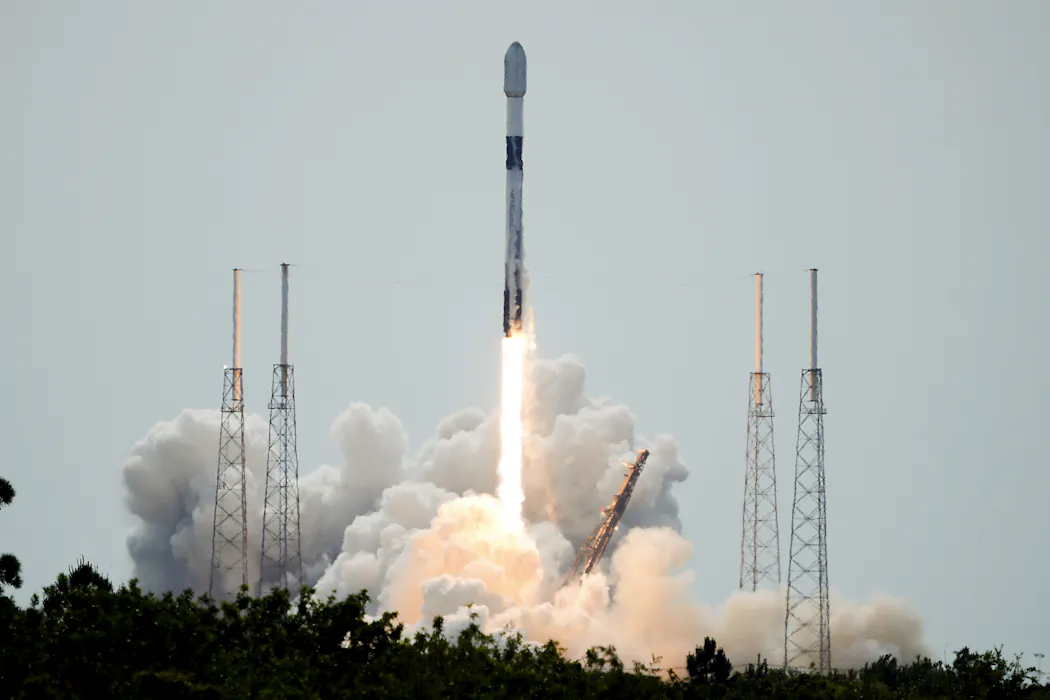
More than 50% of the nearly 330 spaceflights to low Earth orbit in 2025 were done on a SpaceX Falcon 9 rocket. Falcon 9 is much smaller than SpaceX’s flashy Starship rocket, but for the past 16 years it has been a reliable choice for launching satellites to orbit.
It has carried payloads ranging from Earth-imaging sensors feeding smartphone map apps to environmental monitoring satellites that track wildfires. It has also launched the crew capsule that ferries astronauts to the International Space Station.
In late 2026, reports came out that SpaceX is shuffling its staff in an attempt to focus its resources on developing and commercializing Starship, while phasing out the Falcon 9.
At face value, this sounds like routine news; after all, companies shuffle resources all the time. But as a space scientist, I believe that retiring this rocket threatens to suffocate the commercial space industry that it helped bring to life – unless the public and private sectors step up their efforts to fill the gap Falcon 9’s retirement has created.
How did we get here?
Since its inception in 2002, SpaceX has broadened access to space. In 2006, while facing the looming retirement of the space shuttle, NASA searched for a private alternative to resupply the International Space Station. The agency awarded companies contracts, and SpaceX’s award helped kick-start the development of Falcon 9.
Despite multiple near-bankruptcy setbacks, Falcon 9 made its inaugural test flight in 2010, followed by sending the SpaceX Crew Dragon capsule to its first docking at the International Space Station in 2012.
The real turning point came in 2015 with the first successful landing of a Falcon 9 booster. The booster is the rocket’s main first stage. It houses fuel tanks and nine main engines. It provides the primary thrust off the launchpad but detaches from the rest of the rocket shortly after. Landing the booster meant SpaceX could recover and refly this component and dramatically slash launch costs.

In the meantime, Boeing, the other NASA contract awardee, struggled with budget overruns and operational delays. Some of SpaceX’s other competitors, such as Blue Origin, pivoted toward suborbital space tourism. As a result, Falcon 9 did more than just capture the market. It effectively became the market.
A booming industry teetering on the edge
SpaceX’s affordable and frequent access to space helped to breathe life into a booming space economy. It allowed startups with creative new business models to send their satellites to orbit, such as TakeMe2Space, an Indian startup exploring hosting data centers in orbit. It empowered governments around the world to dramatically expand their operations in space, including governments relying on SpaceX’s secured communication platform, named Starshield.
Then came the operational shift. In July 2026, accounts from prospective commercial customers and satellite operators revealed that SpaceX had begun turning away Falcon 9 customers to focus its resources on the more capable Starship rocket.
Almost overnight, the announcement threatened to freeze the pipeline of launches the market relied on. Those who can afford it are paying extra to secure the few remaining slots on Falcon 9, while others are scrambling to find alternative launch opportunities. While European customers are generally flocking to the European Space Agency’s Ariane 6 rocket, others are booking slots on upcoming medium-lift rockets, such as Rocket Lab’s Neutron rocket.
SpaceX is contractually obligated to continue Falcon 9 flights for NASA’s International Space Station crew rotations and other national security payloads. However, the rest of the space industry is now forced to buy into SpaceX’s Starship bet. There simply is no operational alternative today that can match Falcon 9’s combination of high launch cadence, affordable pricing and proven flight heritage for medium-class payloads.

National security vulnerability
When a single company is put in charge of controlling the gate to space, its internal corporate decisions can make or break an industry. That also makes the company a potential single point of failure, where a setback by a single vendor would paralyze the entire space economy.
The U.S. has dealt with this type of national security dilemma before. In the 1900s, Standard Oil owned critical oil production infrastructure, pipelines and railroads. Controlling critical pipeline networks gave the company unprecedented power to set transport terms, prioritize its own shipments and restrict pipeline access for independent oil producers. This structure meant competitors had no viable alternative transport routes. Ultimately, this forced the U.S. government to intervene because internal Standard Oil corporate decisions dictated market dynamics.
Standard Oil had become the gatekeeper to the free flow of oil. By addressing that potential single point of failure, the U.S. government nudged an industry to redefine itself, which led to its accelerated growth.
Customers forced to pay up
SpaceX took huge technical and financial bets on the success of Falcon 9. They paid off and led to SpaceX’s market dominance.
But now SpaceX wants to do it again, with the promise that Starship would help further reduce the cost of getting to space. Their vision is grand, but what happens if Starship experiences delays? What happens to companies who relied on Falcon 9?
As SpaceX shifts focus, competing launch providers will likely rush to take advantage of this market opportunity and offer rides to customers being turned away by SpaceX, but at a steep premium. The customers also face the burden of reconfiguring their satellites to fit on another rocket.

Where to go from here
This sudden market shift has been a wake-up call, one that I believe will cost the industry and add significant uncertainty to market dynamics in a few years. But it also offers the market an opportunity to correct course by filling the gap that Falcon 9’s retirement has created.
Over the past two decades, NASA has successfully delivered on its mandate to create a rocket-launch marketplace. To achieve this, NASA fundamentally shifted from operating government-owned hardware to buying fixed-price services. This meant that NASA became a reliable anchor customer whose contracts spurred competition among commercial providers.
While this model proved that routine, low-cost space access was achievable, various technical and business challenges allowed the marketplace to become dominated by a single vendor.
Moving forward, NASA and other public agencies can work together to strategically distribute the payloads they need to launch across commercial rockets built by other companies. These government contracts can help these companies improve and validate their emerging rocket programs. Satellite customers can design standardized payloads that work across multiple types of rockets, so they don’t rely on one launch provider.
NASA can also maintain its dedicated launch assistance programs. Subsidizing these slots would allow smaller institutions, such as academia and nonprofit organizations, to avoid competing on the open market against large companies like SpaceX and Blue Origin that launch satellites regularly. These programs help smaller institutions that may not have the funds to directly buy their own spot on a rocket get their payload to space. These payloads are often used to give students experience and help train the next generation of space workers exploring the cosmos.
Mojtaba Akhavan-Tafti does not work for, consult, own shares in or receive funding from any company or organization that would benefit from this article, and has disclosed no relevant affiliations beyond their academic appointment.
Read These Next

Some states are stepping up after federal childcare cuts – and now offer lessons for the future
Improving both supply and quality of childcare has been the focus of several states trying to find solutions…

‘Let nothing be forgotten’: Holocaust survivors’ memorial books honored lives lost and vibrant homet
After the Holocaust, Eastern European survivors collaborated on memorial books called ‘yizker bikher’…

Plans with cheaper premiums are risky business for Americans seeking lower healthcare costs
Some options that might look like health insurance actually aren’t – and they may leave you stranded…