Ancestors all around – millions of dead people linger in Americans’ memories
The shadow population of deceased relatives is more than three times as large as today’s living population.

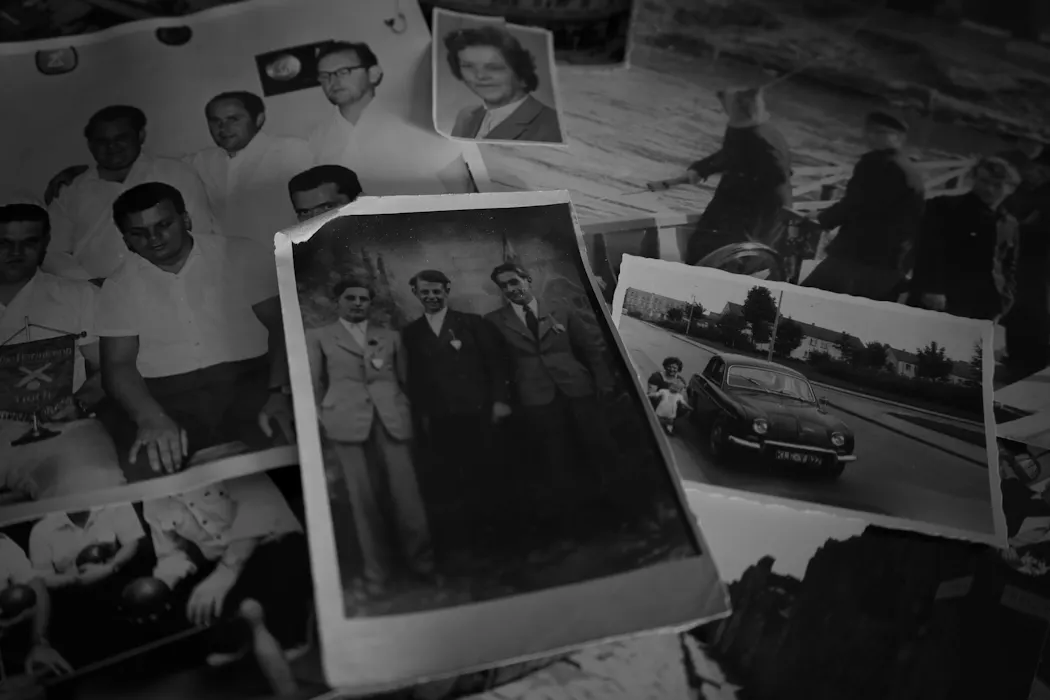
Halloween kicks off a series of religious and cultural festivals to honor the dead, including All Saints’ Day, All Souls’ Day and the Day of the Dead. But deceased loved ones don’t disappear from people’s social worlds once the ghost and skeleton decorations come down.
Present in memory and tradition, the dead can shape people’s identities and behaviors long after they die. Recent survey data shows that almost 44% of Americans report that they have felt the presence of a deceased relative or that they have communicated with a deceased relative in the past year alone.
Researchers lack basic knowledge about this shadow population. As demographers, we typically study the living. But in our recent work, we asked a very unusual demographic question: What does a population of our deceased relatives look like?
Characterizing an unusual population
Our research typically categorizes the living population by age groups and other demographic attributes. In our recent study, we took our analysis a step further to estimate the size and age distribution of the currently living population’s deceased relatives. We focused specifically on deceased grandparents, parents, siblings, spouses and children.
To do this project, we relied on a modeling framework called demographic microsimulations. This approach produces results only for Black and white Americans. The method cannot estimate relative populations living outside of the United States, so it excludes groups with high percentages of foreign-born individuals who have family abroad.
Our study focused on the populations as of July 2020, but for the purposes of this article, we updated our analysis and weighted results to the estimated population as of October 2026.
Because estimating the deceased relative population is not a common exercise in our field, we had to make some modeling decisions. We counted only deceased relatives who died after the birth of at least one person still alive; if no one remains who could remember them, we did not include them.
Also, we counted deceased persons based on how many relatives they have in the living population. For example, if a deceased 60-year-old man is survived by a spouse, an adult child, a grandchild and a sibling, we count him in the deceased relative population four times, reflecting his being remembered by four living individuals. As such, the deceased relative population we quantified is really a count of how many direct relative ties remain to those who are dead.
And finally, we classified deceased relatives according to their age at death. We believe this represents the age many people will most clearly remember their deceased loved ones. Of course, we categorize the living population by their current age.
Deceased relatives of today’s Americans
Our results included several key findings.
First, the deceased relative population is large. Our model estimated that the living Black and white populat,ion representing about 217 million people, had 755 million ties to deceased close relatives. That’s a population more than three times the size of the living population. For every under-15-year-old out trick-or-treating on Halloween, there are about 21 deceased relatives remembered.
Second, our model shows that, on average, the deceased relatives died 25 years ago. That the average deceased relative has been remembered for a quarter of a century makes it clear that loved ones are often suspended in memory for years, even decades, after their deaths.
Third, over half of the deceased relative population was born more than 100 years ago – even before the term “trick-or-treating” took hold in the U.S. Around 10% of the deceased relatives were born before 1900, with 140,000 of them born before the Civil War – these are the remembered grandparents of today’s oldest individuals. These results speak to how generations of the seemingly long ago past still have a direct tie to the living.
The Halloween season reminds us of ghosts, spirits and ancestors. Whatever their beliefs, many Americans also carry relationships with people who are no longer alive: grandparents whose recipes they still make, parents whose advice they still hear, spouses whose absence shapes their days.
These relationships are deeply personal, but together they form a vast and previously unstudied shadow population. By quantifying and characterizing the deceased relative population, our research reveals just how many people no longer appear in the census yet remain an integral part of our social world.
The authors do not work for, consult, own shares in or receive funding from any company or organization that would benefit from this article, and have disclosed no relevant affiliations beyond their academic appointment.
Read These Next
UN peacekeepers prepare to exit Lebanon after 70 years – leaving behind a worrying security vacuum
In August, the UN Security Council voted to end the decades-long peacekeeping mission in Lebanon. Blue…

PHP is in the foundation of 70% of websites – here’s what it is and why a flaw in the software is a
A cybersecurity researcher explains how a flaw in widespread software makes millions of websites vulnerable…
Why ultra-Orthodox parties hold so much sway in Israeli politics
Ultra-Orthodox Jews, often called Haredim, make up a small but growing percentage of Israel’s population.…