Hibernating bacteria can invade hospitals and survive outer space – but their high energy bill is a
Bacteria make a survival gamble when they devote all their energy to forming spores. Evolution is quick to get rid of this function, and researchers did the accounting to understand why.

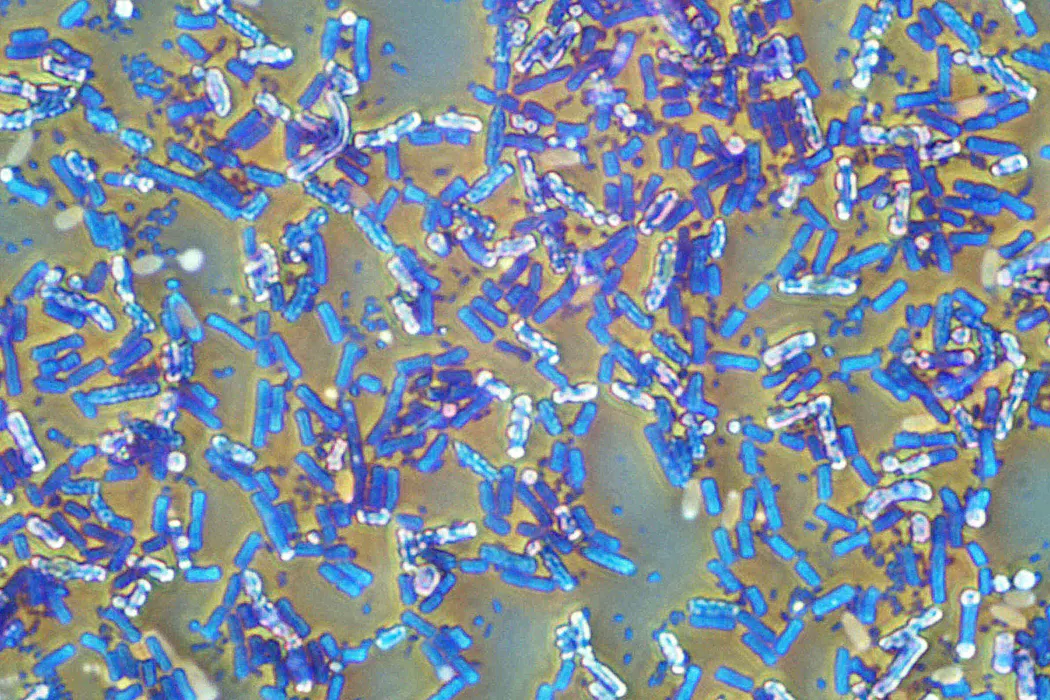
A spore is a bacterium’s survival capsule: dried almost solid, wrapped in protein armor and chemical processes shut down. Bacteria enter this state of hibernation when environmental conditions are unfavorable. What’s left is close to indestructible: It can survive boiling, desiccation, radiation and the vacuum of space. NASA once bolted Bacillus spores to the outside of a satellite and left them in orbit for nearly six years; the ones shielded from sunlight were able to come back to life upon returning to Earth.
Out in the dirt, bacteria have handed this spore-forming ability down for roughly 3 billion years. But if you put this bacterium in a comfortable laboratory flask and feed it well, within a few thousand generations it will lose the ability to make spores altogether.
Why would a trait this useful, conserved for 3 billion years, vanish in a few thousand generations? This paradox has bothered microbiologists like me for decades.
In our research, my colleagues Jay Lennon and William Shoemaker and I think the answer comes down to energy: We added up what it costs a bacterium to go dormant and wake up again, and the energy bill is large enough for evolution to push it to lose its spore-making genes if they aren’t being used.
This same arithmetic runs on any costly trait in any organism. Building the first complete energy budget of forming and sending out a bacterial spore also shows where a spore is most vulnerable – an important data point to fight the bacteria behind some of the hardest hospital infections to treat.
Expensive insurance
Cells run on a molecule called adenosine triphosphate, or ATP, which acts like a rechargeable battery. Because every job in a cell is paid for with ATP, we can treat this molecule like a real currency: It lets you directly compare the cost of producing a spore with the cost of producing a swimming tail.
Starting with Bacillus subtilis, a harmless soil bacterium, we gathered information in the scientific literature on which genes switch on as it builds spores, hour by hour, as well as how many copies of each type of protein one bacterium carries. Proteins are what a cell actually builds – the armor, the machinery, the enzymes that do every job — and they are also where most of a cell’s energy goes, which makes them the main thing to follow in energy accounting.
This data let us price every step for making a spore – copying genetic material, reading genes, assembling proteins, building membranes – into one bill, and a second bill for bringing a spore back to life as a new bacterium.

We then fed those numbers into a mathematical model of a starving population of Bacillus to ask what the cost of a spore does to a bacterial colony and whether evolution would notice – that is, whether a bacterium that quietly deleted its spore-making genes would end up with more descendants than one that kept them.
The full cycle of forming a spore and then reviving it came to nearly 10 billion ATP molecules, one of the most expensive things a bacterium ever does. Growing a flagellum and swimming away in search of food costs a fraction as much.
Moreover, most of that ATP isn’t fuel burned outright but an opportunity cost – building blocks that could’ve become a new cell go instead into the spore’s armor and protective proteins. A sporulating bacterium is not only spending energy, it’s also giving up the chance to reproduce while its neighboring bacteria are actively dividing.
High risk, uncertain reward
Our accounting also turned up something even stranger. A dormant spore also holds almost no ready-made fuel – nearly five orders of magnitude short of what it needs to wake up.
What it carries instead is raw material. Packed around its DNA are small proteins it can tear apart for amino acids, along with stored carbon compounds it can start burning within minutes of getting wet. Think of it as a stocked pantry that helps carry the spore through the first steps of germination.
The cost of building a spore falls unevenly. The mother cell generating the spore covers roughly 87% of the cost of building it, feeding materials to it through a narrow channel, before dissolving herself to set the spore free. Still, to finish waking up, the spore needs to find food in the world outside.
In comparison, when a bacterium lives somewhere where resources are abundant, its sporulation genes sit idle and unactivated. But these genes still get copied every time the bacterium divides, and copying DNA costs energy. Our numbers suggest this cost is high enough for natural selection to push bacteria to lose these genes.
Evolution isn’t only letting the bacteria’s survival kit corrode. Where life is easy, it is actively throwing it out.
From soil to hospital ward
Spores are not only a curiosity of soil microbiology. For example, Clostridioides difficile is a spore-forming bacterium that infects the gut and causes severe diarrhea and colitis. The bacteria’s spores allow it to spread through hospitals and nursing homes.
The infectious diseases anthrax and botulism come from spore-forming bacteria, too. The armor that carries a bacterium through a drought can also carry it through disinfectant and alcohol hand gel, keeping these chemicals from getting inside a cell. While bleach can chew through the armor itself, it’s too harsh on skin. For hands, the advice is plain soap and water to wash the spores away.

Our energy accounting points at a weak spot in the spore’s defenses.
Waking up happens in two stages. Germination comes first and is quick: In about 15 minutes, the spore rehydrates and sheds the armor that made it so hard to kill. Then comes outgrowth, three or four hours of rebuilding the proteins and machinery of a working cell. Only at the end of that is the bacterium alive and growing again.
That process leaves a gap: A spore cannot finish waking using only its internal reserves. If it wakes up where there is nothing to eat, it has given up its armor without finishing the job of coming back alive. Here is where scientists can attack.
Researchers have successfully triggered spores to germinate on skin and hospital surfaces and then killed them before they can finish developing into infectious bacteria. Our numbers show why this strategy works, suggesting that the tightest bottleneck – the point where a waking spore is most likely to run out of energy and die – is not germination but the outgrowth that follows, which consumes 88% of revival’s energy.
Putting a price on life
Our findings explain both why bacteria hold onto the spore-making habit where life is hard and why they shed it where life is easy.
In the 1920s, mathematician Alfred Lotka argued that evolution favors whatever captures and puts to use the most energy. Researchers have since measured the cost of building a single gene, a virus particle and an entire animal body.
Biologist Christopher Kempes pushed our team’s arithmetic further: The cost of building a spore and the cost of idling both depend on cell size, but not at the same rate. So a large bacterium recoups the cost of a spore sooner than a small one does – meaning dormancy is a better bet the bigger you are.
Follow that relationship down to the smallest cells and it implies a floor: Below some size, a bacterium could never recover what a spore costs to build. So no spore-forming bacterium smaller than that should exist. Nobody has checked yet.
This research was funded by the NSF, NASA and the U.S. Army Research Office Grant.
Read These Next

Young voters fear mass shootings like the one in Oregon, but that fear divides them on gun control
An Oregon school shooting comes weeks before midterms when young voters could break turnout records,…

Treating depression during pregnancy may benefit baby’s brain development – new research
Therapy during pregnancy for those who need it may have advantages for the next generation.
Fentanyl is fueling overdose deaths in Colorado – what voters need to know about Proposition 132’s a
In November, Colorado voters will decide whether to further criminalize the use of illicit fentanyl.