Why do I talk in my sleep? A sleep psychologist explains
It might seem like a weird thing to do, but more than two-thirds of people have talked in their sleep at some point.

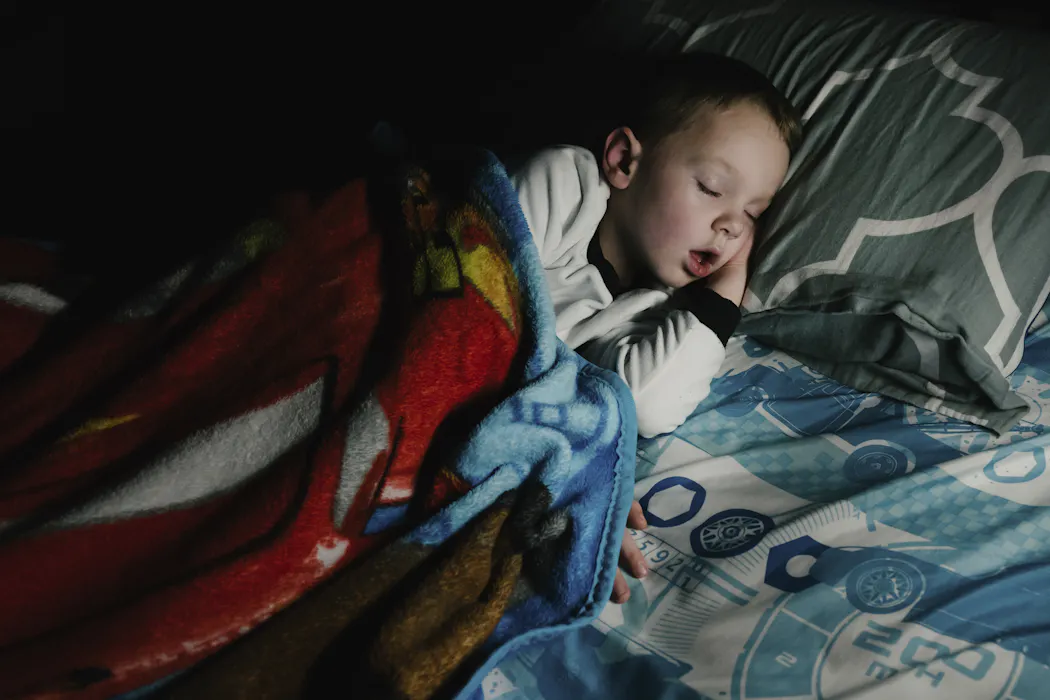
Curious Kids is a series for children of all ages. If you have a question you’d like an expert to answer, send it to CuriousKidsUS@theconversation.com.
Why do people speak while they are sleeping? – Mubina, age 15, Uzbekistan
Everyone sleeps, but not everyone understands much about sleep. One of my favorite parts of being a sleep psychologist is that when people hear what my job is, they always have tons of questions, like why do we need to sleep? Why do we dream? Do dogs dream? I get that one a lot, and the answer is yes!
Sometimes people want to chat about their sibling they share a room with who mumbles nonsense out loud all night long. Or maybe they’ve been teased themselves after delivering a complete but one-sided conversation while fully asleep at a slumber party.
I’ve studied sleep for almost two decades, and I’m still not tired of discussing different aspects of it, especially what are called parasomnias: things your body does or your mind goes through while you’re asleep, such as nightmares, sleepwalking or talking in your sleep. Most are common and completely harmless; they only count as a disorder when they happen so often that they cause real problems.
What’s happening while you’re asleep
Sleep is not one single thing; you go through several stages of sleep every night.
About a quarter of your sleep is what’s called REM sleep, short for rapid eye movement. This is the stage when most dreams, especially the vivid ones, happen.
Non-REM sleep, which includes the deeper stages of sleep, usually takes up between 75% and 80% of your night. It is an important stage of sleep where your body really throttles down, allowing it to rest and repair itself.
Doctors refer to these stages all together as your sleep architecture. People go through cycles of these stages roughly every 90 minutes each night. Non-REM sleep makes up more of your sleep right after bedtime, and then REM becomes a higher proportion of sleep in the early morning hours.

All mammals, from mice to cats to elephants, appear to sleep in some form or another. Researchers have found sleep is important for many things. When you’re asleep is when a lot of your memories get strengthened so they’ll last long term. Sleep is when growth typically happens in kids, and it is one of the times when your immune system is most active.
Sleep is an important time for your brain and body to recharge and take care of themselves. Doctors recommend that teens get 8-10 hours of sleep per night, and even more for younger kids: 10-13 hours for little kids ages 3-5, and 9-12 hours for bigger kids ages 6-12.
Talking out loud while you’re asleep
Even though someone who is asleep may look pretty much shut down for the night, their brain is not turned off. Different parts of the brain are active doing different things during different parts of the night.
Scientists think that sleeptalking happens when the parts of the brain responsible for language and speech are active while other parts of the brain that would typically prevent your mouth from physically talking are asleep.
For the most part, sleeptalking is not even words. Usually it’s mumbles, laughs or whispers. If a sleeptalker does use language, it is most commonly the word “no” – that’s about 5% of all words that are said while asleep. If the sleeptalker is saying words, they’re often questions and sometimes profanity. Rarely are the things sleeptalkers say polite, and often it sounds like they’re having a conflict with someone.
Sometimes it can sound like the sleeptalker is having a real conversation, pausing to allow the other person to speak – even if there’s no one else in the room. Researchers suspect you might be overhearing one side of a verbal exchange from a sleeptalker’s dream. What a sleeptalker is saying out loud during REM sleep matches what they’re dreaming about at that moment about 80% of the time, according to studies in sleep labs.

You may be able to actually interact with someone who is sleeptalking; researchers have found that roughly half the time a sleeptalker will respond to a spoken question or statement. But don’t get excited that you can get someone to spill their secrets or reveal something they don’t want to. There’s no scientific evidence of this happening.
There is not a ton of research on sleeptalking yet, but it appears that this phenomenon can happen in any stage of sleep. Studies do suggest there are differences between the sleep of people who sleeptalk and those who don’t. For instance, one study found that sleeptalkers get more than an hour and a half less sleep per night and roughly half as much REM sleep as nonsleeptalkers.
Why do people talk in their sleep?
The best explanation we have for sleeptalking is that the brain does not fall asleep all at once, and for some people the areas responsible for sleep remain active longer than the parts that help keep them quiet.
This phenomenon is fairly common, with over two-thirds of people sleeptalking at one time or another. It isn’t something to be concerned about if it has happened to you, though it does increase your likelihood of experiencing other parasomnias such as sleepwalking.
Sleeptalking is far more common in childhood. Researchers don’t fully understand why, but we do know that children have more of what’s called slow-wave non-REM sleep. The proportion of slow-wave sleep you have each night declines as you grow older, so it is possible that less sleeptalking comes with this change in sleep architecture.
Looking at the big picture, sleeptalking is considered normal. But if you’re bothered by it – or by other parasomnias, such as sleepwalking, night terrors or bed-wetting – remember, they all become less common as you grow up. And there are treatments you can get from a sleep psychologist like me.
One last tip: Scientists do know that sleeptalking, as well as several other parasomnias, is more common when you’re overtired. So, the next time you talk in your sleep, you’ll know that it’s nothing to worry about, but perhaps a sign that you need to catch up on some extra zzz’s when you can.
Hello, curious kids! Do you have a question you’d like an expert to answer? Ask an adult to send your question to CuriousKidsUS@theconversation.com. Please tell us your name, age and the city where you live.
And since curiosity has no age limit – adults, let us know what you’re wondering, too. We won’t be able to answer every question, but we will do our best.
Michael R. Nadorff receives funding from the Substance Abuse and Mental Health Services Administration and the National Institute of Mental Health. He is a fellow and former president of the Society of Behavioral Sleep Medicine and previously served on its board of directors. He is co-author of "The Nightmare and Sleep Disorder Toolkit" (New Harbinger, 2025) and receives royalties from its sale.
Read These Next

AI behaves more like a brain than a database – cognitive science’s role in its origin story helps ex
Modern AI owes its existence to both cognitive and computer science. What you envision as its origin…

Flu season is near – here’s a guide to available vaccines
Getting vaccinated is the best way to reduce your risk of severe illness and complications from the…

Columbus’ own writings reveal how tightly religion and conquest were intertwined from the start
The ‘Book of Prophecies’ shows how Columbus recast brutal colonization as a divine mission.