
Anthrax-causing bacteria have dwelled in soil for centuries – cycling through people, animals and ea
From bioweapons to biblical plagues, the bacteria that cause anthrax can persist for decades in harsh conditions and wreak havoc on people and cattle.

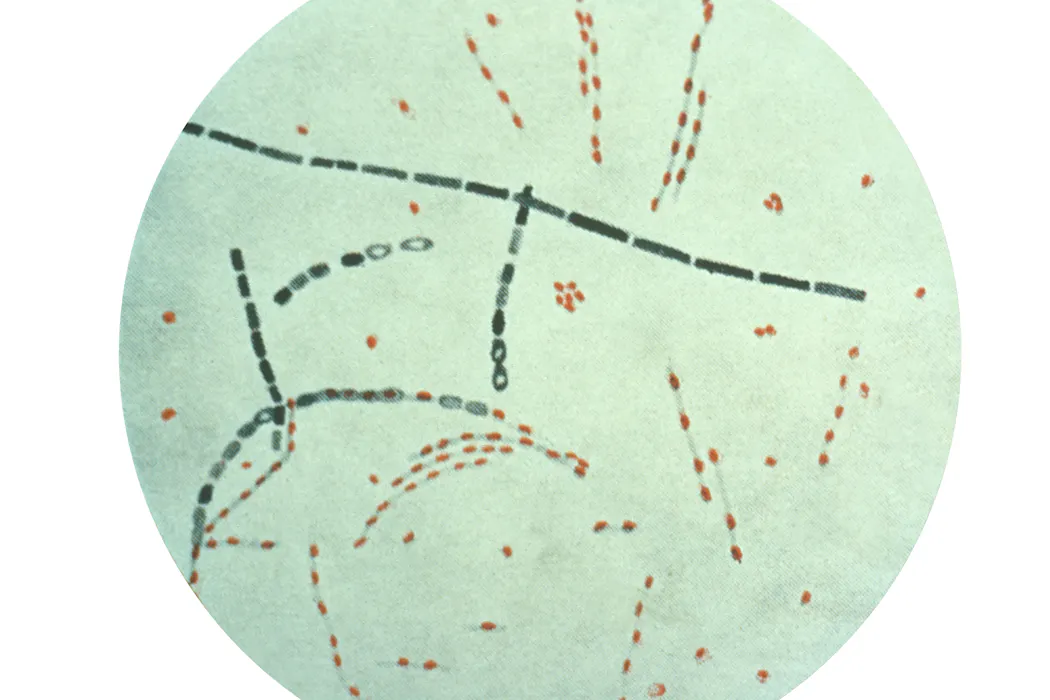
The bacteria that cause deadly anthrax disease persist in the earth, a place their ancestors preferred over petri dishes and blood-filled tissues.
The bacteria that cause anthrax are called Bacillus anthracis. In the soil, they hang out and can form communities around plant roots. They also interact with neighboring organisms, though they’re an admittedly less-than-ideal neighbor to the soil-dwelling amoebae they infect and kill.
As a public health researcher, I am fascinated by how diseases move among people, animals and the environment. When I worked in a state health department, I was surprised to learn how the bacteria that cause anthrax cycle between land and the animals that rely on that land – including people.
Anthrax in the ecosystem
Give these bacteria alkaline-rich dirt, calcium and some nitrogen, and they happily subsist in the ground. If the temperature, humidity or acidity is not favorable, these bacteria can also slumber for decades in a spore form – underfoot and forgotten by nearly all except cattle.
Cattle, deer and other large herbivores disturb the abodes of bacteria. They sometimes unintentionally eat anthrax spores along with their food or are exposed to them through a cut. After anthrax spores enter the animal’s body, immune cells known as macrophages pick up these spores for removal. But instead of being destroyed like other intruding pathogens, the spores germinate and multiply.

Once the spores take the form of bacteria, they can also mount an aggressive offensive. Anthrax bacteria can cleave vital proteins with toxins and wreak havoc on their cellular adversaries. Cattle succumb to the bacteria within days if left untreated – sometimes within 48 hours of infection.
Through the cattle’s death, the bacteria are brought back to the earth to vegetate or sporulate once more.
Humans seeding anthrax
People can get caught in the life cycle of Bacillus anthracis.
Throughout history, humans and animals have seeded new lands with Bacillus anthracis spores. The spores are hardy travelers: They can survive for over 50 years and are resilient to dehydration, radiation, toxic chemicals and enzymatic degradation.
Anthrax in early Egypt may have been one of the plagues described in the Bible. Animal husbandry texts in China have described anthrax for millennia. French explorers brought Bacillus anthracis spores to American soil in the early 1700s.
While people usually spread anthrax accidentally, there are infamous examples of anthrax spread on purpose.
In the 1930s and ’40s, Japanese military leaders released anthrax spores in Chinese villages, killing thousands of people. On Sept. 18, 2001, envelopes of spores were mailed to American media and congressional leaders, killing five people.
The weaponized use of Bacillus anthracis spores brings to mind white powder rather than the brown earth where they naturally lie.

Anthrax underfoot
Most cases of human anthrax result from working with animals – an occupational hazard for tanners, wool sorters and butchers.
Anthrax in people manifests as blisters and dark sores when a person is exposed to the spores through an open wound. When spores are inhaled, symptoms include fever, nausea and chest pain. Very few people ingest the bacteria or spores, but those who do typically get them from eating undercooked meat from an infected animal. Symptoms include vomiting, stomach pain and bloody diarrhea.
Inhalation anthrax is the most deadly type of anthrax. While researchers have estimated that 95% of people with inhalation anthrax die, this is based on historical outbreaks when patients often did not have timely diagnosis or treatment.
Treatment for anthrax includes antibiotics and monoclonal antibodies. William Smith Greenfield developed a vaccine to prevent anthrax around the same time that Louis Pasteur developed one in 1881. However, anthrax vaccines are currently recommended only for people at high risk of anthrax exposure, including animal handlers and U.S. military members.
Anthrax ecology
The bacteria that cause anthrax are forever associated with weapons that destroy people, overshadowing their ecologically complex role in animals and soils that sustain humanity.
In the soil, they interact with other organisms and plants in ways scientists are only beginning to understand. In animals, they are part of the circle of life and death that maintain populations.
Beneath the ever-expanding footprint of civilization, anthrax bacteria will continue to be inseparable from the earth that humans walk upon.
Hannah Kinzer does not work for, consult, own shares in or receive funding from any company or organization that would benefit from this article, and has disclosed no relevant affiliations beyond their academic appointment.
Read These Next

Horror films exploit how human vision works to deliver movies’ best scares
Scary movies create tension in that space between perception and recognition, as your brain tries to…
Who should have a say in which species are saved? The California condor offers lessons for a global
When conservation affects local people, the question of who pays and who has a voice in decisions can…

The science and politics behind the panic over ultraprocessed foods
There’s no doubt that the modern food environment needs to be healthier. But are ultraprocessed foods…