
A Plan B for space? On the risks of concentrating national space power in private hands
What does it mean for national security if access to Earth’s orbit depends largely on one company?

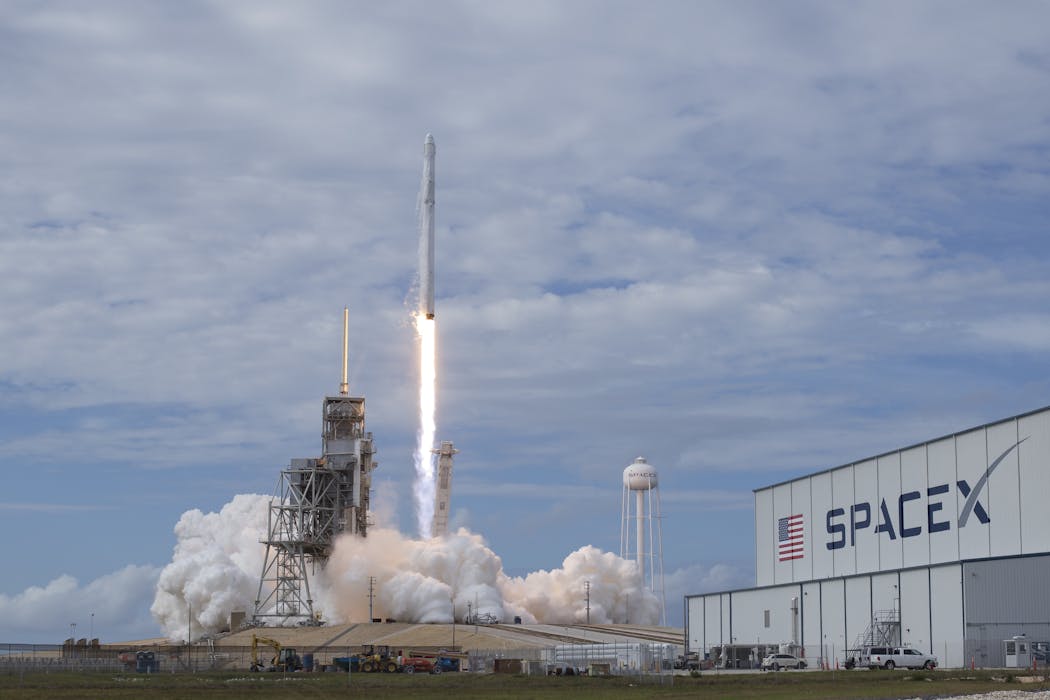
Private companies are no longer peripheral participants in U.S. space activities. They provide key services, including launching and deploying satellites, transporting cargo and astronauts to the International Space Station, and even sending landers to the Moon.
Commercial integration is now embedded in U.S. space policy and shapes national space strategy. As someone who studies space and international security, I have watched the extraordinary rise of commercial space with awe – and with growing concerns about the structural vulnerabilities it creates.
Access to space, particularly for crewed missions, remains heavily concentrated in one company, SpaceX. While the United States has begun developing alternatives, in operational reality that concentration gives the company disproportionate leverage. If private power and public strategy were to diverge, would Washington have a credible Plan B?
Commercial integration is now official policy
On Feb. 4, the House Science Committee approved the NASA Reauthorization Act of 2026, directing the agency to partner with American commercial providers for operations in low-Earth orbit, lunar landings and the transition beyond the International Space Station. In critical areas such as lunar landers, the bill requires NASA to work with at least two commercial providers – a deliberate effort to avoid dependence on a single company.
President Donald Trump’s December 2025 executive order expressed similar preference for prioritizing commercial solutions in federal space activities and set a goal of attracting at least US$50 billion in additional private investment in space by 2028. The U.S. Space Force’s 2024 Commercial Space Strategy also emphasizes speed and innovation through private partnerships.
Congress, the White House and the military are aligned: The government sets objectives, then private industry builds – and increasingly operates – the space systems. This shift has been bipartisan and explicit, and it has delivered results.
From cost savings to structural dominance
Its origins trace back to a moment of vulnerability.
After the retirement of the space shuttle in 2011, the United States temporarily lost independent human spaceflight capability. For nearly a decade, NASA relied on Russian Soyuz spacecraft, paying up to $80 million per astronaut seat, roughly $4 billion in total.
NASA responded by turning deliberately to commercial providers through the commercial crew and commercial resupply programs. The goal was pragmatic: to reduce costs, restore domestic launch capability and accelerate innovation. Under these programs, NASA provided funding and oversight while companies built and operated their own systems.
It worked.
Launch costs fell by almost 70% in some cases. The pace of launches increased.
SpaceX, founded by Elon Musk, became central to this new architecture. Its Falcon 9 rocket now carries the majority – five of every six – of U.S. launches to orbit. Since 2020, its Crew Dragon spacecraft has also routinely transported NASA astronauts, restoring the U.S.’s ability to launch people to orbit after a 10-year gap.

In high-risk and capital-intensive space sectors such as launch and crewed transport, the development costs are enormous. Few companies can afford to compete. The company that makes reliable rockets first, and at a large scale, like SpaceX, wins contracts and consolidates its market share.
Efficiency and consolidation have given SpaceX dominance. This dominance, in turn, creates leverage – not because the company acts in bad faith but because alternatives are limited.
Market concentration is not inherently problematic. But strategic infrastructure – such as the access to space that underpins military operations, communications and critical national systems – is not a normal consumer market. When a single company controls most launches or operates the only crewed spacecraft, its financial troubles, technical setbacks or leadership disputes can disrupt the entire country’s strategic capabilities.

The Musk episode as a warning
In 2025, during a public dispute over government contracts and regulatory matters, Elon Musk briefly threatened to decommission the Dragon spacecraft – the vehicle NASA relies on to transport astronauts to orbit.
Musk quickly backed off his threat, and missions continued. No astronauts were stranded, but the moment was revealing.
At the time, Boeing’s Starliner capsule still faced technical delays. There was no fully operational alternative ready to assume the mission immediately. Even a short-lived threat exposed how tightly U.S. access to space had become linked to the stability of a single firm – and arguably a single individual.

So, is there a Plan B?
A credible Plan B for space does not mean abandoning commercial partnerships. It means ensuring that alternatives exist.
Historically, assured access to space has meant having more than one way to reach orbit. Today, that principle extends to crew transport, lunar logistics, satellite services and data infrastructure.
Congress appears aware of this. The current NASA reauthorization bill requires the agency to diversify providers in key programs, particularly lunar landers. The intent is to build redundancy deliberately into the system, making it more resilient to potential shocks.
But redundancy is expensive. Maintaining parallel systems, supporting multiple providers and preserving internal government expertise require long-term funding and political commitment. Markets alone likely will not guarantee diversification in these expensive sectors.
In February 2026, Congress moved to legislate greater diversification into U.S. space strategy. The intent is clear, but the timeline is not. It remains uncertain when, or if, the bill will become law.
For now, U.S. access to space, particularly for crewed missions, remains heavily reliant on SpaceX. Plan B exists on paper, but in reality it is still under construction.
Strategic permanence in space requires options
The stakes will only grow.
As the United States expands into cislunar space – the region between Earth and the Moon – and looks to establish a sustained presence on the Moon, its reliance on commercial providers will deepen.
Commercial dynamism has revitalized American leadership in space, but it has also revealed structural vulnerabilities. Durable systems rarely depend on a single center of power. In Federalist No. 51, James Madison, the fourth U.S. President, argued that stable political orders require competing forces so that “ambition must be made to counteract ambition.” His insight was political, but the logic can apply. Economic resilience emerges from balance, not concentration.
The United States has chosen a commercial path in space, and that choice has delivered extraordinary gains. But permanence beyond Earth will require a deliberate balance: multiple providers for critical services, overlapping capabilities, and alternatives robust enough to absorb shocks.
Commercial space can underpin American leadership in the new space age, but only if access to orbit, and beyond, never rests on a single, indispensable company.
Svetla Ben-Itzhak does not work for, consult, own shares in or receive funding from any company or organization that would benefit from this article, and has disclosed no relevant affiliations beyond their academic appointment.
Read These Next
Federal spending on climate change before 2024 election boosted incumbents of both parties
Incumbents can still reap electoral rewards when federal money reaches their districts, even if they…

A pregnant mom let her 5-year-old stay outside to collect goose feathers – and was placed on the chi
Child neglect statutes are intended to protect children. But some of them are so broadly written that…