Police solve just 2% of all major crimes
When police arrest a suspect who is then convicted of the crime, it is a rare exception rather than the rule in the US.

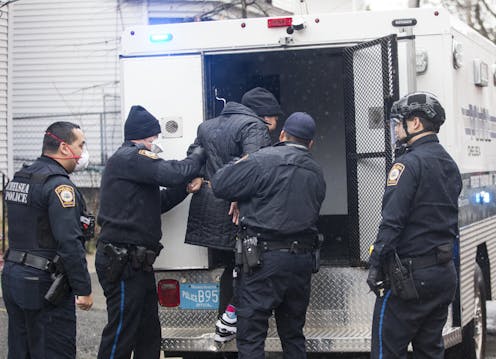
As Americans across the nation protest police violence, people have begun to call for cuts or changes in public spending on police. But neither these nor other proposed reforms address a key problem with solving crimes.
My recent review of 50 years of national crime data confirms that, as police report, they don’t solve most serious crimes in America. But the real statistics are worse than police data show. In the U.S. it’s rare that a crime report leads to police arresting a suspect who is then convicted of the crime.
The data show that consistently over the decades, fewer than half of serious crimes are reported to police. Few, if any arrests are made in those cases.
In reality, about 11% of all serious crimes result in an arrest, and about 2% end in a conviction. Therefore, the number of people police hold accountable for crimes – what I call the “criminal accountability” rate – is very low.
Many crimes aren’t reported
Police can only work on solving crimes they are aware of, and can only report statistics about their work based on criminal behavior they know about. But there is a huge slice of crime police never find out about.
By comparing surveys of the public with police reports, it’s clear that less than half of serious violent felonies – crimes like aggravated assault and burglary – ever get reported to the police.
Real arrest rates
In 2018, the rate of arrest for serious felony crimes reported to police was about 22%. But because twice as many crimes happen as the police find out about it, the arrest rate for all crimes that happened was half what police reported – just 11%.
Real conviction rates
The official percentage of serious crimes where a person is actually convicted is even lower, though data is hard to confirm. The Bureau of Justice Statistics has not reported national conviction rates for serious crimes since 2006 – but in that year, out of all serious crimes reported to the police, only 4.1% of cases ended with an individual convicted in the wake of a reported crime.
Again, taking into account the fact that twice as many crimes happen, the national conviction rate in 2006 was actually closer to 2%.
Resolving crimes without arrests
There are ways police resolve conflicts and crimes without arresting people – for instance, by mediating neighborhood disputes and directing wayward young people to social services and community programs. But so long as police departments measure success by arrests, that won’t happen more widely.
When considering approaches to police reform, it’s important to remember that Americans still don’t report about half of major crimes – and police don’t solve very many of the cases that do get reported. Truly improving policing will require addressing these two gaps.
Shima Baughman does not work for, consult, own shares in or receive funding from any company or organization that would benefit from this article, and has disclosed no relevant affiliations beyond their academic appointment.
Read These Next

How Hurricane Isaias broke through to become the first Atlantic hurricane in an eerily quiet 2026 se
An atmospheric scientist explains what’s been going on in the atmosphere, and how El Niño and the…

Why faculty diversity at universities still lags far behind the changing demographics of college stu
College faculties have become more diverse since the 1970s, but college faculty of color still often…

Iraqi Kurds sees opportunities – and risks – in the withdrawal of US troops
The region may become less of a target for groups seeking to pressure the United States. But the Kurds…