National ground stop response highlights critical errors in public reassurance – saying ‘nothing nef
A crisis communications expert looks at how the Trump administration handled the massive disruption to the nation’s air travel when all planes were grounded on Nov. 13, 2026.

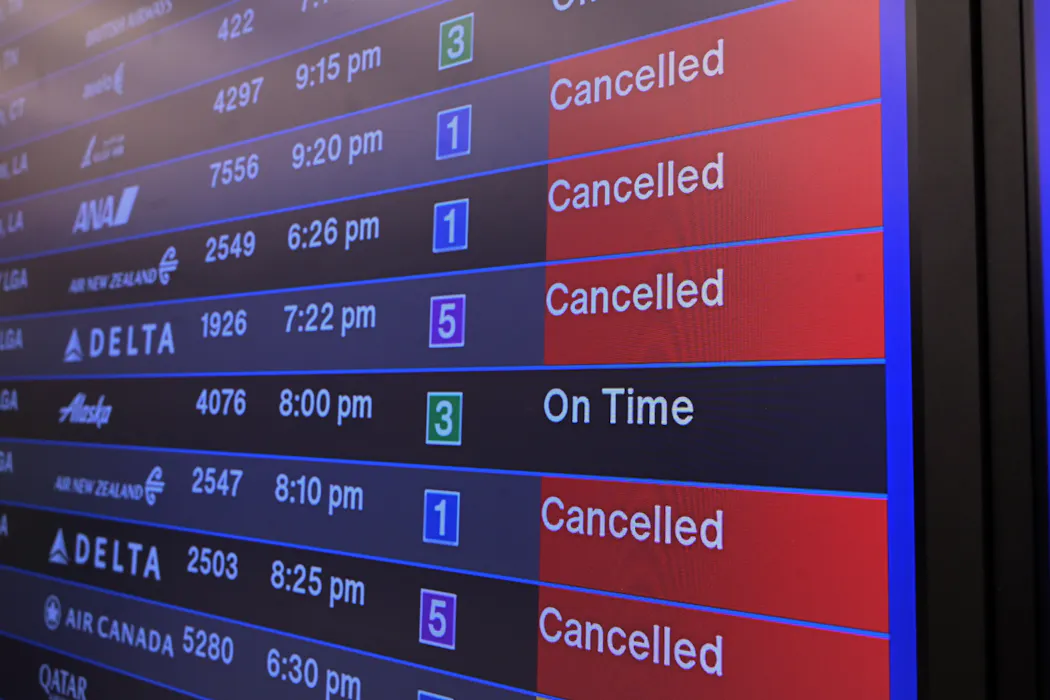
Thousands of travelers were stranded on Nov. 13, 2026, when the Federal Aviation Administration grounded all domestic flights in the U.S. because of what they said were failures in decades-old air traffic communications systems. Crisis communications expert Shannon A. Bowen, a scholar at the University of South Carolina’s College of Information and Communications, spoke with The Conversation’s Politics and Legal Affairs Editor, Naomi Schalit, about how the Trump administration handled the first day of the crisis.
Is there a first principle in crisis communications?
The first principle would be to react quickly and react with accuracy, react with everything you know at the moment, truthfully, but always react quickly. Because if you delay until you gather information, a vacuum will ensue. Information fills that vacuum that may not be accurate. And so that’s the enemy of accurate crisis communication, but you want to always speak quickly and be the most authoritative and definitive source, even if very little information is known.
What did we see on the day of the ground stop?
A crisis unfolded and to the administration’s credit, they did react very quickly, in a way that offered the information that was known at the time, even though not a lot was known about why the ground stop was issued until later.
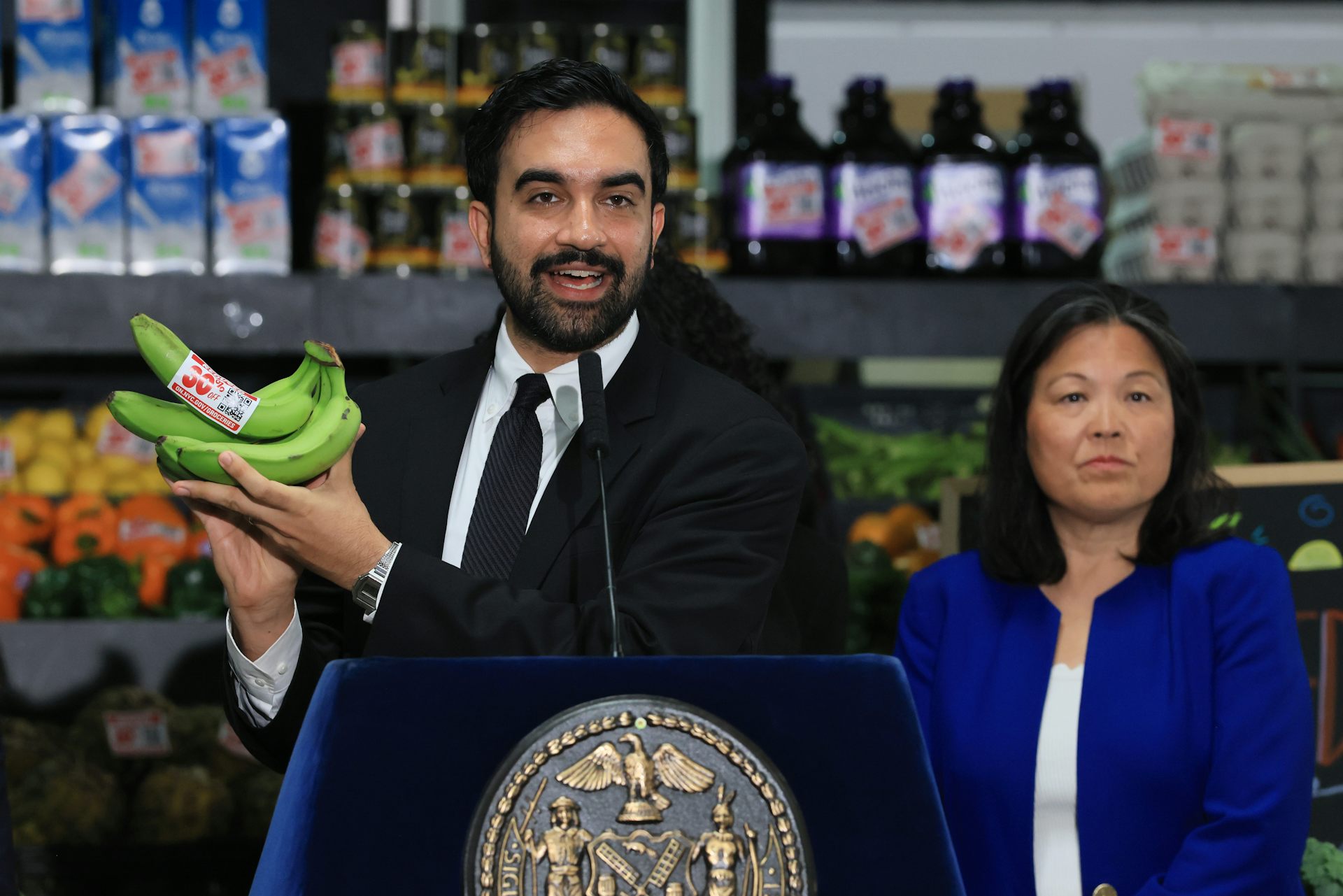
You’re speaking about the short press conference that afternoon with Department of Homeland Security Secretary Markwayne Mullin?
He did keep saying that nothing nefarious was at hand. And for a crisis communication scholar, you would not want to introduce the idea that something nefarious was at hand, unless, indeed, something nefarious was at hand. So by the very act of introducing this concept and this idea, I think the talking point, “Nothing nefarious,” then went across multiple networks, and it became the center of a controversy rather than quelling a controversy.
By saying nothing nefarious is at hand, that indeed confirmed something nefarious was at hand, even if the nefariousness was only the mismanagement of the air traffic control systems routers that they claimed caused the problem. By introducing this idea, I believe it did bring to mind that there may be other state actors behind whatever happened, that it could be a cyber attack. It would have been better to say, “We have evidence that this was not a cyber attack but a hardware failure.”
How did the later press conference with Mullin and Transportation Secretary Sean Duffy go from your perspective as an expert on crisis communications?
They handled the questions that they received correctly. They told us as much information as they knew.
However, they did seem to downplay the extent of this crisis, because we have to remember the traveling public is not just people trying to get to business meetings.
We had football teams stranded. Now football Saturday, all over the SEC, has been disrupted. And there’s probably disruption in other areas of the country, but to us in the South, SEC football is almost a religious experience on Saturday. Luckily, the University of South Carolina football team had already flown out. But our marching band was stuck in this crisis, and so we have a lot of ripple effects from something like this happening, and it definitely says to me that this was an emergency situation. It wasn’t simply a crisis, it was an actual emergency of impending disaster-level scale.
If it were simply routers being overloaded, as we’ve been told, why wouldn’t they already know this situation and restart those routers the night before or over Friday night after most of the traveling public is out of the air?
What was Mullin’s and Duffy’s job when they got out there? What did they need to do?
To inform the public about the danger, why this happened, the extent of the problem, and what they’re doing to remediate the problem. We keep hearing that they’re asking for US$30 billion and more to repair the whole infrastructure for the air traffic control system, which is great, but what are they doing right now?
How do we know that flights in the air, right this minute, are any safer than the ones yesterday, a minute before the ground stop? Do we have that information? I don’t feel confident that they addressed that question appropriately. I don’t think that the traveling public entirely feels safe at this point or adequately informed that they will arrive at their destination.
They introduced politics into the press conference as well, didn’t they?
It’s something that they have the prerogative to do. They are both political appointees and members of the cabinet. So I understand that aspect, but I really wish they had addressed the traveling public’s concerns more overtly before making it political, that they need more money to fix this. We know they need more money to fix it, and I’m sure the American taxpayers are aware of the problem and willing to fund those corrections. But the more expedient issues would be, what about all these people who were stuck in airports?
Were there warning signs for this crisis?
I believe there were. We had another ground stop about three years ago, due to air traffic control problems, and that is what we call in crisis communications a “prodrome,” a warning sign of larger impending problems. When you see these types of warning signs, it really gives us a reason to think it’s going to get worse.
Duffy did say on Nov. 13 that, because of the condition of the air traffic infrastructure, “you will have more” ground stoppages. If you had a piece of advice for the administration regarding their future communications, what would you tell them?
I would say to communicate in advance as much as possible, so if you’re even considering a ground stop, it may be a good idea to put out a public notice so that people don’t go to the airport on a vacation flight, maybe they delay that for a week or two. It might also be a good idea to speak with the airline industry representatives and say, “Here’s what we’re thinking. Can you work with us? How can we make this better for the traveling public?” Also, if 17 of 22 routers were malfunctioning, could we have had a partial ground stop at only the affected airports, rather than a nationwide stop?
My silly last question: Do crisis communications experts have any theories about Friday the 13th?
We consider it more of a superstition, but I have noticed that there does tend to be a lot of activity on Friday the 13th. It might be placebo effect, it might be because we expect something bad to happen and we’re looking for it. But that day does seem to always have some type of activity. This is also when organizations release bad news, oftentimes, they say, “Let’s hold it until Friday the 13th, because bad news is expected.” People will assume, on Friday the 13th, that negative things are going to come out, so the shock value won’t be as much.
Shannon A. Bowen received funding in 2022-2023 from The National Science Foundation as PI on a grant studying disaster management.
Read These Next

Why the Microsoft 365 outage is different and why it takes so long to restore email services
When one email service goes down, others don’t stop trying to send emails to users of the affected…

Oceans and forests have absorbed roughly half our carbon emissions for decades, slowing climate chan
A method for measuring the world’s crucial carbon sinks finds that the ocean’s so-far-increasing…
To get Americans to care about climate change, just call it climate change
Phrases like ‘climate crisis,’ ‘climate emergency’ or ‘climate justice’ used at COP31 might…