1 in 2 Florida residents live in HOAs – how these private governments are reshaping the American Dre
HOA policies don’t always reflect the wishes of the homeowners whose interests they are meant to represent – and they aren’t legally required to.

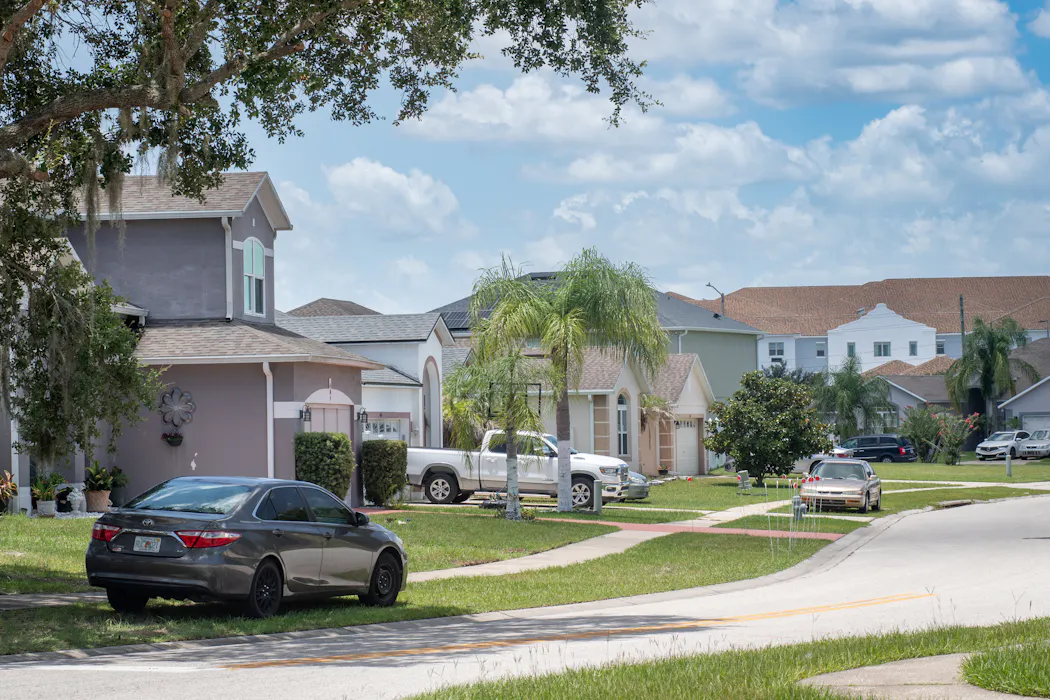
As she sat across from me drinking tea, Coretta – a pseudonym to protect her identity – shared her dismay about living in a central Florida community due to the control of her homeowners association, or HOA.
A Black mother of three with a background in real estate, Coretta has lived in her mostly Hispanic community for over 20 years. She told me that apathy had long replaced her anger.
“I don’t think [the community developers] intended for it to be a heavily Hispanic population. … They were expecting a certain economic class to come here. I think they were trying to push out the ones that they felt didn’t belong. I think they’re doing that and have done that.”
I’m a sociologist, and Coretta was one of 47 residents of this community that I interviewed between 2017 and 2020 as part of a survey to understand the experiences of people of color living in an HOA. All of the people I interviewed identified as Latino, Caribbean or Black.
Over and over, residents shared with me the same story: We are being given the clear message by the HOA governing officials that we do not belong here, but we cannot afford to leave due to rising housing prices.
The people I spoke to worried that even if they did move, that wouldn’t solve the problem. Nearly half of Florida residents live in communities overseen by HOAs, the largest share of any state.
And it’s not just a Florida phenomenon. Across the U.S., 80% of new single-family homes in subdivisions, and 60% of new single-family homes overall, are governed by HOAs. Even if they moved, families like Coretta’s would likely end up in another HOA.
Based on my research, stories like Coretta’s are an example of how homeowners associations act as what sociologists call racialized organizations. Racialized organizations, while appearing or even intending to be neutral, can create and maintain inequality. They can diminish the agency of racialized groups – that is, groups that are perceived as different from the white racial majority – and legitimize the unequal distribution of resources. Within organizations, being seen as white often provides advantages and power. What they formally state as rules and what they do can be very different, and is often shaped by race.
Based on my research, I believe that HOAs meet all of these criteria in the way they are structured.
Rules and regulations
HOAs are a form of private government, led by an elected board of volunteer directors. They often oversee residents’ aesthetic choices in order to maintain a consistent appearance in the neighborhood, but they have the power to do much more than regulate paint color and fencing placement.
HOA boards act as policymakers to pass and enforce community restrictions, fines and sanctions.
In some cases, HOAs even have the legal authority to foreclose on homes if a homeowner fails to pay HOA fees or assessments.
The policies that HOAs create and choose to enforce are sometimes controversial. For instance, in 2019, one Florida HOA made headlines when it told a veteran to remove her Puerto Rican flag.
And an HOA’s purview often extends beyond rules about flags or decorations on personal property to include things like sponsoring events and activities relating to cultural celebrations and community services. This means that many times, HOAs have a measure of control over home decor and public gatherings of residents, such as parades, festivals and holiday parties – including which holidays are celebrated at all.
Exclusionary by nature
There are about 373,000 HOAs in the U.S., affecting the housing of more than 78 million Americans. Yet there are no consistent laws from state to state as to how board members are elected and whether they must reside within the HOA. And even in some states where there are laws, the the regulation guidelines often vary across associations.
While federal laws limit the absolute power of HOAs, these organizations typically act as private government entities with substantial control. Research has shown they also act as spaces of exclusion, maintaining residential segregation and favoring those of higher socioeconomic status.
One survey from 2024 found that fewer than half of Americans living under an HOA believe their neighborhood is better off with an HOA, and 1 in 10 had considered selling their home for HOA-related reasons.
HOAs charge dues – a median of $230 monthly in Florida, with some homeowners paying over $500 monthly – typically tied to extra amenities. For this reason, they can be exclusionary by nature. The extra income required to keep up with HOA dues can act as a barrier to entry for many potential homebuyers. This exclusion often falls along racial lines and becomes a way of maintaining racial segregation. In practice, this segregation is seen as a way to maintain property values.
Voter suppression
On the other end of this are families who are pushed to the side. In my research, I continuously heard about the lack of agency residents felt. No one I interviewed currently attended HOA meetings. Residents who previously attended had long since stopped because they felt it made no difference.
Many residents told me they were frustrated by what they saw as voter suppression in their HOA. HOAs set the rules for how and when homeowners can vote for board representatives. In this Florida community, the HOA had decided not to allow voting by proxy, which would allow you to designate a neighbor to cast a vote on your behalf. This meant each homeowner must vote in person on the day and time set by the HOA board. Voting felt inaccessible to residents I spoke with, as it always took place in person on a Tuesday.
The HOA also allowed only the listed homeowner to cast a vote, which meant that other household members and renters could not vote. In fact, according to their HOA bylaws, renters were not permitted even to attend meetings, as this was a “privilege” afforded to homeowners.
These bylaws also excluded residents who lived in multigenerational family homes, like one woman I spoke to whom I will call Elena. Such arrangements are more common among Latino families like Elena’s. Though Elena paid the mortgage on the home, she was still barred from voting for an HOA representative.
Exasperated, she told me: “I’m not allowed to vote. You’re not allowed to vote with a proxy. My son, [who is listed as the homeowner], works crazy hours. He gets up at 3 in the morning to work, he comes home, has dinner and goes straight to bed … he never makes it. They should have that on the weekends.”
Even how the day and time of votes was communicated to residents was controlled by the HOA. According to bylaws, the HOA did not have to make this information available beyond its physical office, located at one end of the community.
Restricting the American Dream
This story goes beyond paint colors and fences. Historical discriminatory practices like redlining have inhibited homeownership for Black and Latino families across the nation dating back to the 1930s. Today, rates of homeownership are rising for all groups, but they are rising unequally. The Black homeownership rate, at 45%, is still lower than all other racial groups, according to census data. With the non-Hispanic white homeownership rate at 73%, the gap between the two is persistent.
As the racial wealth gap also continues to increase, Black and Latino residents are still more likely to rent than own their homes. At the same time, the number of HOAs in the United States continues to rise year after year. What will the future of housing look like?
Racialized minorities will increasingly reside within HOAs as homeowners and renters. Homeownership has long been a marker of the American Dream, but this dream presumes autonomy, voice and equitable treatment. When HOAs fence out the participation and culture of minority residents, they limit the value of homeownership for those residents.
I am a former resident of the community.
Read These Next

An AI model’s false tip to Philadelphia police reveals how digital agents can do as they’re told and
An expert on AI governance explains why these rare mistakes may soon be common, and with much higher…
Offering cash for votes is quite common – but here’s why it doesn’t work
Money or other material benefits are often not enough to override a voter’s preferences and partisanship.
El Niño is threatening California’s fragile coast again – the 1982-83 El Niño opened eyes to the ser
The destructive 1982-83 El Niño, then the strongest on record, eroded cliffs, leaving homes hanging…