Is it illegal for the president to spend ‘patriotic’ donations on a White House ballroom or anything
Uncle Sam may receive charitable gifts, but that doesn’t give presidents free rein on how to spend those funds.

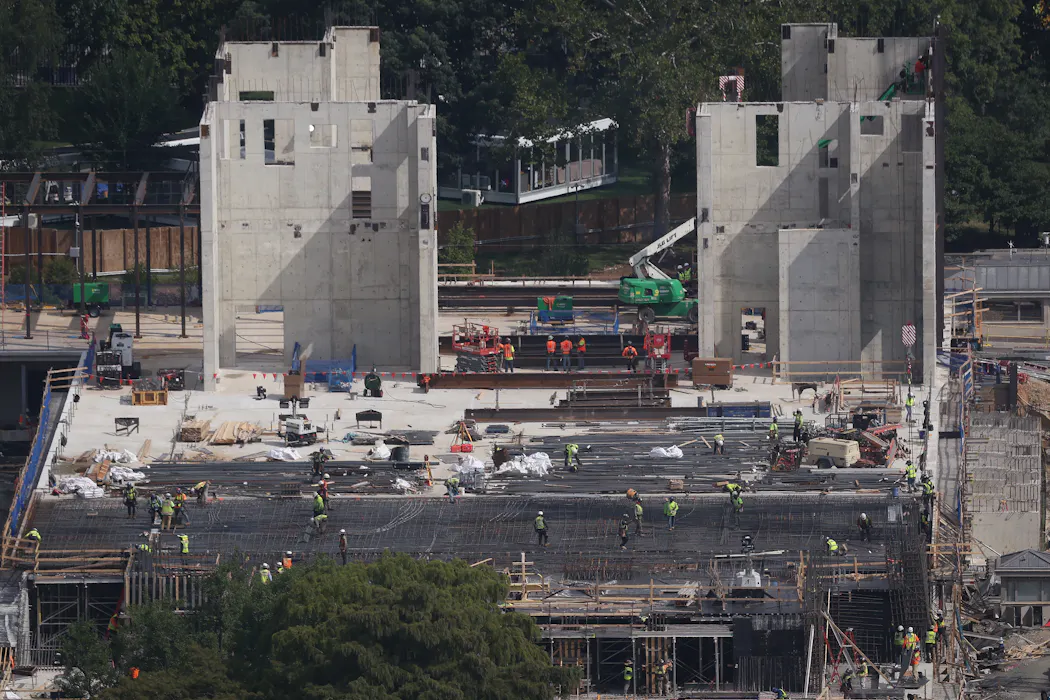
The fate of President Donald Trump’s estimated US$400 million White House ballroom may hinge on the little-known and somewhat surprising rules as to when the federal government and its agencies can accept privately donated funds.
That’s because Trump’s is using the fact that he’s been accepting private donations to pay for at least some of the project’s cost as a justification for not needing Congress’ explicit authorization.
A federal appeals court on Aug. 7, 2026, disagreed and left in place a lower court’s injunction that’s slated to halt construction on Aug. 21, barring Supreme Court intervention.
As a scholar of nonprofit and tax-exempt law who has studied for decades how the law governs deductible charitable contributions, including those to the government, I find that this appeals court decision calls for an explanation of the role that such private donations may play in any federal government project or activity. An intricate statutory dance is required for taxpayers to make donations to particular government agencies or for particular government purposes.
Giving to the government
You may not realize that you can make potentially tax-deductible contributions to the federal government itself. An official website lists almost two dozen programs, including the National Endowment for for the Humanities, the National Arboretum and AmeriCorps, to which U.S. citizens can donate.
But such donations are allowed to government agencies only if Congress has granted the agency statutory authority to receive those funds.
In this context, according to the reasoning of the majority in the appeals court case, that means spending donated funds to preserve the East Wing would have been automatically allowed because it stood on a national park and the National Parks Service is an agency that individuals can donate to; spending those funds to build something new to replace that structure would not be allowed unless Congress had authorized the project.
But the Trump administration has failed so far to obtain congressional authorization and appropriations for the ballroom.
The federal government has accepted donations voluntarily made by Americans since its founding.
What’s more, the Bureau of Fiscal Services – the central bank account and financial manager for the federal government – explains that it “may accept gifts donated to the United States Government” and that the account for such gifts, which dates back to 1843, was established “to accept gifts, such as bequests, from individuals wishing to express their patriotism to the United States.” Such gifts, however, are subject to restrictions.

Statutory restrictions
Since 1982, a provision of the United States Code, the official codification of all the nation’s general and permanent federal statutes, has required that these “patriotic” donations be devoted exclusively to reducing the national debt.
By law, federal agencies cannot augment congressional appropriations. The Miscellaneous Receipts Act requires that “an official or agent of the Government receiving money for the Government from any source shall deposit the money in the Treasury as soon as practicable without deduction for any charge or claim.”
Despite this seemingly absolute language, government agencies are permitted to accept gifts of money or other property when – and to the extent – they are given explicit statutory authority.
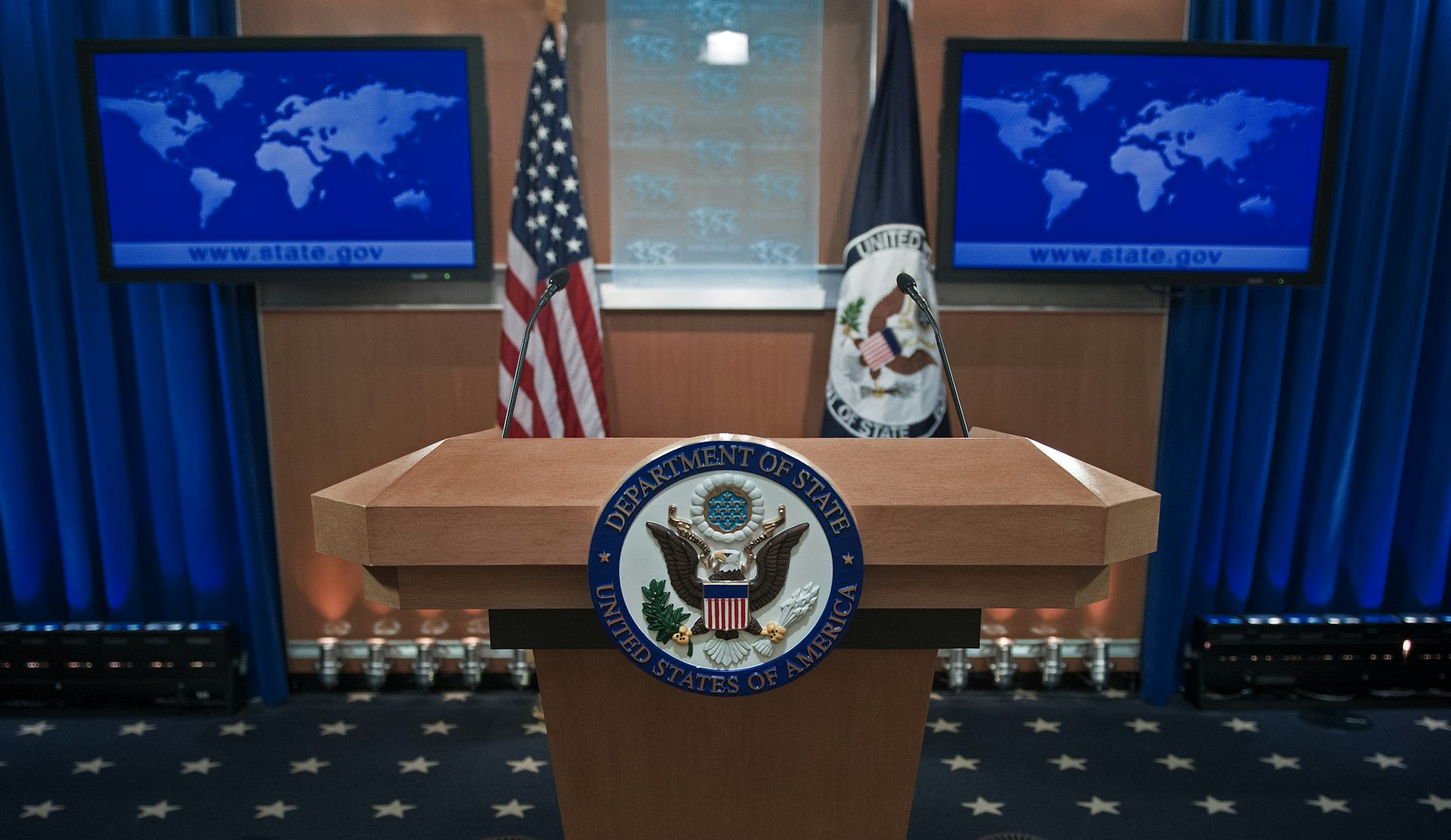
Agencies with the authority to accept gifts include the Justice Department, the State Department and the Library of Congress.
But this money must be spent only as Congress directed in establishing the mission of the National Park Service, which is the conservation and preservation of the land and structures under its jurisdiction.
In contrast, the White House does not have this authority. Its own website states that it “is unable to accept cash, checks, bonds … or other monetary equivalents” as gifts from private citizens.

‘No instance in American history’
That’s in part why the U.S. Court of Appeals for the District of Columbia Circuit held on Aug. 7 that Trump could not build the ballroom on the site of the former East Wing building.
The two judges in the majority concluded that neither the National Park Service, which is the steward for the national park on which the White House stands, nor Trump himself had satisfied all the statutory requirements needed to undertake building of the above-ground ballroom. It did not block work on an underground military bunker the Trump administration began renovating after it demolished the East Wing in October 2025.
That some, most or even all the funding comes from private donations does not protect the administration’s right to proceed with construction of the 90,000 square-foot (8,361 square-meter) ballroom because it has failed so far to obtain congressional authorization and appropriations for this project, the majority explained.
Crucial to this conclusion was a statute declaring, “A building or structure shall not be erected on any reservation, park, or public grounds of the Federal Government in the District of Columbia without express authority of Congress.”
“We are aware of no instance in American history in which a President unilaterally and using privately collected funds demolished substantial portions of the White House that Congress authorized to be built and American taxpayers paid for,” the majority opinion says. “Until now.”
Satisfying 2 statutes
The Trump administration has pointed to two possible statutes it says provides the necessary authority to do that.
One involves the purposes for which the National Park Service can spend its funds, including privately donated funds. The other grants the president the ability to spend funds for, among other items, “the care, maintenance, repair, alteration, refurnishing, [and] improvement” of the executive residence at the White House – funds that “are authorized to be appropriated each fiscal year.”
The majority explained that authority for the president to construct the ballroom requires satisfying both of those statutes; neither alone suffices.
And it rejected the reliance on the National Park Service provision alone. That statute limits use of the service’s funds, in the words of the majority, to “the identified purposes of conservation and preservation.”
In particular, the majority ruled, the provision does not authorize the construction of a new building. Further, it held, the National Park Service provision cannot authorize the president to lead the project; only the provision related to the executive residence can do that.
As to the executive residence provision, the majority opinion explains that it “does not expressly grant the President any independent authority.”
Instead, the majority held, the president must rely on “an accompanying appropriation.” The court found no such accompanying appropriation.
Ellen P. Aprill does not work for, consult, own shares in or receive funding from any company or organization that would benefit from this article, and has disclosed no relevant affiliations beyond their academic appointment.
Read These Next

Why your boss matters more than remote or hybrid work when it comes to burnout and job satisfaction
A return to the office can mean very different things to different workers, which is why this debate…

AI can help with academic research but doesn’t always get it right – here are some tips to check the
AI is quickly changing. These tips from university librarians can help people keep pace with the shifts…
Armed poll watchers: New Jersey’s 1981 racist voter intimidation campaign is a cautionary tale ahead
An armed voter suppression campaign in New Jersey in 1981 finds echoes today in the Trump administration’s…