From the San Luis Valley to Vail, Latino labor powers every sector of Colorado’s economy
Latinos were the first Coloradans, and yet they are portrayed by the administration as intruders in an era of immigration enforcement.

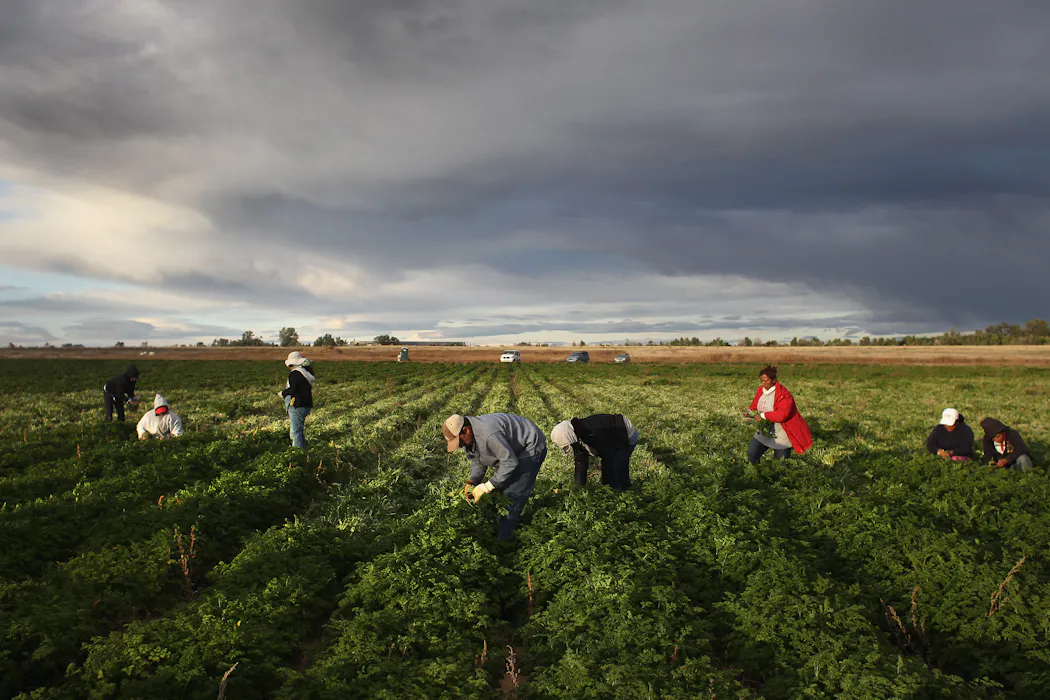
In Colorado, a national debate about the role of Latinos in American society has deep roots in the state’s history, current identity — and future.
I’m a professor of ethnic studies at Colorado State University. I recently published a book titled “Latino Colorado: The Struggle for Equality in the Centennial State.” In it, I explore how Latinos in Colorado have bridged Old West and New West industries to help our state grow. As a longtime resident of the state, I have witnessed many of these socioeconomic phenomena firsthand and through my research.
Latinos have always been a part of the Colorado story. Let’s look at some ways Latinos help drive the state’s economy and contribute to its unique culture and lifestyle.
Latino labor in Colorado
Latinos were the first Coloradans.
San Luis was founded in 1851 by Hispanic settlers from northern New Mexico. It is the oldest continuously inhabited town in the state. In the late 19th century, Hispanic Coloradans and immigrants from Mexico fanned across the territory and later the state to work in mining, the railroad industry and the emerging agricultural sector.

In the fist decades of the 20th century, Colorado’s sugar beet industry relied heavily on Latino workers. Those workers then established Hispanic neighborhoods in cities along the Front Range and the Eastern Plains.
Colorado’s geographic diversity has led to the development of numerous economic sectors from so-called Old West industries like agriculture, cattle ranching and mining to New West industries like tourism, real estate and tech startups.
The running thread of Colorado’s diverse economic picture is its reliance on Latino labor, whether from U.S.-born or immigrant workers. The state has relied on this labor practically since the territory was acquired from Mexico in 1848. The region known as the Western Slope is a good example of this trend.
In the Western Slope, Latino workers were the muscle behind the building of railroad lines and the growth of the sugar beet industry in the early 20th century. Latino immigrants still work in the oil and gas industry and the fruit orchards that dot the region. But, more recently, their descendants have moved into the middle class. They’ve opened small businesses and some have even become white collar professionals.
As tourism began to flourish in the Western Slope in the 1990s, Latinos quickly became the indispensable labor force that kept the ski resorts, hotels and restaurants running. And as Baby Boomers began to retire and move to the region, Latino labor supported the construction boom fueled by this demographic shift. There is practically no sector of the Western Slope’s — and the state’s — economy that does not rely on Latino labor.
Latino demographic shifts
Latinos have also driven the Western Slope’s demographic growth. The expansion of the real estate and tourism sectors around the turn of the 21st century attracted tens of thousands of Latinos to the region. They came from Colorado’s Front Range, other U.S. states and Mexico and Central America.
Their presence has revitalized towns historically afflicted by the woes of the boom-and-bust cycles of the oil and gas industry. For example, along the west I-70 corridor, towns such as Eagle, Edwards and Gypsum in Eagle County, and towns like Glenwood Springs, Parachute, Rifle and Silt in Garfield County, have seen their Latino populations soar with the arrival of families attracted to job opportunities in resort destinations like Vail and Aspen. By 2020, Latinos made up more than a third of these counties’ total populations compared to the 1990s when Latinos made up less than 10% of the population in the region.
Further west, Montrose’s Latino population has grown in tandem with the popular resort town Telluride’s economic expansion. Nowadays, Latinos represent more than 20% of the Montrose County population compared to 12% three decades ago. Mesa County has the largest number of Latinos on the Western Slope, about 25,000, which make up 15% of the population. Latinos are mostly clustered in and around Grand Junction, the largest metro hub between Denver and Salt Lake City.
Like most working-class Coloradans, these Latino families typically cannot afford to live in the ritzy communities where they work. Many make long commutes over treacherous mountain roads to get to their workplace. Some juggle multiple jobs and rely on carpooling because they don’t own cars and don’t make enough money to afford their long, potentially dangerous commutes.
While the first-generation immigrants who came to Colorado’s Western Slope in the 1990s-2000s have a limited educational background and speak little English, their second-generation children are trying to realize the American Dream by moving into the middle class. This second generation benefits from a public education, command of the English language and greater knowledge of American society than their parents.
The U.S.-born descendants of Latino immigrants represent a tip-of-the-iceberg phenomenon. They currently make a large component of the school-age population in these counties. In another decade or two, they will join the labor force, pay taxes, vote and likely transform the demographics, culture and political status quo of these mountain communities.
Challenges facing Latino Coloradans
Latino Coloradans’ story is fraught with challenges, too.
First-generation Latino laborers often endure long work hours for low pay, a high cost of living, occupational hazards and the stigma of racial discrimination. Moreover, shifting political winds represent a significant challenge for Latinos concerned about changes in U.S. immigration policies.
President Donald Trump’s recent immigration dragnet has reached the Western Slope, where Latino individuals have been routinely arrested and Latino families fear deportation. Many Latino families in Colorado are mixed-status families, in which some family members may lack U.S. citizenship or work visas and are subject to deportation. They feel targeted for the color of their skin, their accent or the jobs they do. The immigration operations are having an impact on the economy and social fabric of the communities where Latinos live and work.
Still, Latinos have grown deep roots in Western Slope communities. Grand Junction has a thriving Latino middle class and is home to the Western Colorado Latino Chamber of Commerce. Latinos, such as State Rep. Elizabeth Velasco, are running for office in the region and getting elected. Velasco represents House District 57, which covers Glenwood Springs and Aspen.
Latinos have always been an intrinsic feature of the Western Slope’s socioeconomic landscape, as ubiquitous as the area’s mountains, mesas and canyons. In cities like Grand Junction and Durango, and ski towns like Aspen, Telluride and Vail, they enrich the region’s economy, society and culture.
Read more of our stories about Colorado.
Ernesto Sagás does not work for, consult, own shares in or receive funding from any company or organization that would benefit from this article, and has disclosed no relevant affiliations beyond their academic appointment.
Read These Next

Remote work made these colleagues more open with each other, not less
Remote work does not necessarily mean that social connections break down. Instead, it can provide the…

Fentanyl is fueling overdose deaths in Colorado – what voters need to know about Proposition 132’s a
In November, Colorado voters will decide whether to further criminalize the use of illicit fentanyl.

Why the 26 secretary of state races this November matter more than they did before Trump’s drive to
Secretaries of state are at the center of growing conflict over how election authority should be divided…