There’s a competition crisis in America’s state legislatures – and that’s bad for democracy
In dozens of states, an increasing number of legislative seats are going completely uncontested by one of the two major parties.

Many Americans report frustration with the two-party system, in which the Democratic and Republican candidates are seen as the only viable options for elective office.
But an alarming trend in many state legislative elections is lowering the bar even further, to something more like a one-party system. In dozens of states, an increasing number of state legislative seats are going completely uncontested by one of the two major parties.
State legislatures play a crucial role in American governance. As congressional gridlock has intensified over recent decades, state governments have increasingly picked up the slack on policymaking.
Yet in many states, competition over who serves in these legislatures has deteriorated significantly.
The result is a genuine crisis for political representation, policy innovation and candidate recruitment.
Scale of the problem
In many cases, one of the only two viable parties can’t field enough candidates for the state legislature to mount a credible challenge to the other, more dominant party.
While uncontested seats for Congress remain relatively rare – approximately 3% to 4% of U.S. House districts in recent cycles were uncontested – the phenomenon has become endemic in state legislatures. In recent election cycles, between 30% and 50% of lower-chamber state legislative seats nationwide went uncontested by one of the two major parties.
Even more astounding is the lack of competition in individual states, some of which see far less competition than others. Some states, like Michigan and Minnesota, regularly field candidates for both parties in nearly all their state legislative races.
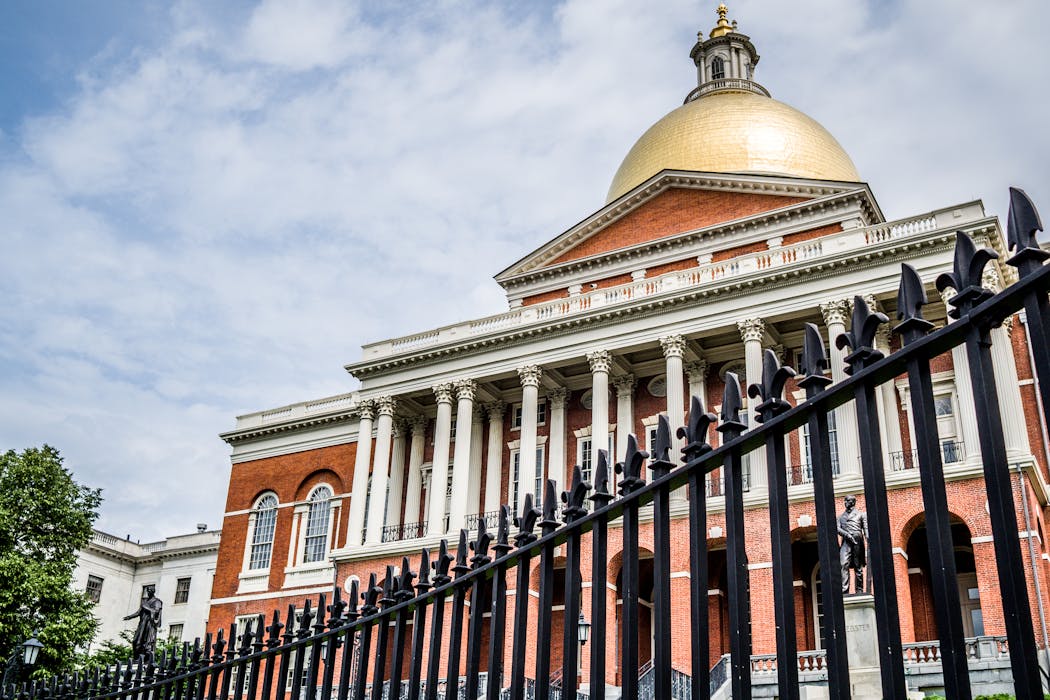
Massachusetts is a different story: In their lower legislative chamber, more than half the races have gone uncontested by one of the two major parties in every election since at least 2010. In the 2024 elections, four out of every five seats went uncontested in races for the Massachusetts House. In Mississippi, out of the 174 seats in the state Legislature, only 25 of them – 14% – had actual contests with both parties participating.
In practice, this means that for many state legislative chambers each election cycle, the party that will control the majority in the next legislative session – a major prerequisite for governing and passing legislation – is literally a foregone conclusion. In these chambers, one party or the other has fielded candidates for less than half of the legislative seats.
In other words, it’s mathematically impossible for that party to win a majority, even if its candidates win every seat they compete in.
In the 2022 cycle, for example, simple majorities were guaranteed for either the Democrats or Republicans in 22 chambers across 16 states. In some of these cases, one party was guaranteed a veto-proof majority – meaning that party had enough lawmakers to override a governor’s veto if necessary – before a single vote had even been counted in the election.
What is and isn’t behind lack of competition
Several factors contribute to the prevalence of uncontested races, including the individual decision-making processes of potential candidates.
Running for office requires substantial investments of time and money, as well as major sacrifices of privacy and, in many cases, public and personal reputation. Even many individuals who are interested in serving decide that the cost isn’t worth it, especially when winning isn’t a guarantee.
The calculus is even more straightforward in heavily partisan districts, where the other party’s presidential candidate may have won by 40 or 50 percentage points in a previous election. Here, even well-qualified candidates face near-certain defeat. It’s easy to see why would-be candidates might reasonably decide to opt out.
Structural explanations for this lack of competition are more complex. For example, gerrymandering – the practice of drawing district boundaries to favor one party – is frequently cited as the main culprit.
But while gerrymandering does occur and merits concern, the evidence suggests it is not the principal driver of uncontested seats. Many states with independent redistricting commissions, such as Idaho, have experienced high rates of non-contestation despite having drawn competitive districts. Meanwhile, many states where legislatures control redistricting, such as Minnesota and Florida, maintain robust competition.
The phenomenon is also not correlated with whether a state is red, blue or somewhere in between, indicating that partisan control of redistricting alone cannot explain the trend.
Two complementary factors are more likely important. First, geographic partisan sorting – the concentration of politically like-minded people in communities – has accelerated over the past three decades. Democrats have consolidated in urban centers while losing ground in rural areas, particularly in the South and Midwest. This residential sorting creates naturally uncompetitive districts regardless of how boundaries are drawn.
Second, state and local party organizations have experienced significant decline in power and influence, particularly in states where one party holds an overwhelming advantage. These organizations historically served as recruitment and support networks for candidates challenging incumbent officeholders.
Without robust local party infrastructure, even qualified potential candidates in minority parties lack the resources and institutional backing necessary to mount viable campaigns.

Competition is fundamental to a functioning democracy
Regardless of underlying causes, the consequences of uncontested races extend beyond the immediate lack of choice on the ballot.
When one party faces no meaningful electoral threat, research shows that policy innovation and responsiveness suffers. Dominant parties lack incentives to develop proposals that address the concerns of all constituents, or to engage seriously with opposition ideas.
More fundamentally, the prevalence of uncontested races raises questions about democratic legitimacy. Elections serve not merely as mechanisms for selecting officeholders, but as opportunities for citizens to evaluate governance and hold officials accountable. When voters face no choice – when a candidate wins by default and not by persuasion – the basic requirements of democratic representation go unmet.
Obstacles to renewed competition
Reversing this trend requires overcoming significant practical obstacles.
Recruiting qualified candidates to run for office is famously difficult; recruiting them for seemingly unwinnable seats is nearly impossible. And convincing national party organizations, interest groups and donors to invest resources in what they see as “hopeless” races is equally challenging.
But the consequences are too significant to ignore, and go beyond democracy or policy considerations.
State legislatures serve as the primary training ground for candidates who later seek higher office. When parties and their candidate talent decline to compete in entire states, they forfeit not only immediate electoral contests, but also the opportunity to cultivate future leaders at the federal level.
Competition cannot be superficially manufactured, and both the causes of and solutions to its recent decline are complex. Both, however, must be reckoned with. Without real competition, elections risk going from true exercises in popular sovereignty to a mere administrative formality.
Charlie Hunt does not work for, consult, own shares in or receive funding from any company or organization that would benefit from this article, and has disclosed no relevant affiliations beyond their academic appointment.
Read These Next

These state supreme court races could decide abortion access and trans rights
Ohio, North Carolina and Michigan have open seats on their state supreme court, and these hotly contested…

Why your boss matters more than remote or hybrid work when it comes to burnout and job satisfaction
A return to the office can mean very different things to different workers, which is why this debate…
Armed poll watchers: New Jersey’s 1981 racist voter intimidation campaign is a cautionary tale ahead
An armed voter suppression campaign in New Jersey in 1981 finds echoes today in the Trump administration’s…