Local democracy is holding strong, but rural communities are falling behind, new survey of Michigan
Officials from 70% of Michigan’s 1,856 cities, villages, counties and townships completed the survey.

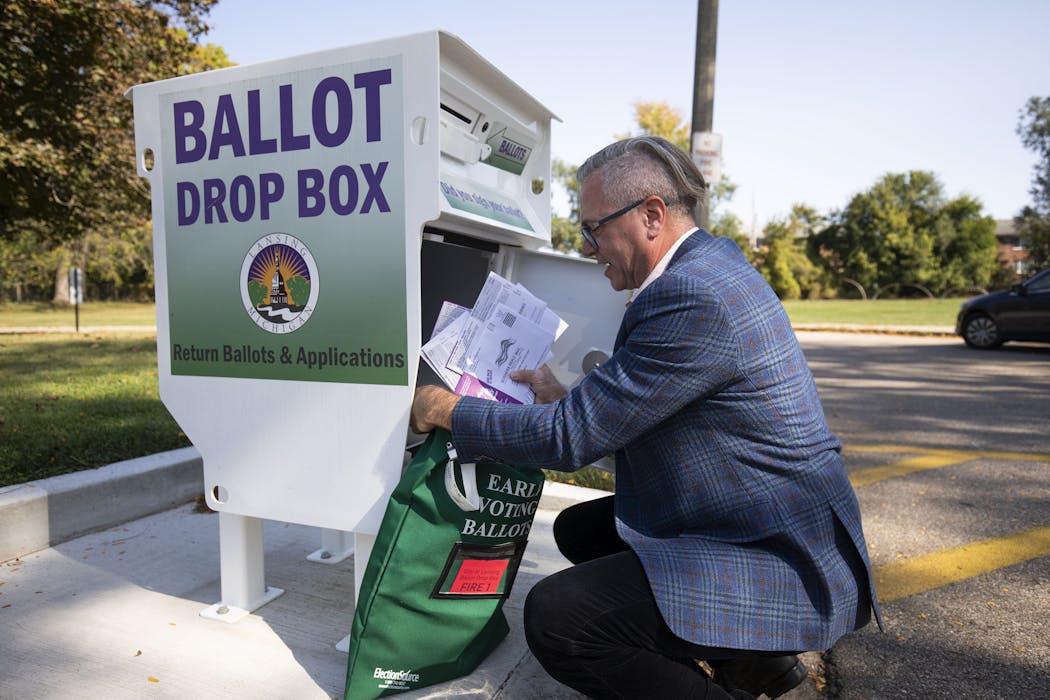
According to our recent survey of officials in Michigan communities, local democracy is humming along and city hall is taking care of business.
The federal government was shut down in October and November 2025, but cities and towns around the United States continued to fill potholes, purify drinking water, respond to emergency calls and issue construction permits, mostly with little fanfare.
But Michiganders should not take this local resilience for granted. Officials – especially in rural communities – are also raising some red flags about declining public engagement, deteriorating public discourse and harassment.
The view from city hall
At the University of Michigan’s Center for Local, State and Urban Policy, we have been surveying local officials in Michigan’s 1,856 cities, villages, counties and townships since 2009. About 70% of local governments in the state complete our survey each year, which means that our results reflect the opinions of everyone from township clerks in the Upper Peninsula to mayors of larger cities in the Metro Detroit area.
This Michigan Public Policy Survey has covered a wide variety of local issues over the years. One topic we track closely is how democracy is functioning in local communities.
While many public opinion surveys ask how Americans feel about democracy, very few examine the viewpoints of local officials whose job it is to carry out the daily work of democratic governance. For example, instead of asking whether people trust their government, we flip the question around and ask local officials whether they trust their residents to be responsible participants in policymaking.
Democracy at its grassroots is strong
To get a high-level understanding of local democratic health, we ask Michigan local officials to rate the overall functioning of democracy in their communities on a scale of 1 to 10, from total breakdown to perfectly functioning.
Statewide, 82% reported a score of 7 or higher when we surveyed them in the spring of 2025. This percentage has remained remarkably steady since we first began tracking it in 2020.
At the other end of the scale, only 2% of communities this year rated democracy poorly – 4 or below – falling from a high of 7% in 2024.
Small and rural communities are falling behind
While these high ratings are good news for local democracy in general, when we break down the results by whether communities consider themselves more urban or rural, we see some divergence. While 82% of communities overall reported relatively good democratic health this year, this reflects 92% of urban communities and 79% of rural communities.
We also see evidence of a growing urban/rural divide in resident engagement, an essential ingredient of democratic health. When we asked local officials how engaged their residents were with their local governments, 64% of urban communities said their residents were somewhat or very engaged, but only 41% of rural communities felt the same. In fact, 13% of rural communities said their residents are not engaged at all, compared with only 5% of urban communities.
Similarly, local officials in urban communities have higher levels of trust in their residents to be responsible participants in local policymaking – for example, by contributing ideas, volunteering or speaking with elected officials. In Michigan’s urban communities, 48% of local officials said they trust their residents nearly always or most of the time. However, only 38% of rural local officials had the same level of trust in their residents.
The big picture looks less rosy
While rural communities currently appear to be struggling more than urban communities to engage with their residents, looking over time, democratic participation is getting worse everywhere. For example, 18% of Michigan communities statewide reported this year that civic discourse among residents was somewhat or very divisive, up from 11% in 2012.
Between 2012 and today, despite their efforts to expand engagement opportunities, particularly online, local officials’ satisfaction with their residents’ level of engagement has plummeted from 58% in 2012 to 38% in 2025. Among the most common frustrations are that their efforts attract the same people over and over and that a small vocal minority of residents is negatively affecting overall engagement.
Even more troubling, about half of local officials who responded to the 2022 version of our survey have experienced some kind of personal harassment, with 39% reporting in-person harassment such as hostile or aggressive comments, 31% reporting online harassment and 3% reporting violent actions like assault or destruction of property.
Looking ahead
While only 17% of Americans currently trust the federal government to “do what is right” “just about always” or “most of the time,” according to a recent Pew survey, 65% of Americans still trust their local government. And as our survey results suggest, most local officials feel pretty confident that they’re being good stewards of local democracy, despite declining help and input from their residents.
To any Americans worried about the state of their democracy, may we suggest heading to the next meeting of the local planning commission? We hear there are sometimes even snacks.
Read more of our stories about Michigan.
Stephanie Leiser does not work for, consult, own shares in or receive funding from any company or organization that would benefit from this article, and has disclosed no relevant affiliations beyond their academic appointment.
Read These Next

Why the assault weapons debate is a culture debate
The Supreme Court’s decision to hear two assault weapons cases caps a multi-decade dispute over restricting…
What the law says about armed officers at polling places
What does the law say about armed officials at the polls? That’s one of four questions that a legal…
Meet the ‘independent voters’ who will likely decide which party triumphs in the 2026 midterm electi
Republicans and Democrats need to make inroads with independent voters. But the themes that motivate…