2026’s abortion battles will be fought more in courthouses and FDA offices than at the voting booth
Judges and federal regulators will make significant decisions over Americans’ reproductive rights.

In 2026, the biggest battles over abortion will not be at the polls.
There will be a few contested measures on state ballots. Next year, Nevada’s government will ask residents to approve constitutional protection for abortion rights for the second time, as required by state law. The same measure passed in 2024 with just over 64% of the vote.
Virginians will likely see a similar ballot initiative. In November 2025, voters there cemented a majority for Democrats in the state legislature, and the House of Delegates is expected to put forth an abortion rights ballot measure to voters in 2026.
Anti-abortion proponents in Missouri want to undo an amendment protecting abortion rights that voters passed in 2024. They’re advancing a new measure that could strip residents of the reproductive rights that are now constitutionally enshrined.
However, the most consequential questions about abortion in 2026 could be answered at the federal level, by the Trump administration or in the courts. As a scholar of reproductive health law, I’m watching how federal judges and agencies respond to conservative efforts to restrict or end people’s access to mailed abortion medication.
Medication abortion in the courts
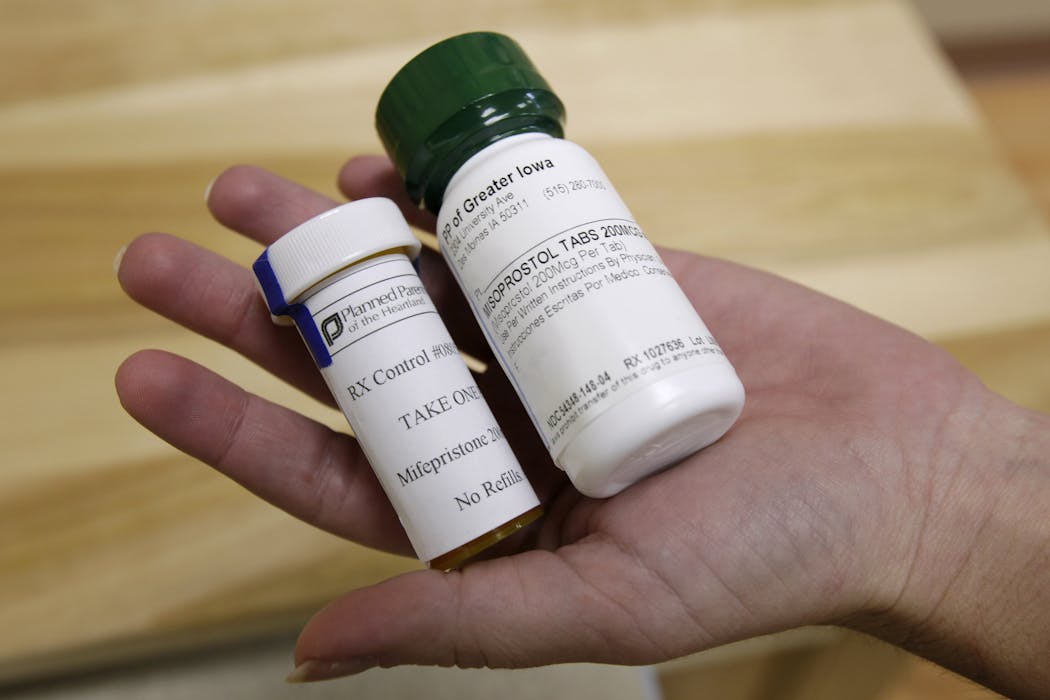
Over 25 years ago, the Food and Drug Administration approved mifepristone – one of two drugs commonly paired together to end a pregnancy. Since that time, medication abortion has been closely regulated by the FDA and is under attack.
In 2022, the Alliance for Hippocratic Medicine, a coalition of anti-abortion physicians, sued the FDA for approving mifepristone in 2000 and for each time the agency eased a restriction on mifepristone thereafter, in 2016 and 2021. The complaint argued that the FDA failed to consider evidence establishing the harm caused by medication abortion – claims roundly rejected by decades of rigorous, peer-reviewed research.
The Supreme Court in 2024 ruled that the Alliance for Hippocratic Medicine lacked standing to sue because FDA regulation of medication abortion caused no actual injury to the doctors it represented, who do not prescribe mifepristone or perform abortions.
Yet the case lives on in lower federal courts. There is ongoing litigation, and politicians are taking up the fight over mailed medication abortion.
Kansas, Missouri and Idaho intervened in the Alliance lawsuit in 2023, seeking to establish standing, and Louisiana sued the FDA in a separate case challenging the FDA’s regulation of mifepristone.
The pending actions focus on the FDA’s decision in 2021 to lift the requirement that patients pick up mifepristone in person, which has permitted patients to receive medication abortion by mail. These states claim this development is dangerous and threatens their right to enforce their abortion bans.
In October 2025, a federal court in Hawaii came to a different conclusion. The court concluded that because mifepristone is very safe, the FDA must reconsider whether the drug necessitates any restrictions at all.
The politics of medication abortion
The dispute over medication abortion is playing out in Washington, D.C., too.
In 2025, 51 Republican senators and 22 Republican attorneys general asked the FDA to reinstate the 2021 in-person restriction and upend the transit of abortion pills.
In response to Republicans’ push to restrict or withdraw the availanlity of mifepristone, 47 Democratic senators and 20 attorneys general issued letters supporting mifepristone’s safety. The letters questioned a pledge by Health and Human Services Secretary Robert F. Kennedy Jr. and his FDA chief to commence a “review” of the drug. The Democratic senators’ letter pressed the agency to remove all remaining restrictions on mifepristone.
In early December, Bloomberg reported that the FDA had quietly postponed its planned mifepristone “review” until after the 2026 midterm elections.
The battle over telehealth abortion care
Decades of research demonstrates that medication abortion is safe and effective. When commenced before 10 weeks’ gestation, the two-drug method is effective about 98% of the time. Complications, such as infection or hemorrhage, are rare; they occur in perhaps a fraction of a percent of all medication abortions.
Yet courts and legislators cannot agree on basic facts, in part due to widespread disinformation about abortion care, and anti-abortion forces have waged a concerted national campaign to stop mailed abortion pills.
Today, no part of the medication abortion process needs to be done in person: The patient, provider and pharmacy can all interact virtually.
Mailed medication abortion is popular nationwide, particularly in states with abortion bans. Because of mailed medication abortion, the average number of abortions nationwide has actually increased since the U.S. Supreme Court in 2022 overturned Roe v. Wade, reversing abortion protections under the U.S. Constitution.
Providers in so-called “shield” states are a key reason for this. Eight U.S. states have laws that shield providers from civil, criminal and professional consequences for delivering reproductive health care to out-of-state patients.
In these shield states, doctors may prescribe abortion medication no matter where the patient lives, so long as that care is delivered by a provider licensed and located in the shield state, complying with the shield state’s laws.
These laws are the subject of legal conflicts between anti-abortion states and shield states.
Late in 2024, Texas sued a doctor in New York, a shield state, for violating Texas abortion and licensure laws. In early 2025, Louisiana indicted the same New York physician.
Texas won its case in a Texas court and then asked New York to enforce the judgment of more than $100,000 in fines and fees. A New York court has refused to do so, citing its shield law. New York also rejected Louisiana’s request to extradite the doctor to stand trial for the same reason.
On Dec. 4, 2025, Texas officially enacted the first bill in the country that explicitly targets shield laws. Passed in September 2025, HB 7 allows private citizens to file lawsuits against a person or entity for attempting or intending to mail abortion pills into the state.
Watch the courts and the FDA
Having written about shield laws extensively, I believe these interstate conflicts will land, sooner or later, before the Supreme Court. Right now, state and federal courts are deciding the issues.
If judges determine that shield laws are unconstitutional or that the FDA acted illegally, courts could substantially alter people’s ability to gain access to medication abortion.
So could the FDA. If it reimposes an unnecessary restriction on mifepristone, meaning the drug would no longer be widely available through telehealth, that decision would curb how 1 in 4 women in the U.S. receive abortion care today.
But opinion polls indicate that the majority of Americans do not think abortion should be illegal in all circumstances, and they vote accordingly.
In November 2025, Democrats won significant elections, for example, in New Jersey, Virginia and Pennsylvania. Abortion was absent from ballots in these states this year, but these races still held significance for abortion rights.
The election of a pro-choice governor and legislature in Virginia, for example, all but guarantees that abortion will continue to be legal in the last Southern state to protect broader abortion rights. Likewise, Pennsylvanians opted to keep the state supreme court’s liberal majority, which struck down the state prohibition on Medicaid payment for abortion.
In 2024, two years after the fall of Roe v. Wade, 14 states put forth ballot initiatives to enshrine abortion as a constitutional right. Eleven passed.
With little political support to pass a nationwide abortion ban, making it illegal to mail abortion pills is the most immediate way to obstruct reproductive health care in states with abortion bans.
The question for abortion in 2026, then, is: Will courts or federal forces do what democratic processes cannot?
This story was published in collaboration with Rewire News Group, a nonprofit newsroom dedicated to covering reproductive and sexual health.
Rachel Rebouché does not work for, consult, own shares in or receive funding from any company or organization that would benefit from this article, and has disclosed no relevant affiliations beyond their academic appointment.
Read These Next

Why the assault weapons debate is a culture debate
The Supreme Court’s decision to hear two assault weapons cases caps a multi-decade dispute over restricting…
What the law says about armed officers at polling places
What does the law say about armed officials at the polls? That’s one of four questions that a legal…

Meet the ‘independent voters’ who will likely decide which party triumphs in the 2026 midterm electi
Republicans and Democrats need to make inroads with independent voters. But the themes that motivate…