Separating the measles, mumps and rubella vaccine could decrease access for Colorado parents
Parents concerned about vaccine overload may not get the outcome they expect from Trump’s recent vaccine executive order.

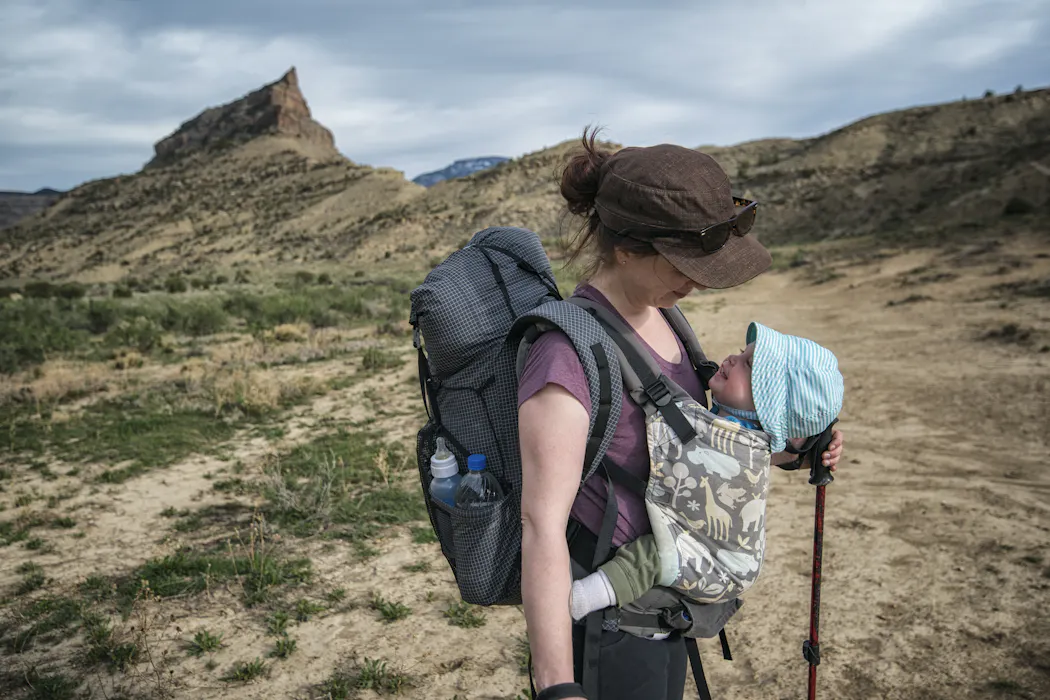
Some parents in Colorado are uncertain about the safety and necessity of vaccines given to their children. They also question how the vaccines are timed.
I am a sociologist who has spent nearly two decades studying how parents make vaccine decisions for themselves and their families.
I have interviewed dozens of Colorado parents, as well as pediatricians, researchers and policymakers, and observed vaccine clinics, educational events for parents and providers, and meetings of groups that distrust vaccines. I have delved into the complex and often contradictory information parents get from online discussions, media coverage and official documents.
Rather than objecting to all vaccines in all circumstances, parents in Colorado have told me they value independence. They feel they know their children better than physicians or the experts who create vaccine schedules. They insist their decisions reflect the unique needs of their own child, leading them to space vaccines or opt out of the ones they don’t feel comfortable with.
President Donald Trump seemed to have these kind of parents in mind when he signed an Aug. 10, 2026, executive order on vaccines, which includes a call for the components of the combined measles, mumps and rubella vaccine, commonly known as the MMR vaccine, to be given separately rather in combination.
While it sounds as if the executive order offers more flexibility, it may actually make it harder for parents to exercise choice and customize vaccines.
Limits of executive orders
At the signing, Trump made the unsubstantiated claim that MMR vaccines given in combination could be “quite lethal.” He said giving children each component of the vaccine separately would be “not at all lethal but just very effective.”
The executive order offers a symbolic gesture, not an implementable policy. But it speaks to parents’ long-standing fears about vaccines, even though the idea that giving vaccines one at a time is safer lacks a strong scientific basis.
The CDC recommends children get one dose of MMR at 12-15 months of age and a second dose at age 4-6 years. Seeing the value of fewer injections, the trivalent MMR vaccine has been given in combination since 1971 and became the only option around 2008. The MMR has a long safety record, with some evidence the combination may even yield a stronger immune response.
No published scientific evidence shows any benefit in separating the combination MMR vaccine into three individual shots, according to the CDC.
‘Calling the shots’
During research for my book “Calling the Shots: Why Parents Reject Vaccines” almost a decade ago, I heard parents’ concerns that children were given too many vaccines. Parents feared vaccines could overwhelm their children’s immune system or increase risk of complications. Many didn’t see all vaccines as equally important for every child.
This view was common. Prior to the COVID-19 pandemic, between 20% and 25% of U.S. parents chose alternative or slow schedules or rejected some vaccines outright.
Colorado state law allows parents to opt out of vaccines that are required for school attendance. Since the pandemic, the number of parents filing exemptions has increased, with Colorado’s rate remaining higher than the national average. During the 2025-26 school year, about 87.7% of kindergartners in Colorado had received both measles shots, giving Colorado the sixth-lowest rate in the country. This is far below the threshold to achieve community-wide immunity against measles, which is 95%.
A slower vaccine schedule might sound cautious. Taking it slow – whether in cars or relationships – generally feels safer.
One mother in my study explained her strategy. She accepted vaccines against the diseases she “felt were the most serious and also the ones that had the best track record of (not causing a) reaction.” But she put off vaccines against diseases that she didn’t feel her child “had a high likelihood of catching.”
Parents like this mother, whose name I withheld to protect her privacy, are not actually “anti-vax” or opposed to all vaccines, even as they express a desire to exercise caution.
In my research, I find that parents in general – and mothers in particular – shoulder a huge burden of making dozens of choices about health, food, education and care for their families. Vaccines increasingly feel like a high-stakes decision – but with increasingly confusing and contradictory public health information.

More vaccination choices – but little availability
What makes sense to parents in theory can run into some real-world complications. Parents who decide they want to customize a vaccine schedule for their child are often unable to do so because of manufacturing and distribution limitations.
On one side of the process, there has been no manufacturing of separate shots against measles, mumps and rubella in the U.S. since 2008.
Changing availability from one combined MMR to three individual vaccines would require manufacturers to reinvent the vaccine supply chain. The MMR has been licensed for decades and is not patented. As a result, the two remaining MMR manufacturers, Merck and GSK, have few incentives to spend millions of dollars and up to a decade to make this change.
There are already shortages of many medications, so it is hard to imagine this would be a priority.
Harder for doctors and parents
On the other side of the process, pediatricians already find the cost of supplying and administering vaccines to be a challenge. Having to estimate demand, preorder vaccines, insure shipments, and have appropriate storage for the shots has made vaccination a significant investment and hassle for many practices.

Some are already rethinking it. One national study found that 36% of pediatricians had considered stopping or already had stopped stocking vaccines. Those who still do may find themselves unable to purchase and provide vaccines in multiple forms or store three times the number of vials. This could lead more physicians to stop offering vaccines, limiting options, and restricting, not expanding, choice. Some families may be able to find vaccines at county health clinics. Others may be left without options.
Pharmacists play an important role in expanding access, but they cannot, under federal law, administer vaccines to anyone younger than 3 years old, when vaccines are often most important.
Many families could find themselves unable to access vaccines they want, particularly during outbreaks of the infectious diseases they most want to avoid.
On-the-ground reality check
In August 2026, following the executive order, Republican U.S. Sen. Bill Cassidy of Louisiana made the case that “instead of the child getting two shots, they’re getting six. Instead of Mom and Dad missing work twice to bring the child to the doctor, they’re missing six times. And instead of the insurance company paying for two visits, they’re paying for six.”
Research shows that in rural Colorado, distance, lack of evening or weekend appointments, and high provider turnover create barriers to vaccination. Counties on the Eastern Plains – Kit Carson, Cheyenne, Lincoln and Elbert – and many mountain communities already have a measurable shortage of primary care providers. For the 13% of Coloradans who live in rural communities, managing to get a primary care appointment can take longer than it does in urban areas and often requires travel.
The Colorado Rural Health Center estimates that the average overall cost to rural patients traveling outside their community to access healthcare with a provider is US$718 per trip, which includes an average of $235 in lost wages. Expecting six appointments instead of the two recommended to complete the MMR series could increase the chance that some children would miss vaccines and not be fully protected.
Healthcare costs are already a barrier. Recent data suggest that almost half of U.S. adults say it is difficult to afford healthcare.
Trump’s August executive order does little to help families in Colorado that are struggling to make healthcare decisions for their families. Although it promises greater safety, it does not offer data, evidence or even access in ways that will improve children’s health or families’ lives. And the confusion that is emerging is doing little to alleviate parents’ anxiety about the existing vaccine schedule.
Nothing to disclose.
Read These Next

From jargon to impact: Teaching undergraduates the art of public communication
Teaching public storytelling to students can help them communicate better in the world.

These state supreme court races could decide abortion access and trans rights
Ohio, North Carolina and Michigan have open seats on their state supreme court, and these hotly contested…

Why your boss matters more than remote or hybrid work when it comes to burnout and job satisfaction
A return to the office can mean very different things to different workers, which is why this debate…