Supreme Court preserves access to mifepristone via telehealth – at least for now
The court’s decision sends the mifepristone case back to a lower court, which has signaled that it will continue its challenge to the legality of mailing the abortion pill.

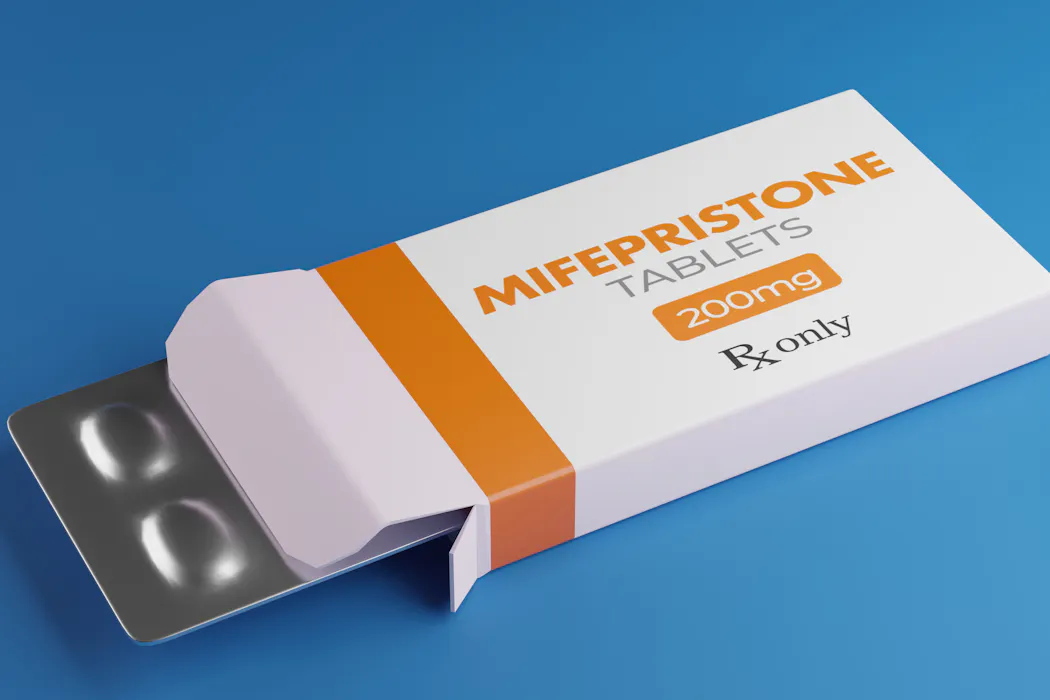
The U.S. Supreme Court has decided that patients can continue to get mifepristone, one of the two drugs used for medication abortion, via telehealth and by mail. At least for now.
A lower court had temporarily blocked this access nationwide in early May 2026. The case now returns to that lower court, although it may well make it back to the Supreme Court in the future.
Since 2023, almost two-thirds of abortions in the United States have involved mifepristone, and since late 2024 one-quarter of all abortions occur through abortion pills provided via telehealth.
As scholars who study laws affecting reproductive health, we believe the outcome of this case will have an enormous impact on access to abortion care across the country.
In states with abortion bans, telehealth prescriptions have allowed women to get abortions anyway. But the case is also significant to those in states without abortion bans, especially women with low incomes and disabilities or who live in rural areas, where reproductive services are extremely limited.
How did the case get to this point?
The case began in October 2025, when Louisiana argued that the Biden administration’s allowance of telehealth abortions was for “avowedly political reasons.” The state asserted that the U.S. Food and Drug Administration had insufficient evidence to remove the requirement that the drug be dispensed in person, which had been in place from 2000 through 2021.
The state also argued that mailing mifepristone violated an 1873 federal law known as the Comstock Act. This law, which makes it a crime to mail or ship any “lewd, lascivious, indecent, filthy or vile article” and anything that “is advertised or described in a manner … for producing abortion,” has rarely been enforced.
The lower court thought Louisiana would likely win, but it decided to keep the FDA regulations in place while the case made its way through the courts. On May 1, 2026, however, the appellate court suspended the FDA regulation allowing mifepristone to be prescribed via telehealth.
As a result, mifepristone could no longer be mailed or prescribed via telehealth, nationwide. Three days later, on May 4, after the manufacturers of mifepristone appealed, the Supreme Court put the 5th U.S. Circuit Court of Appeals’ decision on hold for a week to give it more time to consider the legal issues. On May 11, it extended the stay for a few more days.
What does the SCOTUS decision mean for mifepristone access?
On May 14, the Supreme Court decided to leave the FDA’s regulation in effect, so mifepristone remains available for prescription via telehealth. Justices Samuel Alito and Clarence Thomas dissented, with Alito accusing the court of “perpetrat[ing] a scheme to undermine” the court’s decision in the 2022 Dobbs ruling that overturned the constitutional right to an abortion and allowed states to ban it. Thomas added his view that the Comstock Act makes it a criminal offense to mail mifepristone.
The case now returns to the 5th Circuit, which has signaled how it is likely to rule on this question. Namely, that it believes the FDA has exceeded its authority in allowing the drug to be prescribed via telehealth. Once the case has been resolved in the lower courts, it could end up before the Supreme Court again. If the court decides to strike down the rule, or if the FDA rescinds it, then women in all states would no longer be able to get the pills by mail, not just in the 13 total-ban states.
Why has mifepristone become so contested?
In 2000, the FDA approved mifepristone specifically to end pregnancies. In combination with telehealth, it allows for abortion to occur outside of a doctor’s office. Accordingly, anti-abortion groups have attempted to discredit mifepristone’s safety and effectiveness for decades, even though mifepristone has been shown to be as safe as ibuprofen and safer than Viagra.
Mifepristone first became available in France in 1998. In 2000, the FDA approved mifepristone in the U.S. after evaluating rigorous studies that showed it to be safe and effective.
Initially, the FDA required the drug to be prescribed and taken at a doctor’s office. But after further review of research on the drug’s safety under the Biden administration, the agency changed some of the prescribing regulations, making it easier to access the drug.
One change made permanent in 2023 was to allow mifepristone to be prescribed via telehealth and mailed. That is the regulation at issue in the Louisiana case.
But after the 2022 Dobbs ruling, mifepristone became even more of a target. Anti-abortion groups realized that people could effectively evade abortion bans by receiving abortion pills through the mail. After Dobbs, in fact, the number of abortions increased, and by June 2025 telehealth abortions had increased fivefold, with more than half of them occurring in abortion-ban states.
The attempts to challenge mifepristone first reached the Supreme Court in 2024, when anti-abortion physicians and groups challenged the FDA’s approval of mifepristone and changes in its prescribing regulations that made it easier to access the pill.
The Supreme Court ultimately dismissed the case on the grounds that the challengers did not have legal standing to bring the claim. Legal standing requires the parties to show they suffered concrete harms or injuries.
Since then several states, including Louisiana, have brought lawsuits with the same kinds of challenges to the FDA’s authority. The Louisiana case is the first to reach the Supreme Court. It is also the first state to reclassify mifepristone as a dangerous controlled substance.
Is this likely to happen with the other abortion pill?
The legal challenges so far have been only to mifepristone, one of the two pills used for medication abortion.
Unlike mifepristone, which is approved only for abortion, misoprostol was approved in 1988 for a different purpose: to treat gastric ulcers.
Misoprostol is prescribed for abortion “off-label,” which means it is an unapproved use of an FDA-approved drug that a healthcare provider determined is medically appropriate for their patient.
In fact, 1 in 5 prescriptions is for off-label use of a drug.
While some studies suggest that using misoprostol alone for an abortion is slightly less effective than taking both pills together, many researchers express confidence in the misoprostol-only option.
And the court’s ruling does not affect access to “Plan B,” a pill that prevents pregnancy and thus is used as birth control, not to induce an abortion.
The Supreme Court’s action is certainly not the end of the story. Challenges to abortion pills will continue, particularly because the leaders of many states believe the availability of these pills prevents them from enforcing their abortion bans.
The authors do not work for, consult, own shares in or receive funding from any company or organization that would benefit from this article, and have disclosed no relevant affiliations beyond their academic appointment.
Read These Next
I’ve been studying election integrity for 26 years, and here’s why I expect a normal election this N
Mayhem at the polls on Election Day 2026? Americans are worried. But a scholar of election law who has…

More rehab centers should mean fewer overdoses. In one California region, we found the opposite
When people travel out of state for addiction treatment, overdose risk is greater than many realize.

Why the Paramount-Warner merger is a problem for democracy
The Paramount merger may make good business sense, but research shows putting more media power in fewer…