FDA rejects Moderna’s mRNA flu vaccine application - for reasons with no basis in the law
The move signals an escalation in the agency’s efforts to interfere with established procedures for testing and approving vaccines.


The Food and Drug Administration has refused to review an application from the biotech company Moderna to approve its mRNA-based flu vaccine.
The agency’s decision, which Moderna announced in a press release on Feb. 10, 2026, is the latest step in efforts by federal health officials under Health and Human Services Secretary Robert F. Kennedy Jr. to disrupt longstanding public health practices relating to vaccine access and approval, as well as to reshape the public’s perception of vaccine safety.
Vaccines based on mRNA came to the forefront in the early days of the COVID-19 pandemic, but researchers are now using the technology to create other vaccines, as well as treatments for diseases such as cancer and autoimmune disorders. The Nobel Prize-winning technology may be especially promising for flu because vaccines can be developed rapidly each season to match mutating influenza strains.
However, Kennedy and other federal health officials, including at the FDA, have expressed particular skepticism toward mRNA-based vaccines, raising safety concerns while providing no credible data on their health risks, and defunding research on their development.
The Conversation asked Ana Santos Rutschman, a Villanova University law professor and vaccine policy expert, to explain the significance of the FDA’s decision and how it fits into the rapidly changing landscape of public health policy.
What exactly did the FDA do, and why is it unusual?
In December 2025, Moderna submitted an application to the FDA to approve an mRNA flu vaccine for adults age 50 and older. The vaccine had been tested in clinical trials including more than 40,000 people. In response to the application, the agency sent Moderna a “refusal-to-file” letter, dated Feb. 3, 2026. This is a type of notice the regulator sends to companies when it deems a new drug or vaccine’s application to be incomplete.
Because companies developing new products meet with the FDA early in the process to agree on requirements for approval, it’s rare for the agency to take this action. What’s more, there have been very few occasions in which the FDA has diverged significantly from other major drug regulators around the world. But in this case, drug regulators in Canada, Europe and Australia accepted Moderna’s application for review.
Especially concerning is that several FDA scientists and other staff have confirmed that they expected to review Moderna’s application. The director of the FDA’s Office of Vaccines Research and Review, David Kaslow, wrote a memo recommending it be reviewed. But Vinay Prasad, who directs the center that oversees the vaccine research office, overruled the decision.
Directors rarely overrule agency scientists, especially regarding vaccines. But this is at least the fourth time Prasad has done so since being appointed to the FDA in 2025.
What reasons did the FDA give for its decision?
Moderna took the unusual step of announcing the FDA’s refusal and releasing the agency’s letter. The letter states that Moderna did not conduct an “adequate and well-controlled” study because it had not compared patients receiving its vaccine to patients receiving what the agency claimed to be “the best-available standard of care.”

In the U.S., standard-dose flu vaccines are approved for everyone over 6 months of age, but health authorities recommend that adults over 65 receive a more potent dose. Moderna’s announcement quoted the language the FDA used when approving the company’s clinical trial protocol in 2024. The agency had originally suggested that for people age 65 and older, the company compare the efficacy of its vaccine to the more potent dose. But after reviewing Moderna’s protocol, the FDA deemed the standard vaccine “acceptable.”
Besides the fact that the FDA agreed to the trials Moderna conducted, I believe the agency’s claim that the company didn’t use “the best-available standard of care” is problematic because it does not reflect the legal requirements for vaccine approval. Although this phrase sounds official, it is nowhere to be found in FDA law or guidance for companies developing vaccines.
Instead, FDA law requires a company to provide data from “adequate and well controlled studies” and using standard dose flu vaccines aligns with the requirement because they are widely used across age groups.
Shortly after Moderna announced the refusal, the health news outlet STAT quoted an unnamed FDA official stating that if Moderna were to “show some humility,” the agency might still review the application, but only for people under 65. Imposing this restriction after refusing to review the application has no basis in the law because FDA approves clinical trial parameters early on, in consultation with companies.
From a legal perspective, the FDA’s decision could potentially meet what’s called the “arbitrary and capricious” standard, because the agency seems to have altered its position without a valid reason for that change. If a court makes such a determination, it could invalidate the FDA’s decision. That process, however, would take time.
Does the FDA’s decision reflect a change in vaccine policy?
This is the first time that the FDA has tried to preclude the review of a vaccine for reasons that do not have to do with safety or efficacy. The move, which ties into a broader strategy by federal health officials under Kennedy, signals an escalation in the agency’s efforts to intervene in established procedures for testing vaccines.
In April 2025, Kennedy announced that new vaccines would require additional clinical trials. In November 2025, Prasad released an internal FDA memo claiming that mRNA-based COVID-19 vaccines had killed children. Although he provided no evidence, he said that in response to the alleged deaths, large-scale changes to requirements for vaccine approval were coming.
The FDA’s refusal of Moderna’s application appears to be Prasad’s policy in action.
What might this mean for vaccines going forward?
On a practical level, the fact that the FDA is now articulating requirements that are nowhere to be found in the law creates major uncertainty for companies with pending or upcoming vaccine applications. That’s because manufacturers now have reason to worry that they might invest resources in the lengthy process of developing a vaccine, only to receive similarly unpredictable refusals.
More broadly, with so many areas in vaccine law and policy in turmoil, incentives for vaccine manufacturers to bring vaccines to market are shrinking. In January 2026, even before the flu vaccine refusal, Moderna’s chief executive officer said the company was scaling back on vaccine development .
Finally, the FDA’s move risks fueling further mistrust in vaccines, aligning with a wider push from federal health officials to question long-settled science.
Ana Santos Rutschman does not work for, consult, own shares in or receive funding from any company or organization that would benefit from this article, and has disclosed no relevant affiliations beyond their academic appointment.
Read These Next

More rehab centers should mean fewer overdoses. In one California region, we found the opposite
When people travel out of state for addiction treatment, overdose risk is greater than many realize.

Today’s irreverent politics ignore ancient wisdom: The need to know your limits
Many Americans have decried today’s politics as ‘shameless.’ The antidote, a political philosopher…
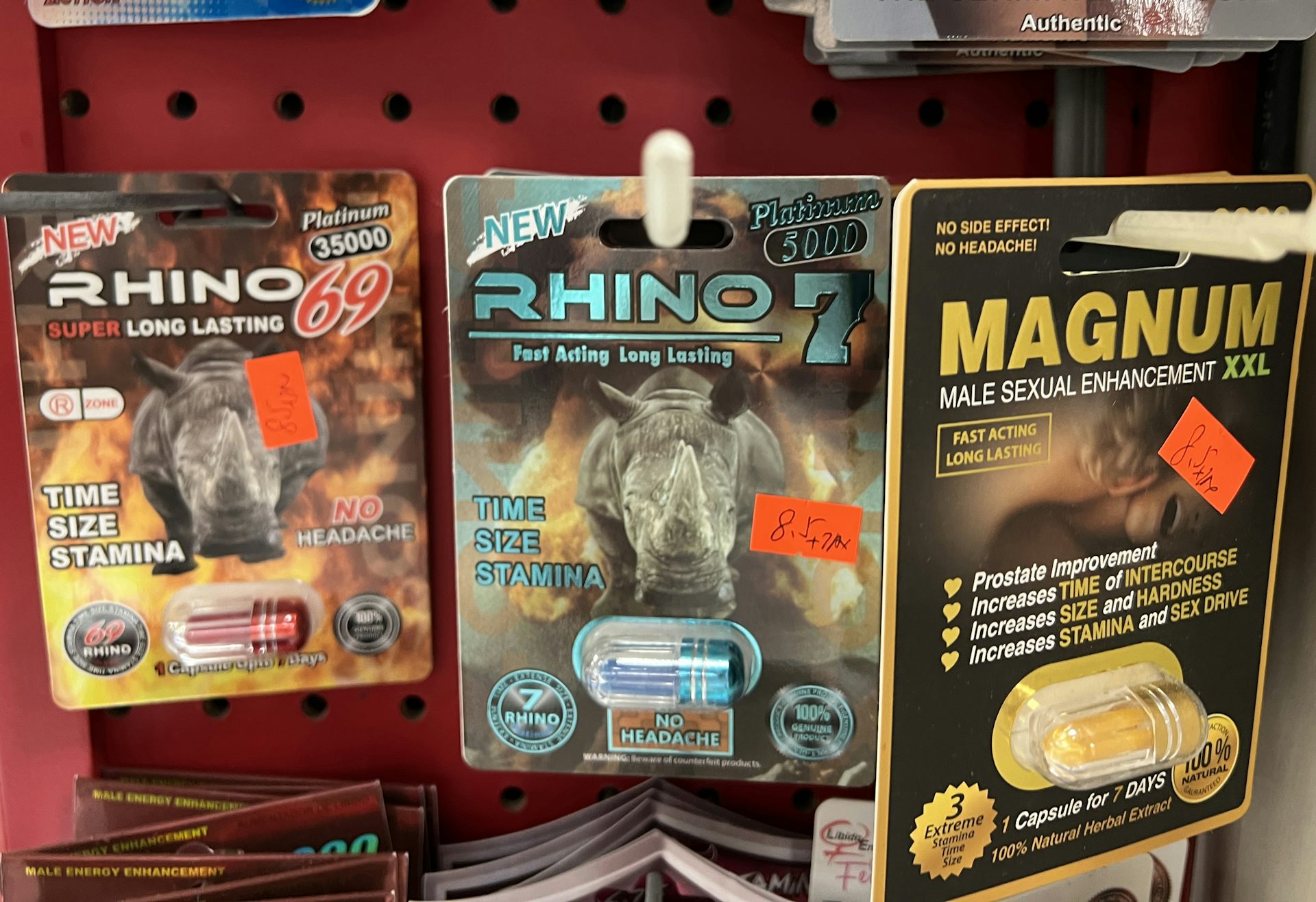
That brightly packaged sexual enhancement pill at the gas station might be laced with dangerous drug
Sexual enhancement supplements often contain unlisted prescription drugs that pose serious health risks.