
Wearing a weighted vest can promote bone health and weight loss, but it’s not a cure-all
Are weighted vests more than a fitness fad? A health and exercise expert explains their potential benefits and limitations.

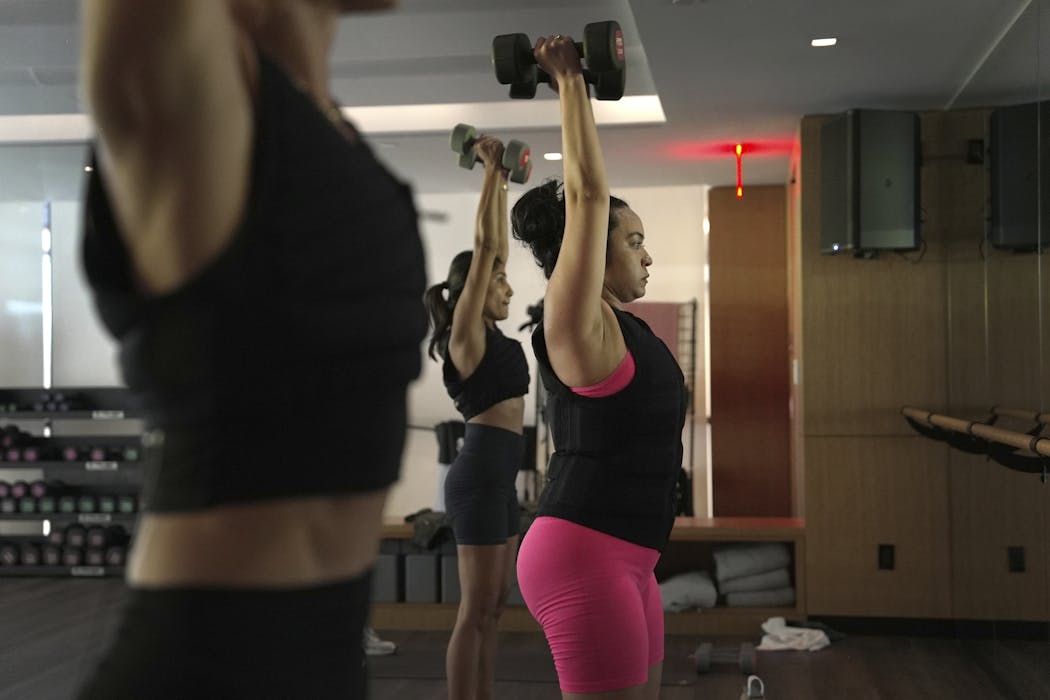
Health and fitness trends come and go, and many fads don’t deliver on their promises – remember vibrating belts or sauna suits? Today, weighted vests, made from sturdy fabrics like nylon and filled with iron sand or small weights, are gaining widespread use. Here’s what to know about them:
Weighted vests have been around for centuries, but they have recently surged in popularity in response to a broader shift in thinking about exercise. No longer confined to the gym, physical activity is increasingly about maximizing health benefits of the movements people already do — things like walking, climbing stairs or cleaning their homes.
Weighted vests fit squarely into this philosophy. They offer a simple, manageable way to add resistance to everyday activities. And they don’t require additional time, complex equipment or major changes to established routines.
I study health and exercise science and have analyzed the effects of exercising with weighted vests. In my view, they represent a low-tech, high-impact opportunity to sneak resistance training into everyday activities. Research has shown that adding weight can help with building muscle and bone, as well as losing weight and keeping it off.
As with any tool, however, the results depends on how you use it.
The physiology behind the practice
The human body has great capacity to adapt to environmental stress. Weighted vests add mechanical stress, or load, to the body, requiring muscles and bones to withstand more force than usual.
Many parts of the body respond to this challenge. The brain learns to “recruit,” or activate, muscle fibers more effectively. This can help prevent injury and increase strength and performance.
Reacting to greater stress can improve muscle power and agility, which are vital for preventing injuries. Carrying a heavier load also makes your heart work harder, which improves cardiac health.
Finally, people need strong balance and proprioception, or body awareness, to protect joints and avoid falls and fractures, especially as they age. Evidence suggests that weighted vests can improve these capabilities.

Several lines of research – especially in aging, obesity and mobility science – have found that weighted vests provide meaningful benefits. They include:
Improved muscle function: In one study from 2002, older people who wore a vest during a 12-week stair-climbing exercise program showed greater muscle power and performance in their legs.
Potential for bone health benefits: A 1993 study showed that bone density modestly increased in older women wearing a weighted vest during a weekly low-level exercise class. A 2003 study in which subjects wore weighted vests during 32 weeks of walking and strength training found significant improvement in hip bone density.
Metabolic improvements: In a 2025 study, my research group found that older adults who wore weighted vests for 10 hours per day while dieting ended up regaining less weight in the following year than older adults who dieted without wearing a weighted vest. These findings seem to be driven by metabolic improvements associated with weighted vest use.
Mixed benefits for bone health
Weighted vests are not a panacea, and there are limits to what wearing one can accomplish. My research, including a recently completed randomized clinical trial called INVEST in Bone Health, has sought to answer whether weighted vests can protect bone health during weight loss in older adults.
As we lose weight, we also tend to lose bone – a particular concern for older adults whose bones are already more fragile. Bone loss can increase the risk of fractures, threatening independence, mobility and overall quality of life.
In the INVEST in Bone Health study, we enrolled 150 older adults with obesity whose average age was 66. Of the group, 75% were women. We assigned them to three groups for a 12-month weight loss program that included meal replacement products and behavioral counseling.
The first group focused on weight loss alone. The second group engaged in the same weight loss program and also wore adjustable weighted vests for eight hours a day, with weight added to match the weight they lost, so that their bodies carried a constant load. The third group took part in weight loss activities and in supervised exercise using weight training machines.
After 12 months, we found that all participants had lost about 10% of their body weight, which was a positive outcome. However, they also had experienced significant declines in hip bone density, ranging between 1.2% and 1.9%. Wearing a weighted vest did not prevent bone loss at the hip compared with weight loss alone. Neither did resistance training.
Both the weighted-vest and resistance-training groups did show increased markers of bone formation compared with weight loss alone. In other words, weighted vest use and resistance exercise showed some evidence of bone growth, which may translate into skeletal benefits over time.
In addition, we recently presented findings at a national aging conference suggesting that weighted vests are more likely to benefit bone health in women than in men, which may be due to sex differences in bone sensitivity. We also found evidence that standing more while wearing the vests positively influences bone health. These findings reflect a growing understanding that weighted vests work more effectively in some people and situations than others.
Getting started
In adopting any new weight-bearing activity, it’s important to “start low and go slow” to avoid injury. Consult with your doctor, especially if you are new to exercise.
For continuous gains, you will need to progressively increase the amount of exercise that you do. In our clinical trials, we add a weight equal to one-eighth of an ounce for every eighth of an ounce a participant loses, to keep the muscles and bones under a consistent load.
Weighted vests are not one-size-fits-all, despite what the tag may say. Vests should not interfere with posture, breathing or your stride. Red flags include hunching, a clipped walking stride and, most importantly, low back pain or hyperextension.
Above all, listen to your body. If you start experiencing pain while wearing a weighted vest, take it off and consider seeing a clinician or physical therapist for guidance.
Kristen Marie Beavers receives funding from the NIH and serves in an advisory capacity for Novo Nordisk, Haleon, and Radius Health.
Read These Next

More rehab centers should mean fewer overdoses. In one California region, we found the opposite
When people travel out of state for addiction treatment, overdose risk is greater than many realize.

Americans are stressed about grocery prices, so why do they toss or overlook so much ‘misfit’ food?
Quality, rather than discounts or environmental benefits, is what’s needed to encourage shoppers to…

Across the US, people don’t want data centers coming to their communities
Opposition to data centers is widespread across the US, uniting people despite other differences on…