Buying a gift for a loved one with cancer? Here’s why you should skip the fuzzy socks and give them
Gifts that make a true connection acknowledge the ugly parts of illness and provide relief from daily burdens.

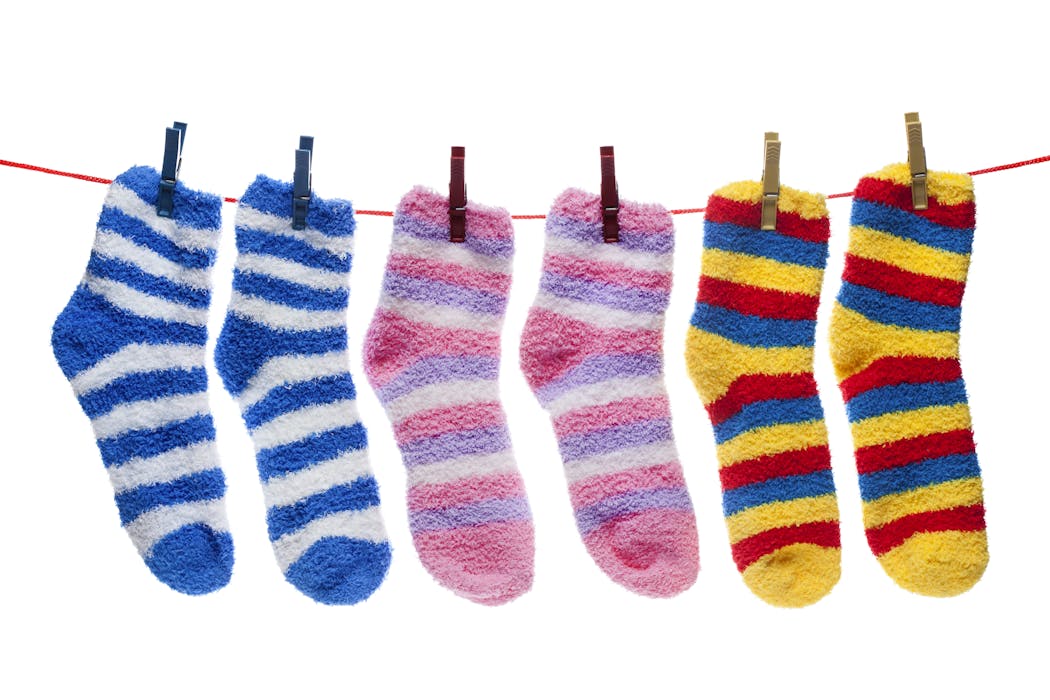
The season of gifting is in full swing – a time when people scour the internet and shops of all kinds for items that appropriately symbolize their relationships with their loved ones.
Gift givers hope that their gift will appropriately communicate their feelings and bring the recipient joy. But that’s not always the reality. Gifts can be tricky and rife with hidden hazards. Relationships can even be ruined when the mismatch between the giver’s intention and the recipient’s perceptions of it is too vast.
The circumstances of the people involved also shape a gift’s meaning and the way it might be interpreted.
My research partner, Nathalie Rita, and I have been seeking to better understand gifting in one of life’s most dicey, distressing circumstances: cancer.
As sociologists, we use techniques such as in-depth interviews to study the experiences, feelings and motivations of specific groups of people. I focus on restaurant workers and my colleague on migrants and minorities. But in 2021, we were both diagnosed with cancer in our early 30s – breast cancer for me and endometrial cancer for her. This encouraged us to explore the experiences of other young women dealing with cancer.
By 2023, we had interviewed 50 millennial women diagnosed with cancer about a plethora of social and emotional topics related to their illness. Our own bouts with cancer revealed curious patterns in the gifts we very gratefully received from family and friends. So, we included a few questions about gifts in our research.
We expected some eccentric anecdotes similar to our own experiences. But our research, which isn’t yet published, revealed just how much of a mismatch there is between what people wanted and what they received – often driven by the marketing of specific gifts or care packages for cancer patients.
What loved ones give
One of our first questions was, what exactly do women diagnosed with cancer receive from their loved ones? Their answers ran the gamut. Our interviewees reported hundreds of gifts, from stuffed possums to child care help to Vitamix blenders. Friends and family were very eager to shower them in goods.
But from these hundreds of items and acts, 10 popped up over and over again. In order of frequency, they were:
- Fuzzy socks.
- Food and drinks, particularly herbal teas, groceries, gourmet goodies and Meal Trains.
- Money, GoFundMe donations and gift cards.
- Blankets.
- Fancy, spa-style self-care items.
- Written thoughts and prayers.
- Flowers and plants.
- Mugs, tumblers and bottles.
- Adult coloring books.
- Books.
The women we spoke with largely understood and appreciated the intentions behind these items in the context of their illness: books to distract, flowers to beautify. They viewed the gifts as material proof that their loved ones wanted to deliver comfort and support in a time of discomfort and helplessness.
But the frequency of certain items perplexed us. Why socks and coloring books instead of, say, Rollerblades and bongs?
The long shadow of online commerce and gift guides
We traced these gifting trends to two sources: premade cancer care packages and online gift guides.
Numerous women reported receiving some of the items from our top 10 list in premade care packages sourced from Etsy, Amazon or cancer-specific companies such as Rock the Treatment and The Balm Box. They noted that the contents of these packages felt predictable: spa-style self-care goods such as aromatherapy oils, lip balms and soy candles; herbal teas; a mug with a slogan or ribbon; and hard candies or throat lozenges.
Some received more opulent care packages, similar to Rock the Treatment’s large chemo care package for women, which adds adult coloring books, protein-rich snacks, a beanie and fuzzy socks. These additions mirror our interviewees’ top 10 received gifts even more closely.
Online gift guides published by magazines, news sites and stores may be influencing gifters’ behaviors, too. A Google search for “gift guide” yields countless lists for niche demographics – chicken lovers, mathematicians, even people who are always cold. Online viewership of these lists is prolific. For example, New York Magazine’s product recommendation site, The Strategist, received 10.7 million monthly views in 2021.
The top seven Google-ranked gift guides for cancer patients also contain suggestions that align almost perfectly with what our interviewees reported, with the addition of clothing and jewelry emblazoned with inspirational declarations such as “I’m stronger than cancer!”
These overlaps reflect the broader phenomena of the commodification and commercialization of cancer. As businesses seek to extract economic value out of all aspects of daily life, cancer has become a lucrative business opportunity and patients a source of profit.
Our research suggests that these market forces warp how gift givers perceive people with cancer and their desires. In turning cancer into something profitable, the ugly parts of illness are also glossed over to make cancer palatable to the market. Businesses then sell would-be gifters the idea that cancer can be assuaged by purchasing and giving a bejeweled, teal-ribboned Stanley tumbler.
Additionally, while premade care packages ease the labor of decision-making for gifters, they run a greater risk of disappointing recipients. These generic boxes, we found, can communicate a degree of thoughtlessness at a time when our study participants were aching for thoughtfulness.

What to actually gift
So, what do women going through cancer treatment actually want to receive? Our interviewees recommended:
- Money in the form of cash or useful gift cards, such as for Door Dash, grocery stores and Petco.
- Meals and groceries, particularly if the recipient is a parent with mouths to feed.
- Help with errands and tasks such as babysitting, transportation, cleaning and lawn care.
- Cards and personal messages of love, which serve as check-ins and gestures of care and support.
- Practical self-care items such as thick lotions, face masks and soft soaps that don’t irritate skin.
Pragmatic. Simple. Even a little mundane.
There is some overlap between these recommendations and the frequently received gifts mentioned earlier. But notably, almost none of the women we interviewed expressed a desire for the nonessential items usually stocked in commercial care packages or those associated with profiting from cancer.
Instead, the gifts they felt touched them more deeply were ones that addressed ways in which they felt the disease incapacitated their abilities as a worker, woman, mother or caregiver.
Our interviewees spoke of financial strain from medical bills, fatigue preventing them from mothering in ways they used to, and mounting burdens that made it almost impossible to be present for partners or spouses. A monstera plant in a whimsical vase offered little reprieve from these pressures. However, a chat while folding laundry or a Pyrex of enchiladas did.
Perhaps most importantly, such offerings made them feel cared for and seen – their unvarnished circumstances recognized.
So, if a friend with cancer – or any other serious illness, for that matter – is on your list this holiday season, consider hanging those fuzzy socks back on the rack.
Instead, mull over their daily stresses, and choose an item – or a task – that provides a bit of relief.
Ellen T. Meiser does not work for, consult, own shares in or receive funding from any company or organization that would benefit from this article, and has disclosed no relevant affiliations beyond their academic appointment.
Read These Next

‘Make this face look gay’: AI models alter faces to give people stereotypical ‘gay,’ ‘straight’ or ‘
AI models will refuse to say whether a person’s face looks gay or straight, but they will alter images…

IceCube is built on decades of research into tiny ‘ghost particles’ – but it was the first to find n
IceCube looks for high energy neutrinos from space. It joins the ranks of complementary experiments…

Many drugs have mirror chemical structures, one helpful and the other harmful – a Nobel-winning disc
From thalidomide to resveratrol, molecules with the exact same chemical properties can have drastically…