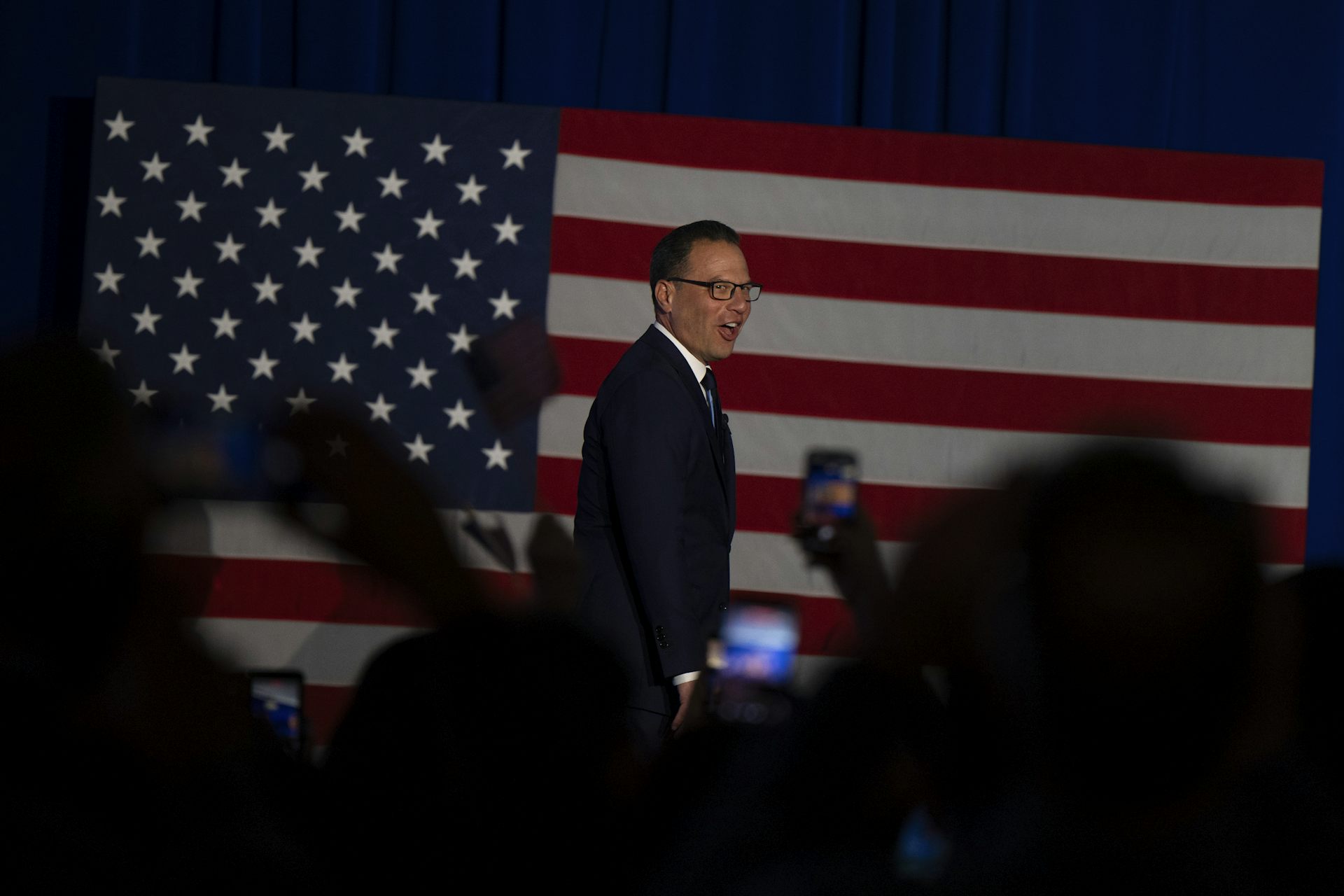
Despite intense Islamophobia, Abdul El-Sayed and dozens of other Muslims elected representatives are
Three political scientists found that visible Muslim representation can make public institutions seem fairer and encourage Muslim Americans to participate in politics.

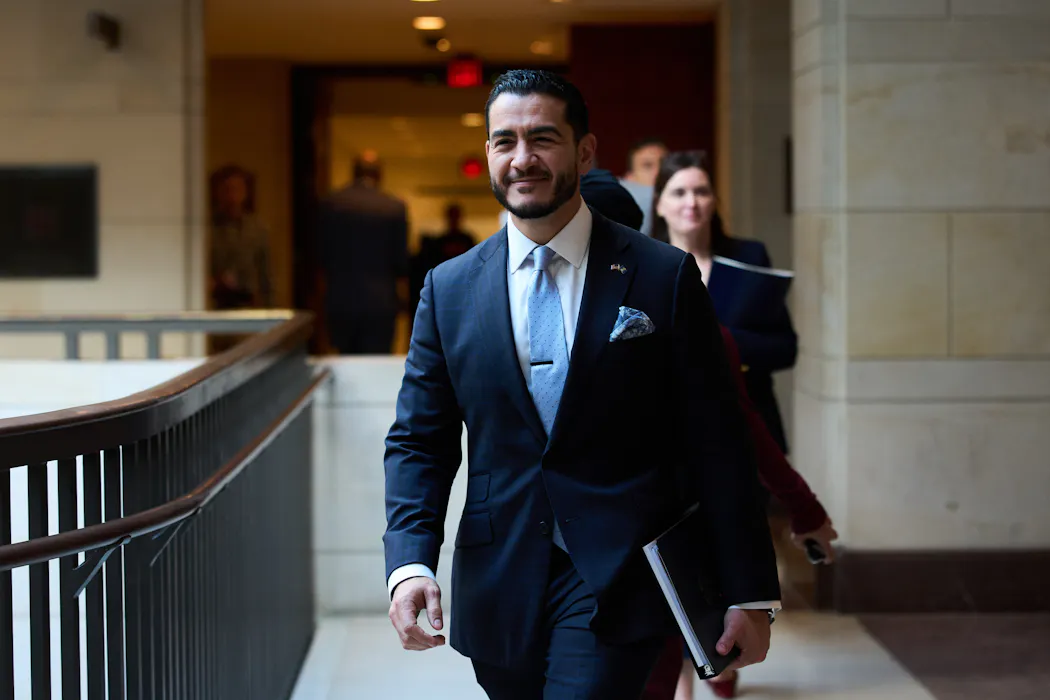
Democrat Abdul El-Sayed made history on Nov. 3, 2026, when Michigan voters elected him the first Muslim to the U.S. Senate despite significant efforts to defeat him.
He wasn’t alone. A record number of American Muslims won their races in the midterms.
As political scientists who study minority politics, we think their wins raise a question that goes beyond any single race: What does it mean for Muslim Americans, and for everyone else, to see Muslims elected to public office?
A tough campaign
The August 2026 Democratic primary alone drew record-breaking outside spending from the pro-Israel lobbying group AIPAC and corporate special interests, totaling nearly US$70 million to defeat El-Sayed. That is about 11 times his own spending.
In the November 2026 midterm election, outside groups, including super PACs and other organizations independent of the campaigns, spent more than $134 million, according to independent trackers. The largest spender was the Senate Leadership Fund, a super PAC aligned with some Senate Republican leaders.
El-Sayed also broke with his party’s leadership on Gaza. As a candidate, he called for ending U.S. arms sales to Israel and opposed what he called “blank-check military aid” to any foreign country. That stance resonated with the many Arab and Muslim Americans who had split with Democrats over the war in 2024.
El-Sayed also faced a barrage of openly Islamophobic attacks expressing hatred or hostility toward Islam or Muslims. President Donald Trump called him a “jihadist” and a “Muslim Brotherhood guy.” Vice President JD Vance accused him of supporting Sharia law. And in the week after El-Sayed’s primary win, anti-Muslim posts targeting him online rose about twentyfold.
El-Sayed won anyway. Across the country, at least 97 American Muslims won federal, state and local races this year, according to the Council on American-Islamic Relations.
Why representation matters
Political scientists have long studied descriptive representation – the election of politicians who share the background of the people they serve, such as their race, ethnicity, gender or religion.
One of the earliest studies came from sociologist Lawrence Bobo and political scientist Franklin Gilliam Jr., who found that Black Americans living in cities with a Black mayor were more politically engaged than Black Americans elsewhere. Those who resided in cities with a Black mayor were more likely to report being trusting of government, more confident that they could make a difference and more attentive to politics.
Later scholars called this the “minority empowerment thesis,” meaning that when members of a minority group are elected, other members of that group feel more connected to politics. For example, political scientists Susan A. Banducci, Todd Donovan and Jeffrey A. Karp found that Black Americans represented by a Black member of Congress were significantly more likely than other Black Americans to know their representative’s name. They were also more likely to have contacted their representative and to remember something they had done for the district.
Exclusion can push Muslims out of public life
For Muslim Americans, the stakes are especially high because research shows that, at times, hostility pushes them away from public life.
During the 2016 presidential campaign, Trump called for “a total and complete shutdown of Muslims entering the United States.” Around that time, users of the social media platform X, then known as Twitter, who had Arabic names shared their locations 10% to 20% less often. It was a sign that they were making themselves less visible online. In the same study, Muslim Americans surveyed in early 2017 who reported experiencing societal discrimination also indicated avoiding public places – such as restaurants, shopping malls and parks – and limiting what they posted online.
Political scientist Nura Sediqe has studied what social psychologist Elizabeth Pinel called “stigma consciousness”: expecting to be judged and treated differently because of a part of one’s identity that others look down on. In a survey of Muslims in southeast Michigan, Sediqe found that the more strongly they expected this, the less likely they were to identify as American. That expectation was highest among those who had faced discrimination and among women who wear the hijab, a headscarf that is a visible marker of their faith. In other words, being made to feel like an outsider can weaken Muslims’ sense that they belong in the country, and in its democracy.
Muslims also face barriers from elected officials of both parties. In an audit study of state legislators in all 50 states, for example, both Democrats and Republicans were less likely to respond to a Muslim constituent than a white one.
What our research finds
To understand what visible Muslim representation can change, we conducted two experiments in May 2022. We created a one-minute animated video showing “a day in the life of a city council member,” designed to resemble the short explainer videos that companies and government agencies use online to explain their work to the public.
Survey respondents were randomly assigned to watch one of two versions. In one, three council members were visibly Muslim. In the other, the same three characters appeared without religious symbols. Because the videos were otherwise identical, any differences in how people responded can be attributed to seeing Muslims on the council. The first study surveyed 740 American Muslims, and the second nearly 4,000 non-Muslim Americans.
In both studies, people who saw the council with visibly Muslim members judged it to be fairer and more legitimate. The effect was strongest among Muslims, but non-Muslims rated the council slightly fairer and more legitimate, too.
Muslim participants who saw visibly Muslim leaders were also more willing to take part in politics. On average, they were about 5 percentage points more likely to say they planned to do things like contact a public official, attend a local political meeting or join a protest in the coming year. They also showed a small increase in interest in running for office.
Representation is not zero-sum

Our research suggests that representation is not zero-sum, meaning that making a political body more inclusive for one group did not come at the expense of another. That challenges a common worry that elevating one group will alienate everyone else. Readers should note that we used short animated videos of a fictional city council, not real elected officials, so more research is needed to know how these effects play out with real politicians and how long they last.
Still, these findings do matter in a moment like this one. During the campaign, Representative Nancy Mace of South Carolina posted that “every single Muslim holding public office in America is a Trojan horse and a threat to both national security and our republic.”
But our research points the other way. Seeing Muslims in office made both Muslims and non-Muslims alike view a political body as fairer and more legitimate.
We argue that El-Sayed’s presence in the Senate, alongside the record number of Muslims elected across the country, has the potential to not only show Muslim Americans that they belong in American democracy, but also to show everyone else that the country’s institutions are stronger for it.
Financial support for this project came from the Swedish Research Council (#2018-01887). Nazita Lajevardi continues to receive financial support from the Swedish Research Council.
Kåre Vernby currently receives research funding from the Swedish Research Council.
Moa Mårtensson currently receives research funding from the Swedish Research Council, the Swedish Government Research Council for Sustainable Development (Formas), and the Marianne and Marcus Wallenberg Foundation.
Read These Next
US demands that Iraq disarms brigades misread the nation’s complicated security landscape
Washington has reportedly warned of consequences should Baghdad not rein in pro-Iranian groups.
El Salvador is exporting the ‘Bukele model’ to Haiti – but the gang offensive is a gamble for both n
Haiti’s war on gangs is increasingly relying on a patchwork of foreign troops and private militias,…
The ‘religious left’ may be rising – but Black Christian women have been there all along
For years, Black women have been one of the Democratic Party’s steadiest groups of supporters. And…