How religion collided with race and politics in Brazil’s presidential election
Religion has become an important factor in Brazilian politics. But to see the whole picture, you need to analyze diversity within churches, a political scientist writes.


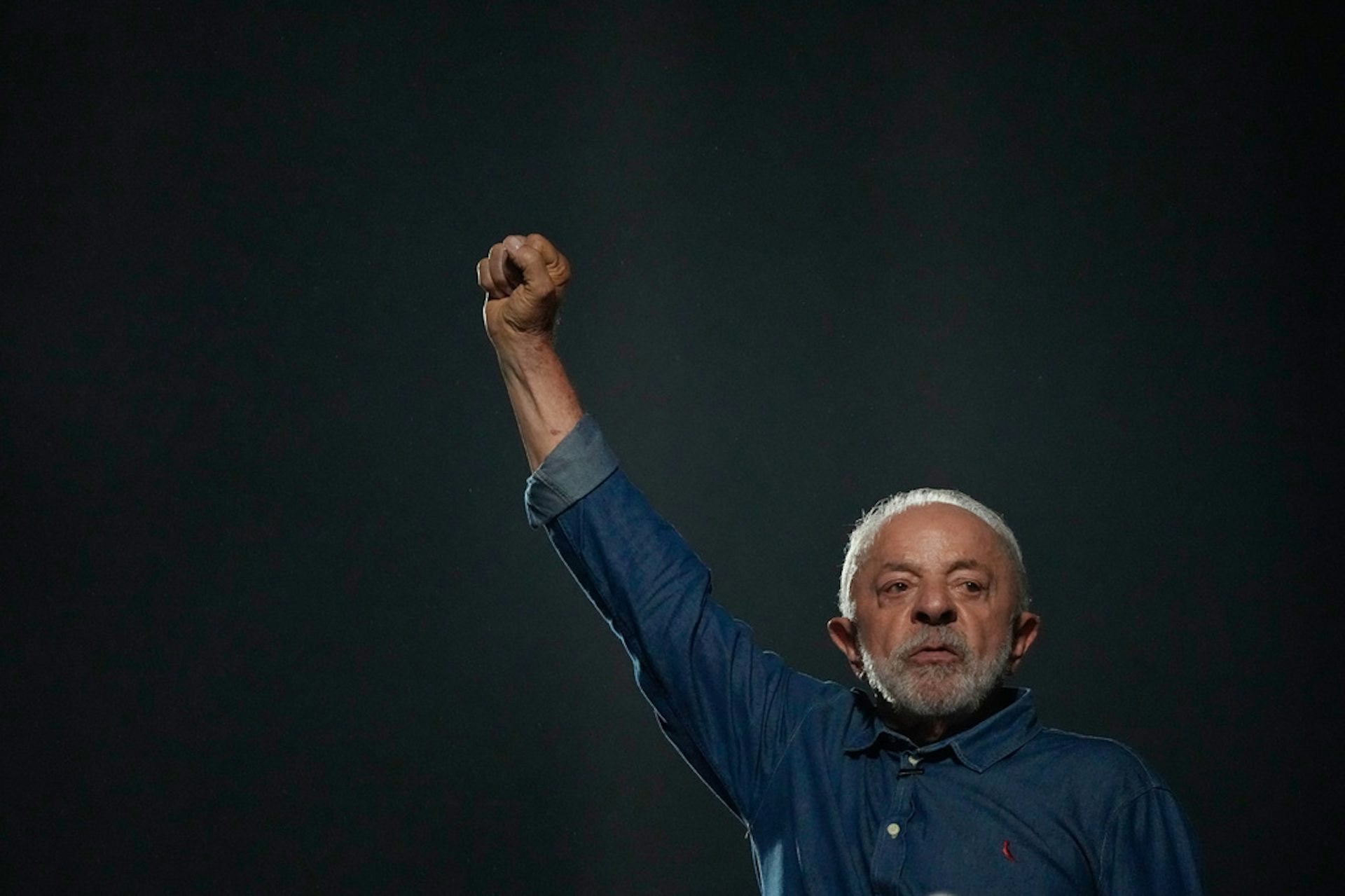
Since Brazil’s runoff elections, most attention has been focused on President Luiz Inácio Lula da Silva’s surprise upset.
The first round of voting gave a narrow lead to challenger Flávio Bolsonaro – son of former President Jair Bolsonaro, who is now serving a 27-year sentence for efforts to overturn the 2022 election. In a Oct. 25, 2026, comeback, however, Lula won nearly 52% of votes, compared with the younger Bolsonaro’s 48%.
Yet the close results still highlight the country’s deep polarization, including religious divides, which have played an increasingly important role in its politics. According to polls before the election, Catholics were more likely to support Lula, while evangelicals staunchly backed Bolsonaro.
But Brazil’s evangelicals have diverse beliefs and identities. As a political scientist who studies Latin America, I believe the full picture of how faith shapes the country’s politics is more complicated – especially when it comes to race.
Changes in Christianity
According to the latest national census, 57% of Brazilians are Catholic and 27% are evangelical. That is a stark shift from just 30 years ago, when 8 in 10 Brazilians considered themselves Catholic and 1 in 10 were evangelical.
Beyond Christianity, 1% of Brazilians practice Candomblé or Umbanda, which draw on African religions. Two percent follow Spiritism, a movement that took root in Brazil around the turn of the 20th century. Four percent belong to other religions, and 9% have no religious affiliation.

One measure of evangelicals’ growing influence is political. Almost 1 in 5 members of Brazil’s Chamber of Deputies, the lower house of Congress, identify as “evangelical.”
Jair Bolsonaro’s wife, Michelle, helped cement his support among many evangelicals ahead of his 2018 election victory. His slogan of “God, country, family and freedom” won endorsements from key clergy. As Flávio, his son, ran in the 2026 election, he also talked about religion, such as declaring that Brazil belongs “to the Lord Jesus Christ.”

But not all evangelicals are the same. Latin Americans often consider anything Christian but not Catholic to be “evangelical.” One wing of Protestant churches in Brazil is decidedly conservative and shares characteristics with evangelical churches in the United States. However, the category also includes denominations such as Methodists, Lutherans and Presbyterians.
Then there are Pentecostal groups like the Universal Church of the Kingdom of God and The Assembly of God, Brazil’s largest non-Catholic denomination.
Survey data from ISER, a Brazilian think tank focused on religion, shows that members of Pentecostal and evangelical churches are more likely to reject Lula’s Workers’ Party than any another faith group, while practitioners of African-rooted religions are more likely to reject Bolsonaro’s Liberal Party than any other group.
Religion and race
Surveys and research also show clear political trends around race, contrary to long-standing beliefs among many Brazilians that race does not matter in their society.
Forty-five percent of Brazilians identify as Pardo, or “Brown,” referring to people with multiracial ancestry. Forty-three percent identify as white, and 10% as Black. Around 0.6% are Indigenous, and 0.4% are East Asian.
Black Brazilians are more likely to support Lula, while those identifying as white tend to support Bolsonaro, and people identifying as Brown are evenly divided.
Examining the intersection of religion and race is also important to understanding Brazil’s diversity. About half of Black Brazilians are Catholic, and nearly 1 in 3 are evangelical; in fact, within Pentecostal and evangelical churches, a majority are of African descent.

Independent Black Christian denominations did not emerge in Brazil the way they did in the U.S.; those churches’ creation was, in part, a result of segregation. However, Black groups within religious organizations have long been involved in activism to address racism and Black communities’ concerns. Despite these efforts, leadership in both Catholic and evangelical circles has remained largely white.
During the late 2010s, a new generation of activists took the helm, concerned about intolerance toward Afro-Brazilian religions and growing Christian nationalism, and some started to more vocally criticize the Bolsonaro administration. During the 2022 election, 14 evangelical organizations created a “Brazilian Black Protestant Manifesto” calling for the government to not favor any one religion, policies to address police violence against Black youth, women’s rights and other issues.
In 2025, political scientist Gladys Mitchell-Walthour and I attended the Enegrecer Conference in São Paulo, which brought together 400 Afro-Brazilian evangelical laity and clergy calling for racial justice and progress in reducing socioeconomic inequality. A key point was rapprochement with Candomblé and Umbanda, whose places of worship are often vandalized and damaged. Ivanir dos Santos, a priest or “babalawo” in the Candomblé tradition, blessed the closing service.
2026 election

Throughout the current Brazilian election cycle, religion has become a polarizing force in its own right. For example, on Instagram, one will see posts like “Real Christians don’t vote for Lula,” or “I’m Christian, and I support Lula.”
Evangelical support for Jair Bolsonaro has been a prominent feature of all recent elections. But this time, it was less unusual to see evangelicals publicly support the left – many of them Preto or Pardo.
“Christians for Democracy,” for example, a group affiliated with Lula’s party, brought together prominent Black evangelicals and Catholics on panels and held prayer rallies. The group’s Instagram page highlighted prominent leaders of Lula’s campaign who are evangelical Christians, including former Environment Minister Mariana Silva, pastor and legislator Henrique Vieira, Attorney General Jorge Mesias, legislator and former Rio de Janeiro Gov. Benedita da Silva, and André Janones. Janones, a legislator from one of Brazil’s most populous states, was the head of “Lula’s Army,” the 10 million-member WhatsApp group that was pivotal in Lula’s victory.
Lula’s victory is just one more example of how race intersects all facets of Brazilian society, including religion. I believe these durable divisions will mark Brazil’s political and religious landscape for the foreseeable future.
John Thomas III is affiliated with the African Methodist Episcopal Church.
Read These Next

Why your vote for local chief prosecutor will matter on Election Day
For over a decade, progressive prosecutors have offered voters various options to tackling crime that…
Putin hopes hardship will force Ukrainians to sue for peace – polling suggests it won’t work
Many Ukrainians have been deeply traumatized by relentless Russian bombing. But that hasn’t translated…

What legal experts say about the Trump administration’s attempts to make a federal case out of state
A crucial US Senate election in Alaska is the latest target among many Trump administration efforts…