Americans who go to church and trust science are also more likely to believe in ghosts and curses, n
Belief in science and belief in magic can coexist.

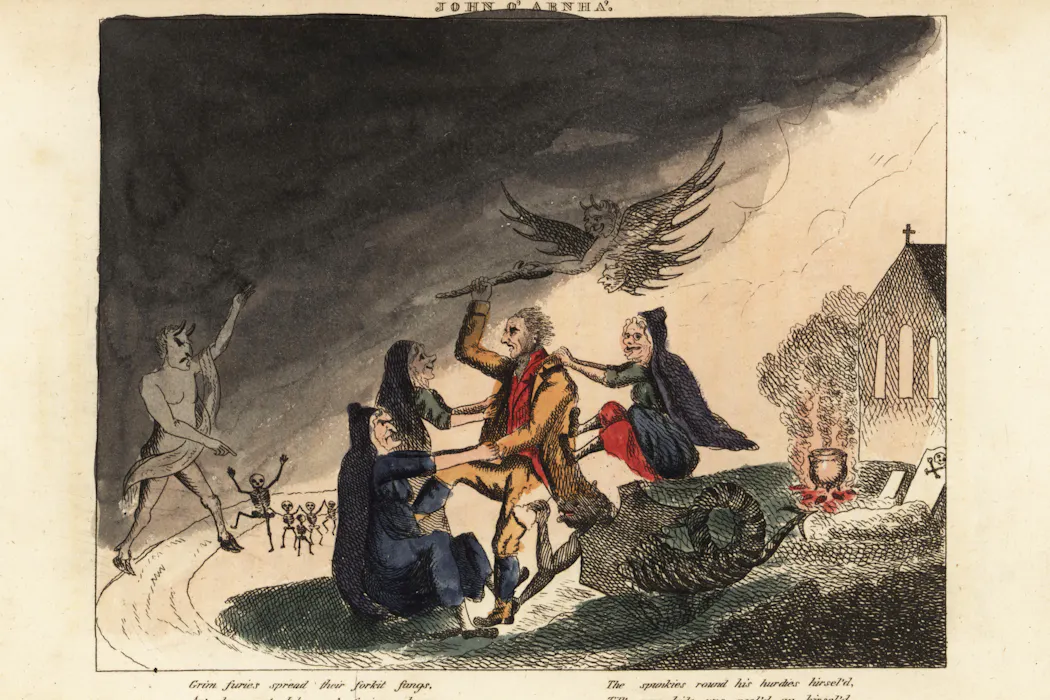
Americans who trust science and reason more than their churches’ teachings, but still believe in God or attend services, are also more likely to believe in magic than those who prioritize religious teachings.
This was the central finding of a study my co-authors and I published in the journal Social Forces in July 2026. We analyzed the latest wave of the Baylor Religion Survey, a nationally representative survey of 1,812 American adults that Gallup fielded in early 2025.
We used four of its questions to measure an outlook we call “secular rationalism.” The term refers to the belief that science is the only way to understand the world and that morality should rest on reason rather than religious teachings. Secular rationalism also includes the idea that people should interpret spiritual matters on their own rather than trust religious authorities.
We looked at people who embrace secular rationalist ideas but also believe in the supernatural. We asked respondents how strongly they believed in six things that people often call magic and require no god or church, from ghosts and curses to talking to the dead. For comparison, we also measured belief in miracles, such as whether miracles still happen today and whether God is the source of all miracles.
What’s interesting was that people who scored high on “secular rationalism” beliefs were more likely to believe in magic, so long as they kept some tie to religion. Among Americans who believe in God, those who also agree with secular rationalism were about twice as likely to lean toward magic as those who reject secular rationalism – 40% vs. 19%. Among people who attend religious services, the share was 28% vs. 19%. Among people who never attend services or do not believe in God, secular rationalism was no longer linked to belief in magic.
Some of the groups we compared were small. According to Baylor Religion Survey 2025 data, fewer than 1% of Americans neither believe in God nor generally agree with these secular rationalist ideas but actively reject them, while about 18% believe in God and agree with them.
Some people may still show up to church, or still believe in God, yet no longer grant their church the authority to define their belief about the supernatural. In short, our research shows, magic thrives where individual rationality and spirituality meet.
Why it matters
About 3 in 10 American adults now claim no religious affiliation. Scholars are still debating whether the decline of organized religion will also mean the decline of belief in the supernatural in the U.S. A long tradition of social theory predicts that as religious institutions decline, a scientific outlook with no room for supernatural or magic will take its place.

Our findings suggest that many Americans who no longer affiliate with an organized religion may still believe in tarot, astrology or psychic services. More broadly, most Americans without a religion still hold some spiritual belief. According to the Pew Research Center, 29% of Americans have no religion, but only 5% call themselves atheists. Most say their religion is “nothing in particular,” and two-thirds of that group still believe in something beyond the natural world.
Why are we seeing this trend? As French sociologist Emile Durkheim wrote in 1912, “The magician has a clientele, not a church.” Magic needs no congregation, clergy or theology, so believers can adopt it without leaving their church. That makes magic a natural fit for people who still believe in God but no longer let institutions define the supernatural for them. It may also explain its appeal to younger Americans, who distrust institutions most and, as our data suggests, are likely to believe in both magic and secular rationalism.
What’s next
Our data comes from a single point in time. It shows that people who are religious but also trust science and reason are more likely to believe in magic. But it can’t tell us whether these people are drifting away from religion, coming back to it or staying where they are. To find out, we would need to survey the same people who participated in the original survey over time.
Archaeologist Chris Gosden argues that belief in magic is older than both religion and science, and for most of history it has existed side by side with religion. What our study adds is a clearer picture of when trust in science goes hand in hand with magic: among people who stay religious but no longer let their church decide what is true.
We still know little about how magical beliefs spread among young Americans, or why they appeal to them. Answering those questions is an important next step for research on belief.
The Research Brief is a short take about interesting academic work.
Ruiqian Li does not work for, consult, own shares in or receive funding from any company or organization that would benefit from this article, and has disclosed no relevant affiliations beyond their academic appointment.
Read These Next
Using light to control brain cells – neuroscientist Karl Deisseroth explains how he made his Nobel-w
Optogenetics, a field that started with an algae gene, is shedding light on new treatments for eye and…

Ketamine’s role in alleged Cornell rape highlights flood of psychoactive drugs on campus
The growing availability of these substances is worsening the already bad problem of sexual assault…
Why the GOP’s voter fraud messaging may backfire
GOP allegations that voter fraud is rampant in the US may drive more Democrats – and fewer Republicans…