Floods in Nepal-Tibet disrupt pilgrimage to Mount Kailash, a sacred mountain with centuries of evolv
Hindus know it as the dwelling place of Shiva, Tibetan Buddhists as the abode of Demchog, and Jains as the site where Rishabhanatha, their first spiritual teacher, achieved liberation.

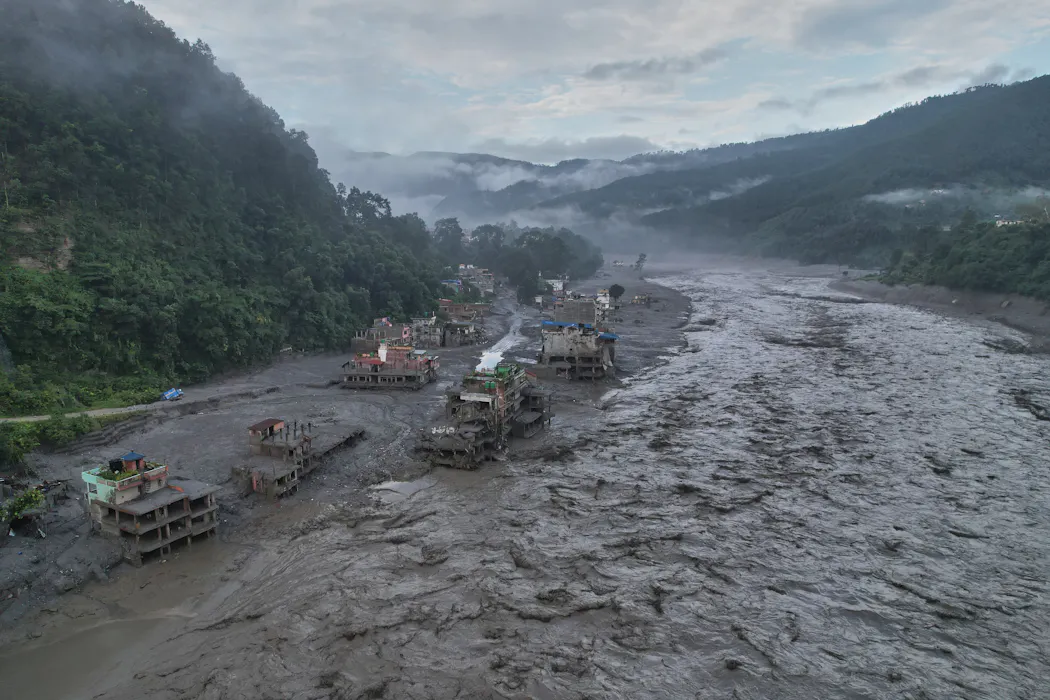
Hundreds of pilgrims traveling to Mount Kailash were among those affected by devastating floods that struck the Nepal–Tibet border on Aug. 26, 2026. The floods destroyed the border crossing most commonly used to reach what is arguably the most revered holy mountain in the world, which sits in the Tibet autonomous region of China.
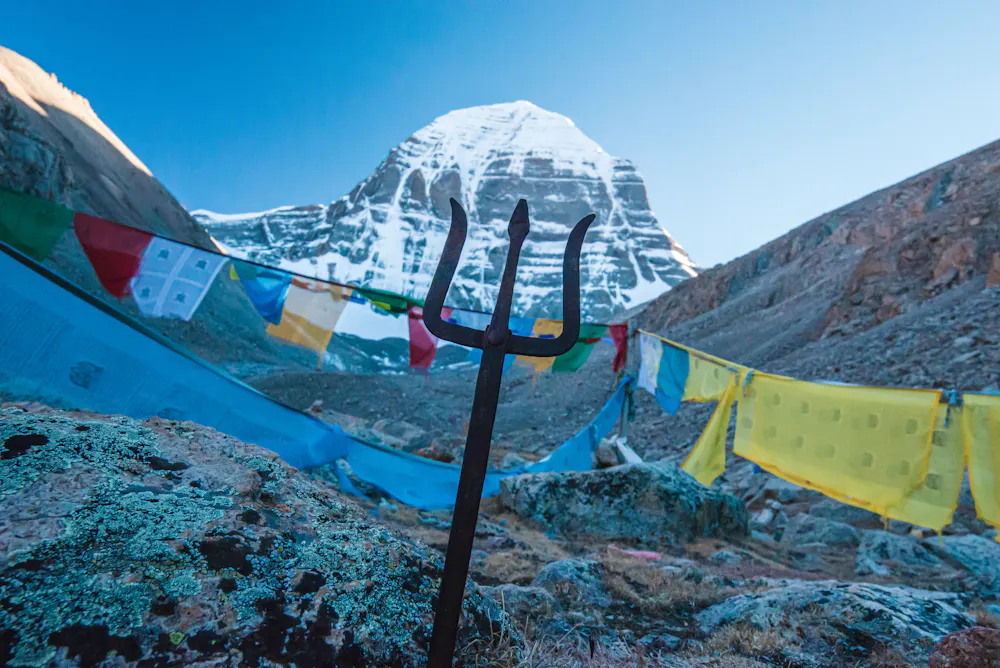
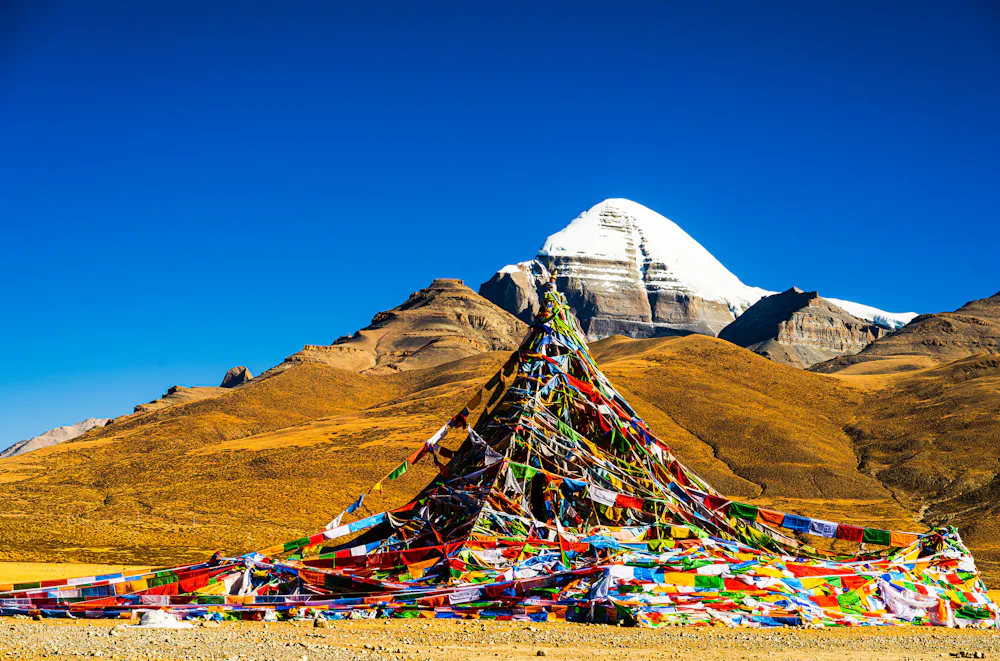
Hindus know the peak as the dwelling place of the god Shiva, Tibetan Buddhists as the abode of the deity Demchok, and Jains as the site where Rishabhanatha, their first spiritual teacher, achieved liberation. Today it also draws nonreligious travelers, who come for the harsh beauty of the landscape and the difficulty of the journey itself. Pilgrims and travelers do not climb Kailash. Instead, they walk a path roughly 33 miles around its base, which many believe to provide blessings and purification.
The legend of Kailash goes back thousands of years, to ancient Indian traditions describing a mountain at the center of the universe. But for most of that history, the Kailash of Indian literature was not associated with the peak that pilgrims travel to now.
In 2025, I published a book about Tibetan pilgrimage to Kailash. While researching it, I learned that it took centuries for a mythical mountain to become identified with this particular peak in western Tibet.
Kailash as legend
Indian religious texts describe a range of snowy mountains to the north called the Himalaya, or “abode of snows.” Beyond them, Indian cosmologies described a cosmic mountain called Meru, believed to stand at the center of the world.
The historian Alex McKay writes that the earliest mentions of a mountain named Kailash – Kailasa in Sanskrit – appear in the Hindu epics, composed roughly between the 4th century B.C.E. and the 4th century C.E.
In the “Ramayana,” an epic recounting of the god-king Rama’s search for his abducted wife, the monkey king Sugriva describes the far-off north, including Mount Kailash and Mount Meru. In the “Mahabharata,” an epic of dynastic war, the prince Arjuna visits a hermitage located on Mount Kailash.
However, these epics do not provide a specific location for Kailash. They portray it as a forbidding mountain realm of sages and gods, not as a pilgrimage destination for humans. The Mahabharata lists sacred places pilgrims should visit – sites across northern and western India – but Kailash is not among them. In fact, the epic states repeatedly that mere mortals cannot travel to the Himalayas.
It is in the “Puranas,” a body of Hindu religious texts composed between roughly the 3rd and 10th centuries, that Kailash is described as the abode of Shiva. The Puranas also begin to describe Kailash as the earthly form of the divine Meru. But it is still not a place of pilgrimage and still not fixed to a particular point on the map.
Kailash as physical place
Eventually, though scholars do not know exactly when, local traditions in North India began to identify particular peaks as Kailash. At least five different mountains, in the states of Jammu, Himachal Pradesh and Uttarakhand, have been claimed as the Kailash, and local pilgrimage to them continues today.
As Buddhism spread from India to Tibet beginning in the 7th century, Tibetans inherited Buddhist scriptures that spoke of Meru, Kailash and other sacred mountains. They also had their own long-standing practices of mountain veneration, making offerings to mountains that were believed to be the homes of local deities. Among them was the mountain now known as Kailash in western Tibet.
A mountain claimed
Tibetan traditions record that the geographical site of Kailash was claimed by practitioners of more than one religious tradition, and that the 11th-century saint Milarepa converted it to being a Buddhist site after defeating a non-Buddhist rival in a contest of magical power.
In the centuries that followed, Kailash became known as a particularly auspicious place to meditate and to visit on pilgrimage. Tibetans believed that while the mountain was the dwelling place of the deity Demchok, its true nature was only visible to the spiritually advanced. Any pilgrim who visited Kailash, known to Tibetans as Gang Rinpoche, would obtain blessings.
Even in Tibet, however, Kailash was only one pilgrimage site among many. Far more pilgrims visited the capital city of Lhasa.
The first clear reference to Indian Hindu pilgrims visiting the Tibetan Kailash comes in 1670, according to McKay, although earlier visits are possible. Its identity as the Kailash was not fully settled until the Indian subcontinent came under British colonial rule in the 19th century. Geographic surveyors mapping the border regions traced the sources of rivers such as the Indus to areas near Kailash. This matched ancient descriptions of Kailash as giving rise to rivers, and so the identification stuck.
By the 19th century, a small but steady flow of pilgrims traveled from India and Nepal, usually alongside the trade caravans crossing the Himalayan passes.
A pilgrimage closed and reopened
After China asserted control over Tibet in 1950, China and India negotiated official pilgrimage routes in a 1954 agreement. That arrangement did not last long. In 1959, a Tibetan uprising against Chinese rule was suppressed, and the Dalai Lama – the spiritual leader of Tibetan Buddhism – fled to India; religious life inside Tibet was severely restricted in the following years. In 1962, India and China fought a war over their disputed border, after which the border closed to Indian pilgrims for nearly two decades.
Routes reopened in 1981, and Tibetans were permitted to resume pilgrimage as well. But since then many Tibetans have found it difficult to obtain the necessary permits, and others have criticized excessive construction of hotels and roads at Kailash.
Most pilgrims today travel with private tour companies. Demand this year ran well above the Chinese government’s quota of 24,000 permits for Indian pilgrims. The Indian government also sponsors an official pilgrimage, with participants chosen by lottery, but places are limited to 1,000 people. Pilgrimage by Indian travelers had reopened only in 2025, after being suspended since 2020 because of COVID-19 and a deadly clash between Indian and Chinese troops in the Galwan Valley over the still-disputed India-China border.
Today, Kailash receives more pilgrims than at any point in its history. Most travelers from India now fly to Kathmandu and continue by bus through Gyirong, a road crossing between Nepal and Tibet that was expanded in 2014 and opened to international travelers in 2017. It became the most popular route after the 2015 earthquake damaged the main alternative. It was this crossing that the August 26 floods destroyed.
Catherine Hartmann does not work for, consult, own shares in or receive funding from any company or organization that would benefit from this article, and has disclosed no relevant affiliations beyond their academic appointment.
Read These Next
Yemen’s Houthis are bringing their war to Saudi Arabia – and reframing the narrative of being an Ira
A deadly bombing at Riyadh’s international airport is the latest in a tit-for-tat retaliation campaign…
How Trump’s disaster aid delays and FEMA cuts could galvanize the ‘movable middle’ in the 2026 elect
In communities across America, people recovering from floods, storms and wildfires have been left waiting…

Nicotine pouches, vaping or cigarettes: Which nicotine product is actually the least harmful?
Not all nicotine products are equally harmful. An addiction medicine physician explains how to parse…