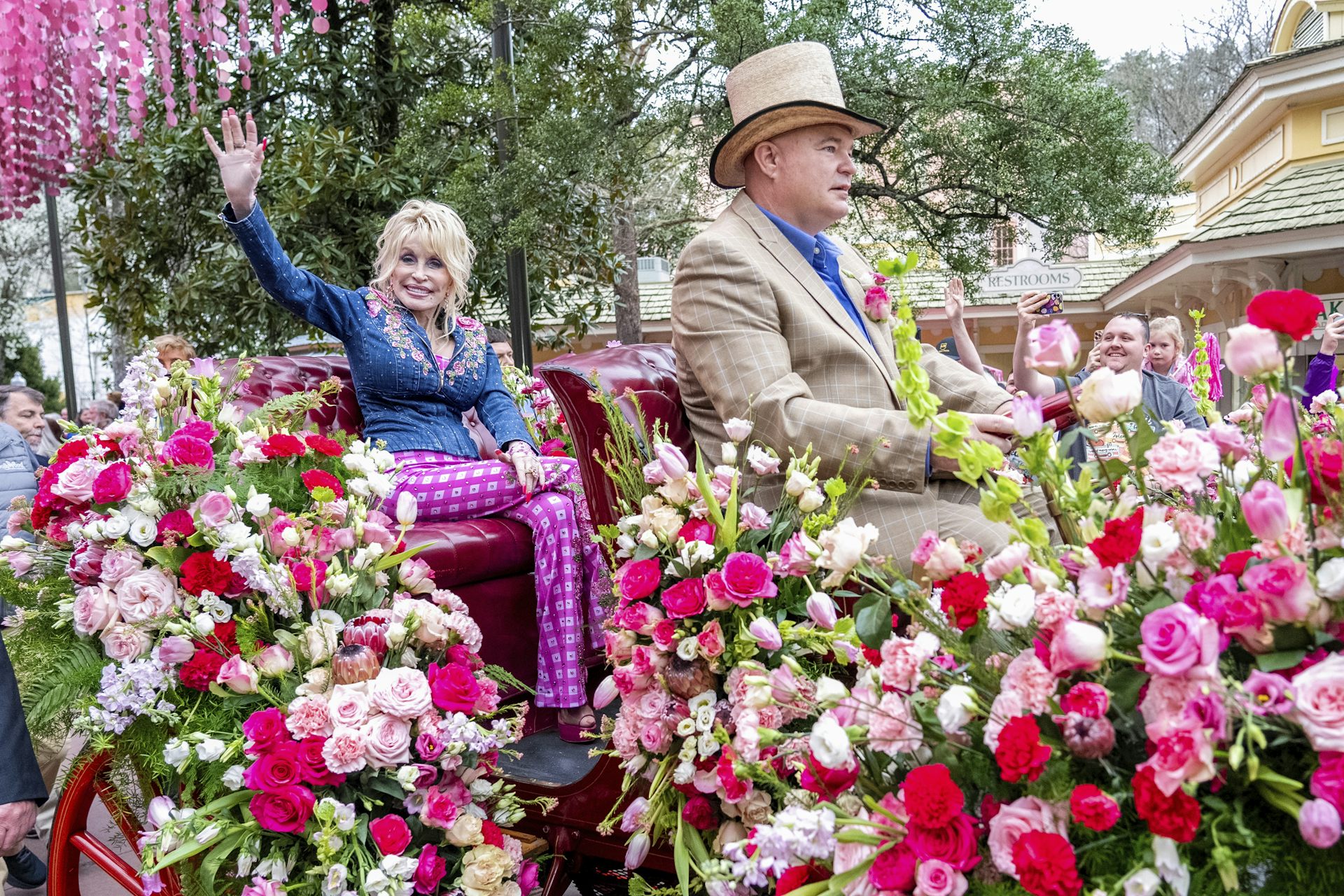
For some fans, Dolly Parton was more than a musical idol – she was a spiritual icon
The legendary singer took on a saint-like aura for some fans.

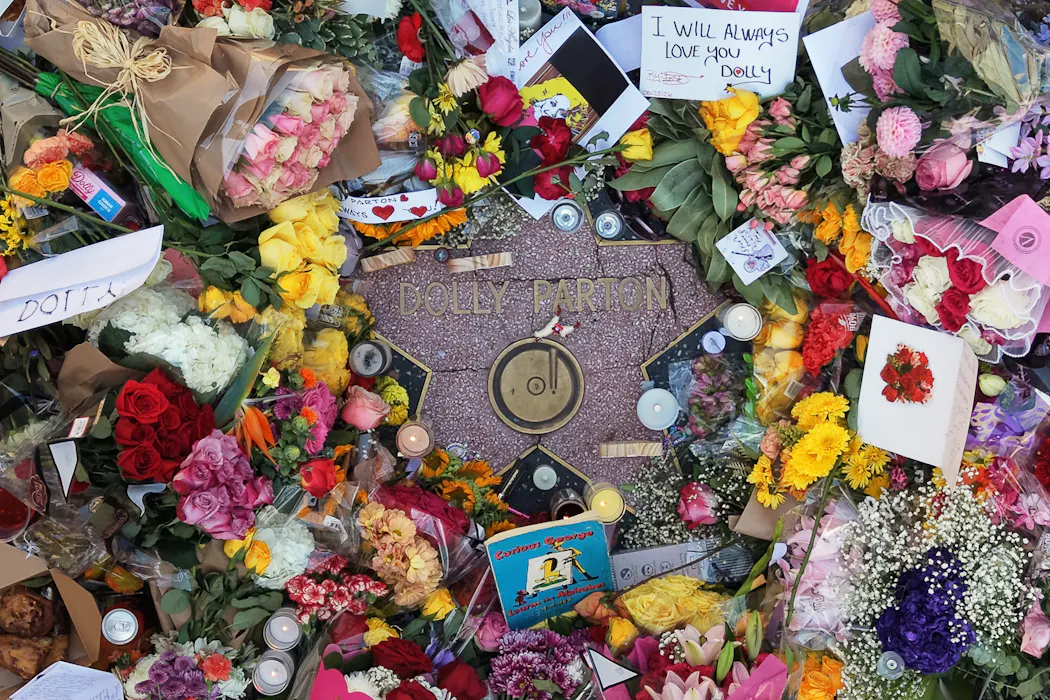
As soon as news broke about the death of beloved songwriter Dolly Parton, I began receiving condolence messages from across the country, and around the world.
They came from friends, family and colleagues who knew I’d been working on a biography of the country legend – everyone from a conservative Catholic monk to advocates for queer and trans rights. The list reflects the even more diverse array of fans, people from countless backgrounds, who are mourning her loss.
The main focus of my project is Parton’s own spirituality, starting with her Appalachian upbringing. But it also examines her fandoms, including some people who elevate the singer to an almost sacred status. This was the case before her death – and even more so now.
As a scholar of American religions, I teach my students about practices, texts and beliefs that many of them immediately consider “religious” – for example, a worship service led by a pastor. However, religion is also found far beyond these official times and spaces, including in popular culture. According to scholar America Wolff, fandoms resemble religious groups in the way they focus on a single popular figure who inspires systems of belief, ritual and law.
Singer’s journey
Looking at Parton’s life reveals how a celebrity can incorporate religion into their public persona, without ostracizing admirers from other traditions. She discussed religion in interviews throughout her career, as well as in her 1994 memoir, where she recounted her maternal grandfather, a fundamentalist pastor, preaching hellfire and brimstone.
In 1971, for example, she told journalist Gene Guerrero how religion inspired some of her songs: “My mama used to read us all the Bible stories. I know the Bible pretty well, and I especially loved the stories.” That same year, she released “The Golden Streets of Glory,” the first of her several gospel albums.
Six years later, talking with Rolling Stone interviewer Chet Flippo, Parton claimed that she wasn’t a Christian. But “I do believe, I know there is a God and He is still the best friend I got in the world,” she explained. “I talk to Him often, but I’m one of the world’s sinners.”
Later in her life, though, Parton embraced the label “Christian” – albeit in a way that was very much her own. In the memoir “My Life and Other Unfinished Business,” she explained that “Christianity and its symbols are powerful parts of my life.” However, she diverged from socially conservative elements of her grandfather’s faith by embracing makeup and flashy fashion, celebrating her own sexuality, and speaking up for LGBTQ+ rights.
She was never interested in proselytizing. People do not have to embrace Christianity “to be a decent and worthwhile human being,” she wrote. “Spirituality is the most intimate part of a person’s makeup, and it’s strictly up to the individual to choose how to express it.”
‘Gospel of Dolly’
This openness explains part of Parton’s widespread appeal. The popular podcast “Dolly Parton’s America,” produced by journalists Jad Abumrad and Shima Oliaee, was based on the premise that Parton is one of the few public figures to have fans across the political spectrum.
After her death, President Donald Trump posted a tribute on his social media site, TruthSocial, and ordered that flags be flown at half-staff for a week. At the same time, in the Castro neighborhood of San Francisco – a haven for the queer community – a Pride flag was also flying at half-staff in her honor.
Mourners include Jesuit priest and author James J. Martin, who thanked Parton for “teaching me about the Christian life,” and numerous Christian musicians who looked up to her. “She was the epitome of faith, grace, talent, beauty and humour,” country artist Carrie Underwood wrote. “She had a humble heart for Jesus and made everyone around her feel special.”

But even non-Christians discussed Parton in sacred terms: a “secular American saint,” as Vox writer Constance Grady designated her in 2021.
Beyond her music, these fans admired her philanthropy, from the Imagination Library program that distributes books to children around the world to her US$1 million donation that helped fund COVID-19 vaccine research. They also highlighted her support for the Black Lives Matter movement and LGBTQ+ rights. “Dolly Parton is beloved because she has devoted her career to standing for love,” Grady wrote.
Even before her death, though, some people idolized her in a saint-like way. In 2011, for example, photographer Alice Hawkins produced a project titled “Dolly Parton is my religon.” Rev. Lindy Vogado, a Presbyterian pastor,likened her to a prophet. “Dolly Parton, through her life and work, inspires us to be better versions of ourselves,” Vogado wrote in 2025. “Just like any good prophet would do.”
In recent years, churches in Illinois, Oklahoma and New York have held services based on “the gospel of Dolly.” I attended the service in New York, which interspersed Parton’s songs with readings from scripture and homilies. Like the other services, the one I attended emphasized Parton’s “teachings”: love, care and acceptance.
Angels and atheists
Since her death, the religious language has only intensified. Musician Roseanne Cash referred to the singer as a “goddess” on Instagram, and cartoonist Marshall Ramsey portrayed her as an angel. “Listen, I’m fairly well atheist and have been for decades,” Threads user @cartergoesplaces proclaimed, “but Dolly Parton is in heaven with Jesus now. That’s simply a fact, and I’ll hear no arguments, no matter how vast the cosmos…”
Parton had her own personal brand of Christian religiosity, but she encouraged others to find and follow their own paths. I believe this helps to explain the huge outpouring of admiration – from followers of many religious traditions, followers of none, and followers of Dolly herself.
Sarah Dees does not work for, consult, own shares in or receive funding from any company or organization that would benefit from this article, and has disclosed no relevant affiliations beyond their academic appointment.
Read These Next
Americans who go to church and trust science are also more likely to believe in ghosts and curses, n
Belief in science and belief in magic can coexist.

Yemen’s Houthis are bringing their war to Saudi Arabia – and reframing the narrative of being an Ira
A deadly bombing at Riyadh’s international airport is the latest in a tit-for-tat retaliation campaign…
From ‘A Little Princess’ to ‘Black Panther,’ how Hollywood films have reimagined the South Asian epi
There is no single way to tell the story of the ‘Ramayana.’ People from different religious traditions…