Most Westerners know Buddhism through meditation, but everyday Buddhist life looks quite different i
Thai Buddhism involves daily rituals and collective acts of worship, unlike the individual-focused emphasis on meditation often found in Western Buddhist communities.

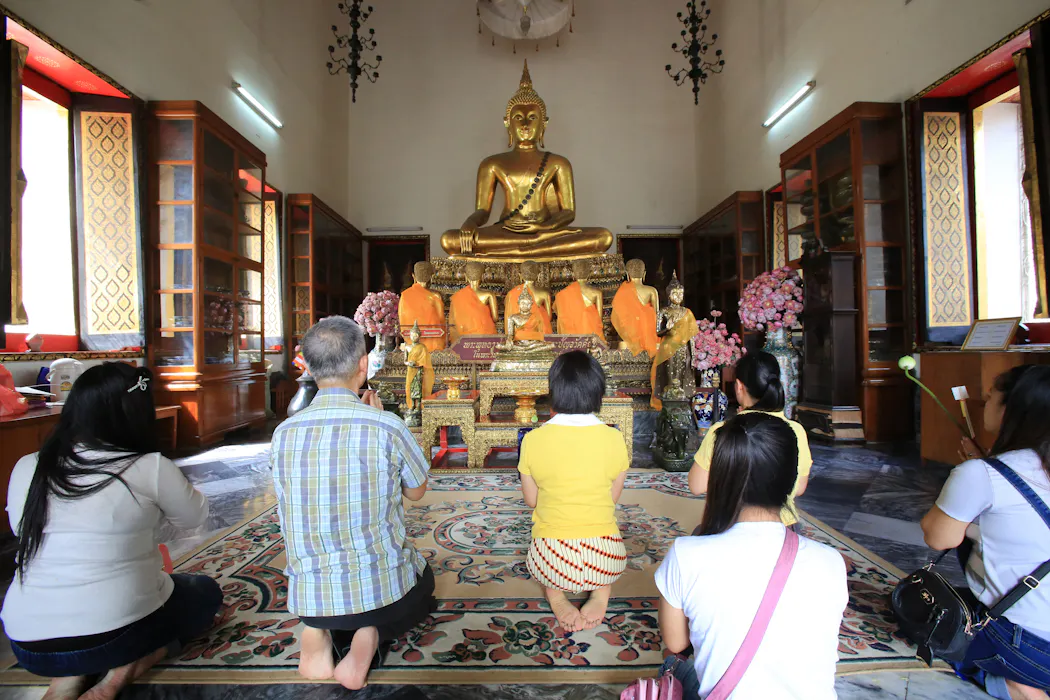
I recently returned from leading an educational program in Thailand focusing on how Buddhists practice the religion in their day-to-day lives. The participants – Buddhist practitioners from North America and Europe – wanted to deepen their understanding and practice of the religion.
Many Western Buddhists’ practices centers on meditation. As a scholar of contemporary Thai Buddhism, I have taught many students and adults in the U.S. who have a similar understanding.
Although meditation can be very important to many practitioners, as I show in my 2023 book, “Living Theravada,” Buddhism is more than an intellectual tradition focused on the mind. In countries with a majority Buddhist population, such as Thailand, Buddhist practice involves rituals, offerings to monks and visits to temples, among others traditions.
Here are three ways in which Buddhism shapes daily life in Thailand.
1. Merit-making
A central part of daily practice is performing rituals associated with merit-making. To make merit means to do something morally good that will generate good karma – actions that are believed to impact this life and future ones. The simplest way to do this is to make a monetary donation to a temple.
There are often several merit-making activities in temples that are meant to be fun and engage participants. For example, one can place a small sheet of gold leaf on a part of a Buddha statue where one would like help or healing, such as one’s mouth if someone often uses their voice for their work or the ankle where they would like help or healing.

Another fun activity is ritually purifying the “chedi,” or a large monument that enshrines sacred relics. Thai Buddhists fill a container with blessed water, which is attached to a pulley that leads to the upper part of the chedi. The container empties when it reaches the top, and participants make merit by symbolically cleansing the sacred monument.
Making offerings to specific Buddha statues representing the different zodiac signs based on one’s day and year of birth is common. In Thai temples, one can often find eight Buddha statues in a row, all in different poses; each represents a day of the week, with Wednesday being divided into morning and evening. Those born on a Friday, for example, will make an offering to the Buddha statue corresponding to their day of birth.
Worshipers can also make merit by directing donations to the zodiac animal associated with their birth year. Those born during the year of the monkey can place a flag or paper decorated with the monkey symbol on or around a sacred structure inside the temple hall. In other words, individuals can make merit connected to their own circumstances, relationships and aspirations, while practicing generosity.
2. Spiritual connections with monks
A foundational feature of Theravada Buddhism is the relationship between monastics and the lay people. This relationship is a delicate balance where laity offer alms while the monks offer spiritual wisdom and guidance. As monks’ lives are dedicated to Buddhism, they are believed to accrue much merit, which Buddhists believe they can then transfer to people who make offerings.
However, there are times when these bonds can be tested. During COVID-19, for example, the laity did not go into the temples for fear of contracting the virus. This made it difficult for monks to obtain food and maintain connections with their local Buddhist community.
The laity’s faith in monks and in their ability to provide merit and moral guidance can suffer if monks break their vows, such as by drinking alcohol or having sex. In 2022, for example, a well-known monk was found to have had an affair with a model. Thai Buddhists felt disappointed and raised questions about the ability of young monks to take their vow of celibacy seriously.
3. Rituals and wish-making
The ultimate goal of Buddhist practitioners is enlightenment, or nirvana – freedom from the cycle of birth and death and suffering. But most Buddhists see this goal as out of reach in this lifetime and instead have desires for worldly things, such as getting a job, winning the lottery or finding a spouse.

Thai Buddhist temples often have icons of Hindu gods, such as Ganesha and Brahma, who are believed to grant these worldly wishes. Some temples may also have shrines dedicated to indigenous gods or spirits of the land. Since these gods are believed to be concerned with worldly success, they are popular places where people pray for wealth, job promotion, romance or fertility.
These rituals involve an exchange, where worshipers promise to return with certain objects the god or spirit is believed to enjoy, such as hard-boiled eggs, figurines of elephants or flower garlands, if their wish comes true.
Buddhism in Thailand is embedded into everyday lives and collective concerns. At the end of 10 days, my program participants learned the value of merit-making and felt benefit from performing rituals. They saw how Buddhism extends beyond the individual pursuit of mental transformation through meditation.
Brooke Schedneck does not work for, consult, own shares in or receive funding from any company or organization that would benefit from this article, and has disclosed no relevant affiliations beyond their academic appointment.
Read These Next
Cornell 7 case puts a spotlight on fraternity misconduct – and the limits of universities’ power to
While universities can suspend and expel students for committing sexual violence and other kinds of…
White nationalism’s appeal runs deeper than partisan politics
Nearly 1 in 7 white men under 30 in the US support white nationalism, and partisanship alone doesn’t…

More than 50 years after a North Dakota school district burned copies of Kurt Vonnegut’s ‘Slaughterh
The battle over the novel offers a window into America’s long-running fight over what students should…