Why it’s OK to say ‘namaste’ in yoga class
In a polarized world, the greeting may be an acknowledgment of our interconnectedness.

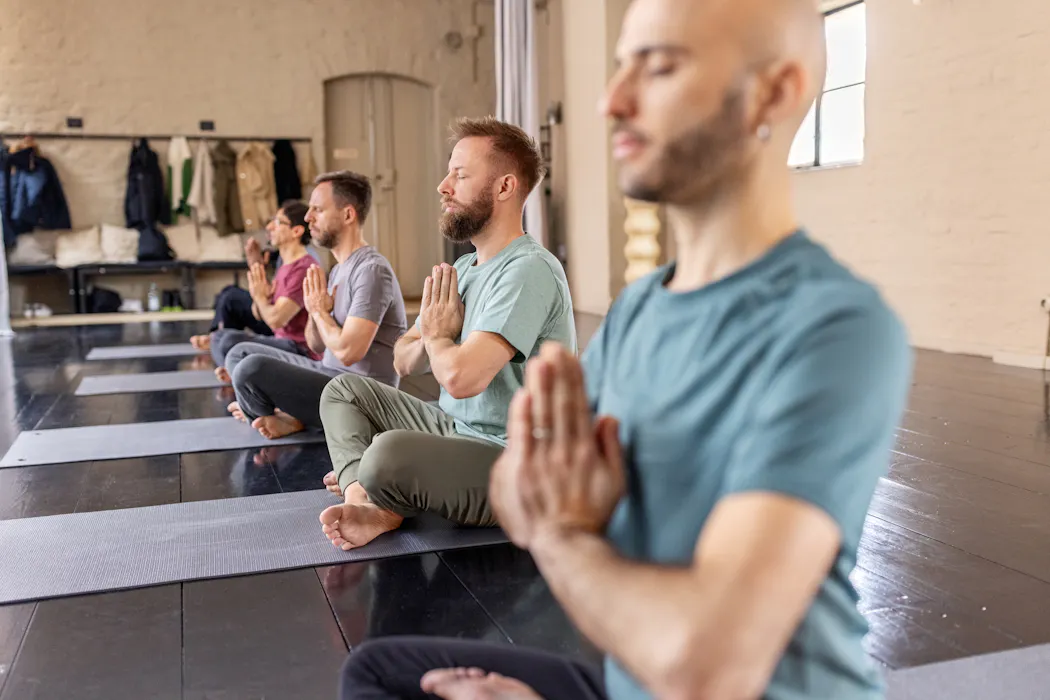
“Namaste,” a common greeting in India and South Asia, has become a global cultural phenomenon – the word appears everywhere, from wellness retreats to political events to pop culture.
In many yoga classes in North America and Europe, it is a ritual to end practice by saying “namaste,” which means, in global yoga culture, something like “the divine in me bows to the divine in you.”
This tradition is not without controversy. Some critics accuse Western yogis of cultural appropriation whenever they say it.
Their argument is that in India, namaste basically means “hello” or “goodbye.” In the West, however, yogis have transformed this word into a catchphrase laden with “overblown interpretations” and a “faux gravity” to better sell yoga, writes journalist Kumari Devarajan in an NPR article.
Others disagree with this view. Swami Tattwamayananda, the head of the Vedanta Society of Northern California in San Francisco and a leading authority on Indian ritual and scripture, told me: “It is perfectly appropriate for everyone, including Westerners like yourself, to say namaste at the end of your yoga classes.”
As a scholar of communication and ethics and a longtime yoga teacher, I explore this controversy in my 2026 book “Living Namaste: A Practical Guide to Mindfulness, Yoga, and Building Community.” My conclusion for those who are wondering: Yes, it’s OK to say namaste. I will explain why.
A brief history of namaste
Namaste is what linguists call a “loan word” that comes into English from Sanskrit. It is composed of two words: “namas” means bow, bend, or honor; and “te” means to you. Namaste literally means “I bow to you.”
As best as scholars can tell, namaste entered the English language in the late 1960s and early 1970s as one of many words associated with the countercultural spiritual revolution. As it did, its meaning changed to “the divine in me bows to the divine in you.”
One person who popularized namaste’s new meaning was Ram Dass. A charismatic spiritual teacher and bestselling author with a background in psychology, Dass toured college campuses in the 1970s and popularized yoga, meditation and psychedelics as lifestyle choices for a discontented generation. In his lectures, he encouraged people to say namaste and taught them that namaste is a bow from one person’s divinity to another’s.
As yoga’s popularity exploded in the 1990s and early 2000s, the use of namaste became more popular.
Shiva Rea was one of the most prominent yoga teachers of this period, and she popularized saying namaste at the end of yoga classes. In her words, namaste means “I bow to the divinity within you from the divinity within me.” In an article in the January-February 2000 issue of Yoga Journal, she wrote, “This salutation is considered to be the essence of the yogic practice of seeing the divine within all of creation.”
The question of cultural appropriation
Cultural appropriation is generally defined as when people from a dominant culture adopt or exploit a cultural practice that is treasured by another culture, without properly understanding the history or context of that practice. This is especially problematic when people do so in a way that disrespects, stereotypes or materially harms the original culture.
To me, based on this definition, saying namaste at the end of a yoga practice does not warrant the red flag of cultural appropriation.

Namaste is not the name of a deity in any Indian religion. Moreover, as James Mallinson of Oxford University points out in a 2017 podcast, namaste does not play a central role in Hindu religious rituals. If namaste were a sacred religious word being spoken by people who do not practice that religion, it might be an instance of cultural appropriation. But it is not.
In the same podcast interview, yoga studies scholar Andrea Jain agrees with Mallinson’s view that saying namaste is not cultural appropriation. She contends that claims of cultural appropriation assume that there is one true, Indian version of yoga that Westerners have stolen. But yoga’s history is more complex.
Yoga has taken a profound diversity of forms in India and the world over the past two millennia. There has never been just one authentic lineage of Indian yoga. There are only yogas in the plural – many forms of yoga practice associated with different traditions, philosophical schools and religions.
No one tradition owns yoga or the words that have become associated with it, such as namaste. Given this fact, the question shifts from appropriation to practice: What do we mean when we say namaste?
Namaste is a word of connection
In the past 50 years, namaste has evolved from a simple greeting and parting to a word that is a mini meditation on the interconnectedness and shared divinity of all beings.
Tracing the evolving meaning of namaste, it is understandable how the word shifted from meaning “I bow to you” to “the divine in me bows to the divine in you.”
Most Indian religions and spiritual traditions agree that there is something divine in all people: For Hindus and Jains it is the soul, or the atman; for Buddhists it is the “Buddha nature” – the living energy of mindfulness, peace and awakening.
Waking up to this sense of innate divinity is what makes namaste a practice of personal transformation.
When you bow to another person while saying “namaste,” you are honoring something precious in them. You are acknowledging that they are sacred and worthy of respect. At the same time, you are honoring the same qualities in yourself.
This is a moment of polarization and division. Many Americans feel isolated and alone. Words that remind us of our shared humanity, or how to treat each other with dignity rather than disregard and disrespect, are badly needed today. Namaste is one such word.
Jeremy David Engels does not work for, consult, own shares in or receive funding from any company or organization that would benefit from this article, and has disclosed no relevant affiliations beyond their academic appointment.
Read These Next
What the Eiffel Tower controversy reveals about a Hindu monastic practice – known as ‘brahmacharya’
‘Brahmacharya’ is a monastic discipline centered on controlling the senses and directing attention…

Many Americans are moving away from congregations, but not necessarily from religion – movies, plays
To understand what religion looks like in 21st-century America, researchers may need to ask different…

You know exercise is good for you – so why is it so hard to put it into practice?
Only 1 in 4 Americans are meeting the recommended guidelines for exercise. Here are some research-backed…