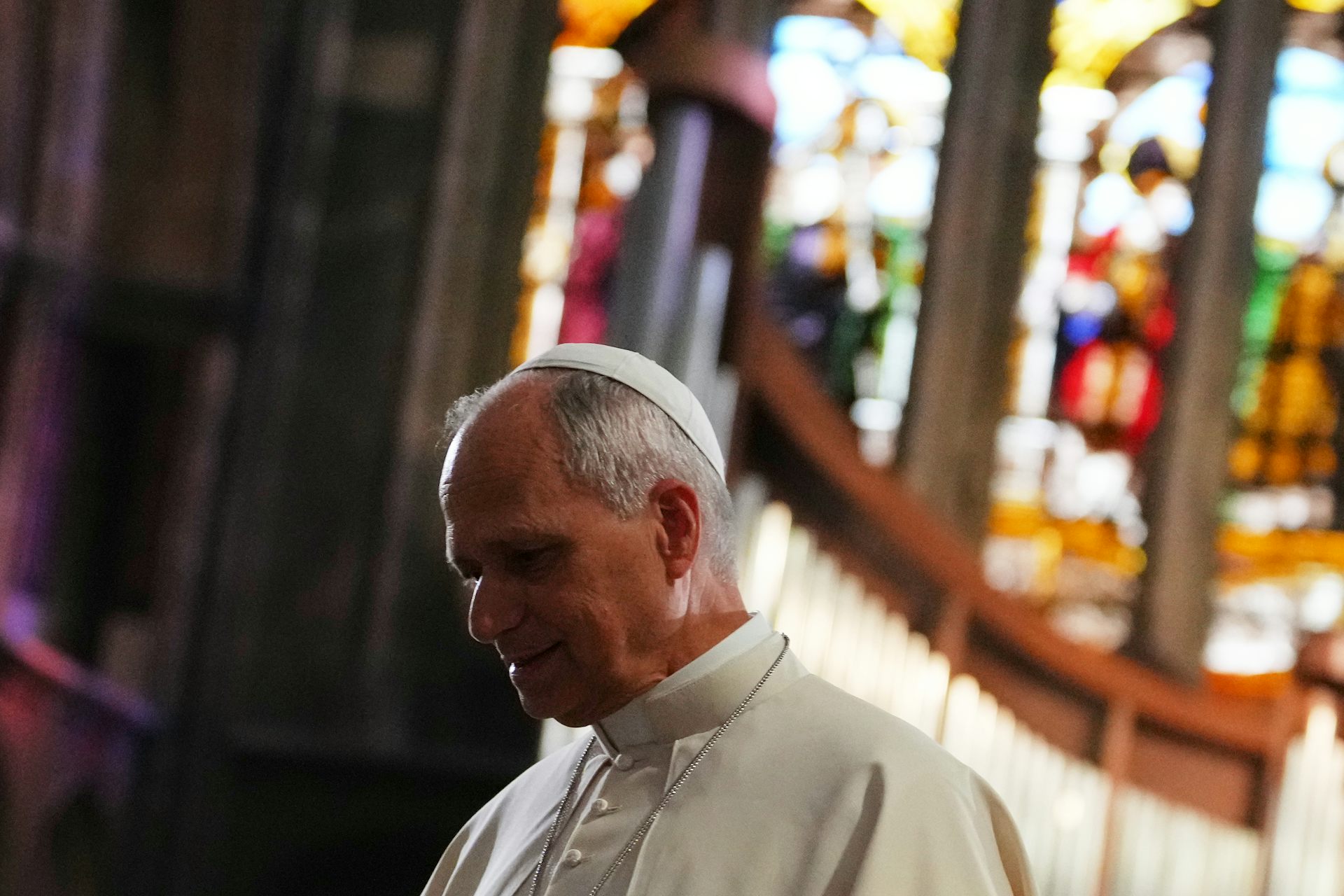
Women of the Rosenstrasse protest challenged the Nazi regime for their detained Jewish husbands’ fre
Couples in interfaith marriages came under intense pressure in Nazi Germany. But women’s protests in February 1943 may have helped save their husbands.

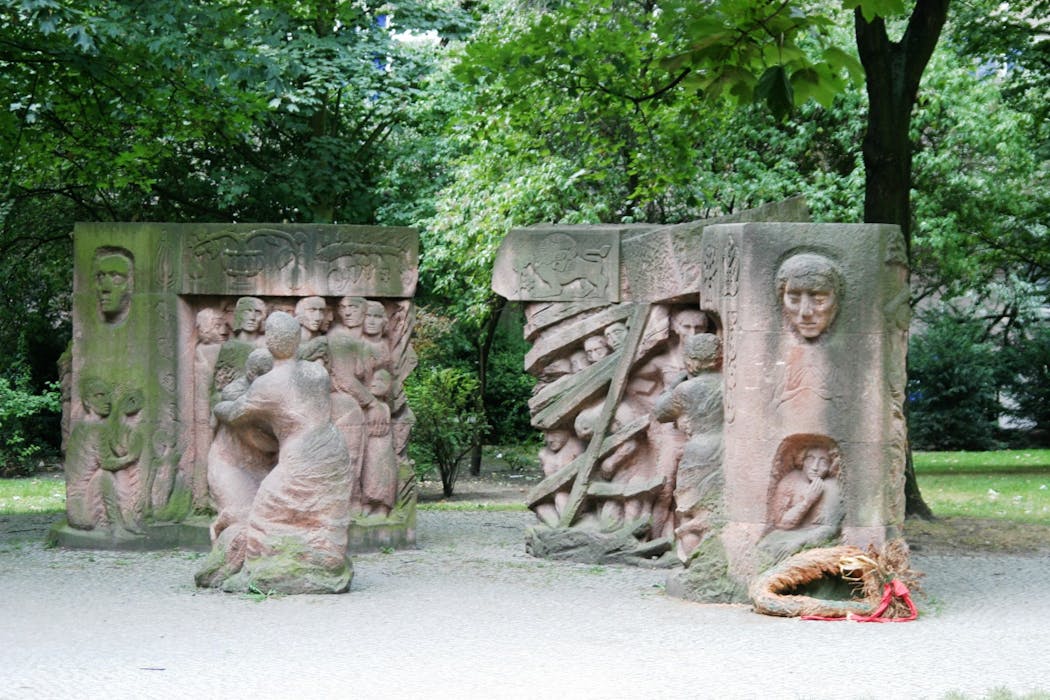
On the cold evening of Feb. 27, 1943, Charlotte Israel gathered with a small crowd of women on the Rosenstrasse, a narrow street in central Berlin. They were not Jewish, but their husbands were, and the men had just been arrested in a sweeping roundup of more than 9,000 Berlin Jews. Heinrich Himmler, leader of the SS and an architect of the Holocaust’s murder of 6 million Jews, called this arrest a “de-judaization of the Reich.”
Nearly 2,000 of those arrested had non-Jewish wives and were crammed together in a building on the Rosenstrasse. Israel and the other women who had gathered outside resolved to return the next day. Early the next morning, as she approached Rosenstrasse in search of her husband, Annie Radlauer heard a chorus of voices growing louder as she drew nearer: “Give us our husbands back!” The vigil, which sometimes grew into collective protests, continued off and on until March 6.
This protest still raises questions about how Hitler ruled and about attempts to rescue German Jews.
Families under pressure
Under the Nuremberg Laws of 1935, Nazi Germany banned marriage and sexual relations between Jews and people it considered “Aryans,” and it ratcheted up pressures for already married couples to divorce.
In most of these marriages, the non-Jewish partners were Christian women who faced enormous social stigma and political threats. Their households were considered “Jewish,” and the Gestapo could storm their homes, day or night, in a terrifying search.
Jewish women married to gentile men, on the other hand, lived under the protection of an “Aryan household,” and virtually all were exempted from wearing the yellow star that Jews in Germany were required to wear from 1941 onward. Yet their husbands were pressured by restrictions to their careers.
Jews married to Christians did face persecution, and at least hundreds of them were murdered in the Holocaust. The Gestapo deported Jews whose spouses had divorced them to labor and death camps, intending that they would never return.
Over the decade leading up to Rosenstrasse, however, as many spouses refused the pressure to divorce, the regime created temporary exemptions. Intermarried couples with Christian children were classified as “privileged” Jews, for example, exempt from wearing the yellow star. And until Himmler’s February 1943 campaign, even “non-privileged” Jews who did wear the star were “temporarily” held back from deportations.
Courage on the street
That February’s mass arrests are sometimes referred to as the “Factory Action,” since many Jews were arrested at work. But others were snatched from home or from the street if seen wearing the star.

The women and girls who gathered on Rosenstrasse were not political activists. They were wives, mothers and children trying to keep their families together under a murderous dictatorship. Their protest was unusual for its public visibility, since non-Nazi public gatherings were outlawed. Eyewitnesses recalled the women shouting for the release of their husbands and moments when guards threatened to shoot if protesters did not clear the street.
Most of the imprisoned Rosenstrasse Jews were released on March 6. American intelligence reported that Himmler’s action was discontinued “because of the protest which such action aroused.”
Meanwhile, 7,000 other Jews arrested in the same roundup – Jews not shielded by family relationships with non-Jews – were deported to Auschwitz, with many murdered.
Weighing the impact
Some scholars see the protest as tipping the balance to save the 2,000 men’s lives – based, in part, on events leading up to Rosenstrasse.
On Dec. 6, 1942, Adolf Hitler had authorized Joseph Goebbels, in his role as district leader of Berlin, to “ensure that the unprivileged full Jews are taken out of Germany,” likely to be murdered. And Nazi officials had promised Auschwitz’s Buna work camp thousands of skilled Jewish laborers – a quota that was not met because of the Rosenstrasse Jews’ release.
But Germany’s defeat in the Battle of Stalingrad by February 1943, coinciding with an increase in Allied bombing raids, sent public morale plunging. That made public opposition a bigger concern for the regime, especially for Goebbels, the propaganda minister. On March 6, he wrote that he had discontinued the deportation of the Rosenstrasse prisoners because “large throngs” gathered to side with the Jews.
During the decade since Hitler took power, women married to Jewish men defied scornful social, economic and political pressure, day after day. Some historians see their refusal to comply – even putting their lives on the line for their families – as causing Hitler to make a series of concessions.
Other scholars, however, say this runs “a danger of dramatically underestimating the power of the Nazi regime.” Gestapo terror suppressed all outward resistance, they argue, and a street protest could not have influenced policy.
This interpretation holds that the regime never intended to send the Rosenstrasse Jews to Auschwitz or elsewhere in the east but was holding the men to register them and select some for labor in Berlin.
Never before or after did the regime imprison Jews for such purposes. In any case, these protesters could only have had influence because they were not Jewish. Any Jewish resistance, such as the famous Warsaw Ghetto Uprising that started that April on the eve of Passover, was violently suppressed.
‘We stuck together’
Our research sees intermarriage and the Rosenstrasse protest as significant for several reasons.
First, they highlight how gender shapes expectations about protest and resistance. Nazi society cast women primarily as wives and mothers. Christian women wishing to reunite their families without calling for Hitler’s demise, or the release of all Jews, were harder for the regime to portray as political enemies or criminal agitators.

Second, the protest underscores the importance of visibility. Much of Nazi persecution relied on secrecy and masking genocide with bureaucratic language and routines. In Germany, deportations to killing sites or forced labor camps were often carried out quickly, with limited public exposure. A protest in the center of Berlin made secrecy impossible.
Third, the Rosenstrasse protest illuminates the range of responses available, in certain circumstances, to ordinary people living under Hitler. While armed resistance movements have received extensive attention, protests rooted in family and community operated differently. For example, Hitler compromised with German women who publicly protested orders to leave their families in order to evacuate cities being bombed by the Allies. Nazi officials appeased protesters opposing the removal of crucifixes from German schools.
The Rosenstrasse protest has become part of wider conversations about women-led resistance in World War II – alongside actions such as sheltering their Jewish neighbors, serving as couriers for underground networks or using workplaces and churches to quietly obstruct Nazi policies.
Decades later, Holocaust survivor Margot Graebert remembered what was at stake on Rosenstrasse. Her father and sister were held there, and her mother brought her to the protest. In the years before, “We’d seen so many families (of intermarriage) split up … and we stuck together.”
Rosenstrasse was not only a public protest but also a struggle to keep families from being torn apart: Above all, the women were fighting for the return of their own husbands and relatives. Its outcome does not change the scale of Nazi persecution or suggest that the regime tolerated dissent. But we argue that Rosenstrasse and its testimonies still matter today – not as a simple story of triumph but as a revealing debate about what protests could and could not accomplish under Nazism.
Danielle Wirsansky is affiliated with the Rosenstrasse Civil Courage Foundation.
Nathan Stoltzfus is co-founder of the Rosenstrasse Civil Courage Foundation.
Read These Next
Americans who go to church and trust science are also more likely to believe in ghosts and curses, n
Belief in science and belief in magic can coexist.
Yemen’s Houthis are bringing their war to Saudi Arabia – and reframing the narrative of being an Ira
A deadly bombing at Riyadh’s international airport is the latest in a tit-for-tat retaliation campaign…
Philly voters care about local issues, but election integrity fears make them wonder if their vote m
A political communications expert explains how myths about election fraud can leave voters asking: What’s…