What loving-kindness meditation is and how to practice it in the new year
The practice of this meditation often involves quietly reciting to oneself several phrases that evoke and visualize the beings who will receive loving-kindness.

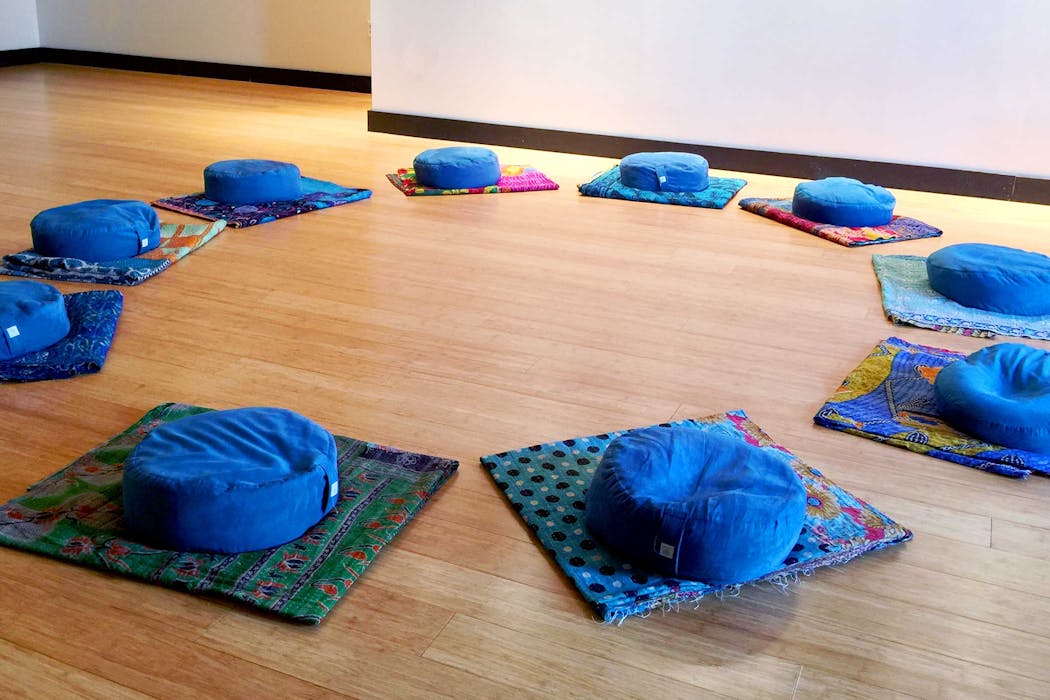
A popular New Year’s resolution is to take up meditation – specifically mindfulness meditation. This is a healthy choice.
Regular mindfulness practice has been linked to many positive health benefits, including reduced stress and anxiety, better sleep and quicker healing after injury and illness. Mindfulness can help us to be present in a distracted world and to feel more at home in our bodies, and in our lives.
There are many different types of meditation. Some mindfulness practices ask meditators simply to sit with whatever thoughts, sensations or emotions arise without immediately reacting to them. Such meditations cultivate focus, while granting more freedom in how we respond to whatever events life throws at us.
Other meditations ask practitioners to deliberately focus on one emotion – for example, gratitude or love – to deepen the experience of that emotion. The purpose behind this type of meditation is to bring more gratitude, or more love, into one’s life. The more people meditate on love, the easier it is to experience this emotion even when not meditating.
One such meditation is known as “metta,” or loving-kindness. As a scholar of communication and mindfulness, as well as a longtime meditation teacher, I have both studied and practiced metta. Here is what loving-kindness means and how to try it out for yourself:
Unbounded, universal love
Loving-kindness, or metta, is the type of love which is practiced by Buddhists around the world. Like many forms of meditation today, there are both secular and religious forms of the practice. One does not need to be a Buddhist to practice loving-kindness. It is for anyone and everyone who wants to live more lovingly.
Loving-kindness, the feeling cultivated in metta meditation, is very different from romantic love. In the ancient Pali language, the word “metta” has two root meanings: The first is “gentle,” in the sense of a gentle spring rain that falls on young plants, nourishing them without discrimination. The second is “friend.”
Metta is limitless and unbounded love; it is gentle presence and universal friendliness. Metta practice is meant to grow people’s ability to be present for themselves and others without fail.
Metta is not reciprocal or conditional. It does not discriminate between us and them, rich and poor, educated and uneducated, popular or unpopular, worthy and unworthy. To practice metta is to give what I describe in my research as “the rarest and most precious gift” – a gift of love offered without any expectation of it being returned.
How to practice loving-kindness meditation
In the fifth century, a Sri Lankan monk, Buddhaghosa, composed an influential meditation text called the “Visuddhimagga,” or “The Path of Purification.” In this text, Buddhaghosa provides instructions for how to practice loving-kindness meditation. Contemporary teachers tend to adapt and modify his instructions.
The practice of loving-kindness often involves quietly reciting to oneself several traditional phrases designed to evoke metta, and visualizing the beings who will receive that loving-kindness.
Traditionally, the practice begins by sending loving kindness to ourselves. It is typical during this meditation to say:
May I be filled by loving-kindness
May I be safe from inner and outer dangers
May I be well in body and mind
May I be at ease and happy
After speaking these phrases, and feeling the emotions they evoke, next it’s common to direct loving-kindness toward someone – or something – else: It can be a beloved person, a dear friend, a pet, an animal, a favorite tree. The phrases become:
May you be filled by loving-kindness
May you be safe from inner and outer dangers
May you be well in body and mind
May you be at ease and happy
Next, this loving-kindness is directed to a wider circle of friends and loved ones: “May they …”
The final step is to gradually expand the circle of well wishes: including the people in our community and town, people everywhere, animals and all living beings, and the whole Earth. This last round of recitation begins: “May we …”
In this way, loving-kindness meditation practice opens the heart further and further into life, beginning with the meditator themselves.
Loving-kindness and mindful democracy
Clinical research shows that loving-kindness meditation has a positive effect on mental health, including lessening anxiety and depression, increasing life satisfaction and improving self-acceptance while reducing self-criticism. There is also evidence that loving-kindness meditation increases a sense of connection with other people.
The benefits of loving-kindness meditation are not just for the individual. In my research, I show that there are also tremendous benefits for society as a whole. Indeed, the practice of democracy requires us to work together with friends, strangers and even purported “opponents.” This is difficult to do if our hearts are full of hatred and resentment.
Each time meditators open their hearts in metta meditation, they prepare themselves to live more loving lives: for their own selves, and for all living beings.
Jeremy David Engels does not work for, consult, own shares in or receive funding from any company or organization that would benefit from this article, and has disclosed no relevant affiliations beyond their academic appointment.
Read These Next

Young voters fear mass shootings like the one in Oregon, but that fear divides them on gun control
An Oregon school shooting comes weeks before midterms when young voters could break turnout records,…

Belonging and belief: Why evangelical churches draw many migrants in the US
Many migrants find community in evangelical churches in the U.S. – part of wider shifts in the country’s…

Fentanyl is fueling overdose deaths in Colorado – what voters need to know about Proposition 132’s a
In November, Colorado voters will decide whether to further criminalize the use of illicit fentanyl.