Midterms’ ‘blue tsunami’ gives Congress and states an opportunity to take action on climate change –
Democrats will have a stronger hand to play in negotiations with the White House, but policy choices have to consider America’s greatest concerns, including affordability.

The 2026 U.S. midterm elections are sweeping Democratic majorities into Congress and state legislatures across the country. That’s creating an opportunity to shift the country back to responding to climate change.
But faced with a president who staunchly opposes policies that could help slow climate change, what will these leaders with newfound power actually be able to do?
Democrats in Congress will have a stronger hand to play in their negotiations with the White House come January, and they may have leverage in pursuing climate policies during negotiations over the federal budget. Yet for the next two years, their ability to enact comprehensive climate legislation will likely be limited by President Donald Trump’s promised veto.
Beyond the federal level, six states – Arizona, Michigan, Minnesota, Nevada, Pennsylvania and Wisconsin – will have new Democratic trifectas: Democratic governors and Democratic majorities in both chambers of the legislature. These state trifectas create a chance to enact policies to advance clean energy and respond to voters’ concerns about energy affordability.
We study the politics and policies around climate change. Here are some ways we see potential for real change.
What can Congress do to restore clean energy spending?
When he took office in January 2025, Trump refused to spend money that Congress had appropriated for clean energy. The courts ruled that the move was illegal.
A few months later, Trump’s federal budget bill eliminated tax credits for producing wind power, investing in solar power and purchasing electric vehicles. It also cut other clean energy provisions of the Inflation Reduction Act, despite the law overwhelmingly benefiting Republican-held districts.

The new Democratic Congress will have authority over taxing and spending, known as the “power of the purse.”
U.S. Rep. Chellie Pingree, a Democrat from Maine who serves on the House Appropriations Committee, plans to withhold funding for federal agencies if the administration does not spend funds allocated to clean energy. Further, advocates believe Democrats can leverage budget negotiations with the White House to restore wind and solar tax credits.
How can Congress respond to federal agencies’ anti-environmental stances?
In his second term, Trump has doubled down on his wide-ranging effort to eliminate environmental regulations. His administration has handed out exemptions from air pollution rules to many facilities, including 71 coal-fired power plants. The administration has also intervened in permitting, holding up hundreds of wind and solar power projects.
Congressional majorities have the power to exercise oversight of federal agencies, including the ability to subpoena documents. They can use this authority to investigate the administration’s refusals both to enforce environmental regulations and to spend money allocated for clean energy.
Since Congress has limited legal means to force the administration to comply with investigations, its oversight powers give it leverage largely through bad press and lower approval ratings for Trump.
Congress has seen some movement lately on legislation that could boost renewable energy. A proposed bipartisan permitting reform bill could speed up construction of electricity transmission lines and clean energy sources such as wind, solar and geothermal power.
However, many climate advocates oppose the bill for accelerating fossil fuel projects and weakening environmental laws. For instance, opponents warn that the bill removes checks on environmentally harmful projects. U.S. Rep. Jared Huffman, a Democrat from California, has called for the new Congress to renegotiate the legislation.
What can state governments do to slow climate change?
Former Washington Gov. Jay Inslee, a Democrat, contends that “almost every (climate) policy you can think of … can be done at a state level.”
In recent years, unified Democratic control has allowed Michigan and Minnesota to pass ambitious climate laws, such as policies requiring that 100% of electricity comes from clean energy sources by 2040. Both are back under Democratic control, and incoming governors Jocelyn Benson and Amy Klobuchar each campaigned on expanding renewable energy.
Those and other states with new trifectas can now enact legislation that has been stalled for years due to partisan opposition.
In Pennsylvania, for example, Democratic lawmakers have advanced proposals that would allow community solar power, regulate data centers – these are huge electricity users – and require utilities to store excess electricity. But those proposals stalled under Republican control of the state Senate. That could change with Democrats gaining a trifecta.
Democrats also broke Republican trifectas in Georgia, Iowa, New Hampshire, Ohio and Texas. Given Texas’ burgeoning wind industry and solar power potential, a shift in its energy policy could help to significantly reduce emissions. Texas’ renewable energy requirements once drove wind power expansion. But electric utilities successfully pushed for weakening the law’s targets for solar power, and the state’s Republican government repealed the policy in 2023.
While Gov.-elect Gina Hinojosa in Texas has focused more on affordable energy than renewable energy, she supports wind and solar power as a means of lowering energy costs. Advocates believe her victory will prevent the enactment of two proposed bills that would impose administrative hurdles and fines on renewable energy generators.
Unlike his predecessor, Ken Paxton, incoming Attorney General Nathan Johnson has signaled that he will not bring Texas into litigation against progressive federal policies such as environmental regulations.
What do US voters want?
Climate policies are broadly popular with Americans, though less so among Republicans. They are more popular than most people and politicians think.

In recent ballot measures, such as Nevada’s 50% renewable energy target in 2020 and Washington state’s cap-and-trade repeal effort in 2024, voters have favored climate policy. However, many Americans currently rate other priorities, such as healthcare, the economy and lowering high prices, as more important.
Taken together, this polling data suggests that bold climate actions may be more likely to flop among voters if they are seen as worsening other issues that voters care about. For example, if voters worry that climate legislation will increase costs, they may be less likely to support the politicians behind it.
In contrast, if politicians can reassure voters that their climate policies are complementary to addressing other public concerns, such action may be less likely to backfire and could even boost politicians’ popularity – even potentially among Republican voters. U.S. Sen. Sheldon Whitehouse, a Democrat from Rhode Island, argues that Democrats should explain how renewable energy can lower electricity prices – a current priority for voters.
Looking back, looking ahead
Democrats arguably owe their newfound power to Trump’s unpopularity and widespread concerns about high prices. Their challenge will be to follow through on their promises to make voters’ lives more affordable. Policies promoting clean energy could be one vehicle for delivering that change.
Geoffrey Henderson has previously conducted research funded by the National Science Foundation.
Nathaniel Geiger has previously received funding from the National Science Foundation.
Read These Next
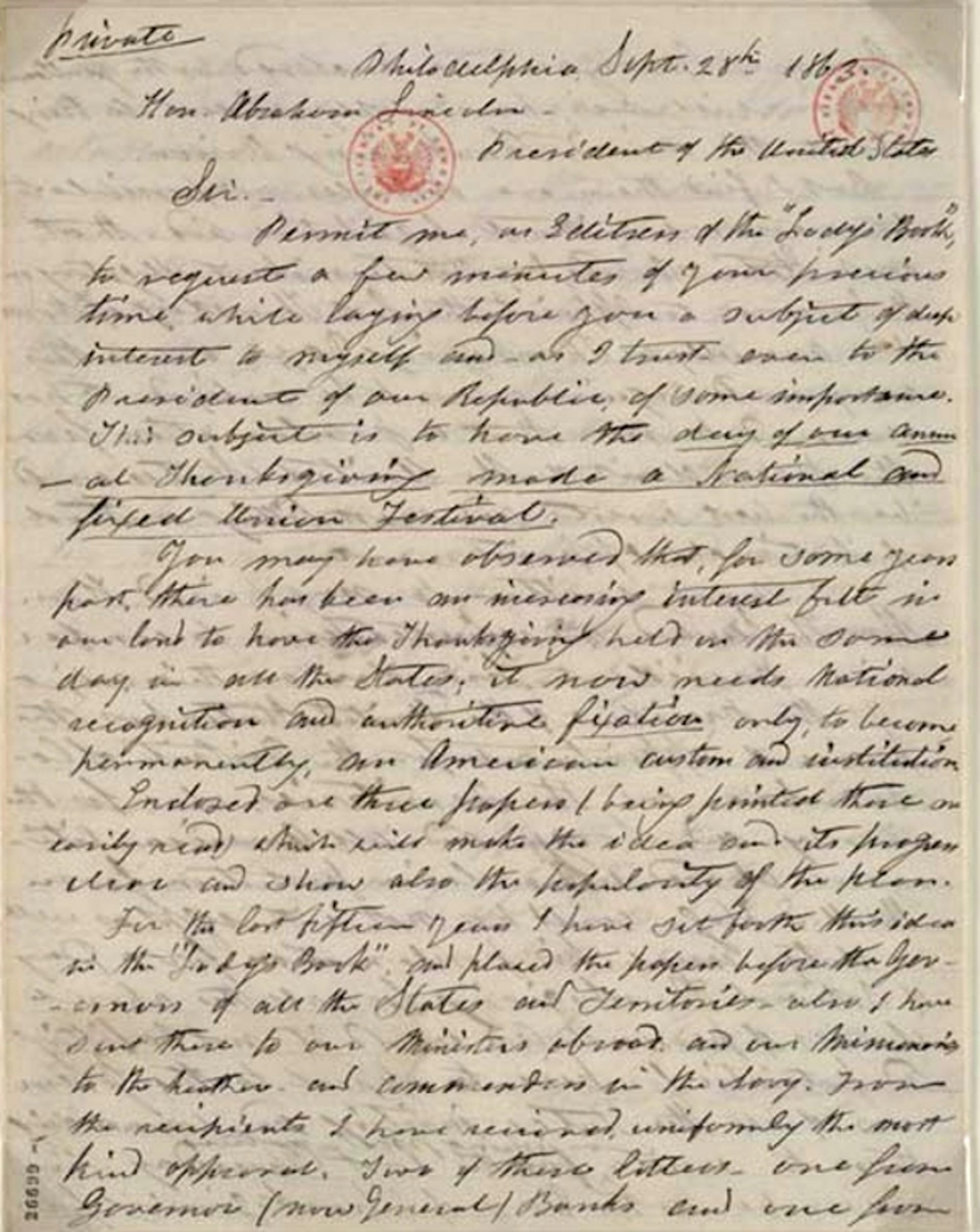
Today’s Thanksgiving holiday was invented amid the Civil War to unite a divided country
Thanksgiving as we know it today was created in the mid-1800s to unify a nation and was often used to…

How the US power rivalry with Russia and China is turning outer space into the next battlefront
After the recent US deployment of a weapon in Earth’s orbit, the space arms race looks increasingly…

The stunning transformation of the Southern Democratic Party, in one lifetime
To understand the magnitude of Mississippi Democrat Scott Colom’s election to the Senate, you have…