Wildfire strategy doesn’t need a winner – with 3 camps fighting for dominance, the system can’t keep
Wildfire strategy tends to break into three distinct camps today, each focusing heavily on one approach over the others. Successful management requires them all.

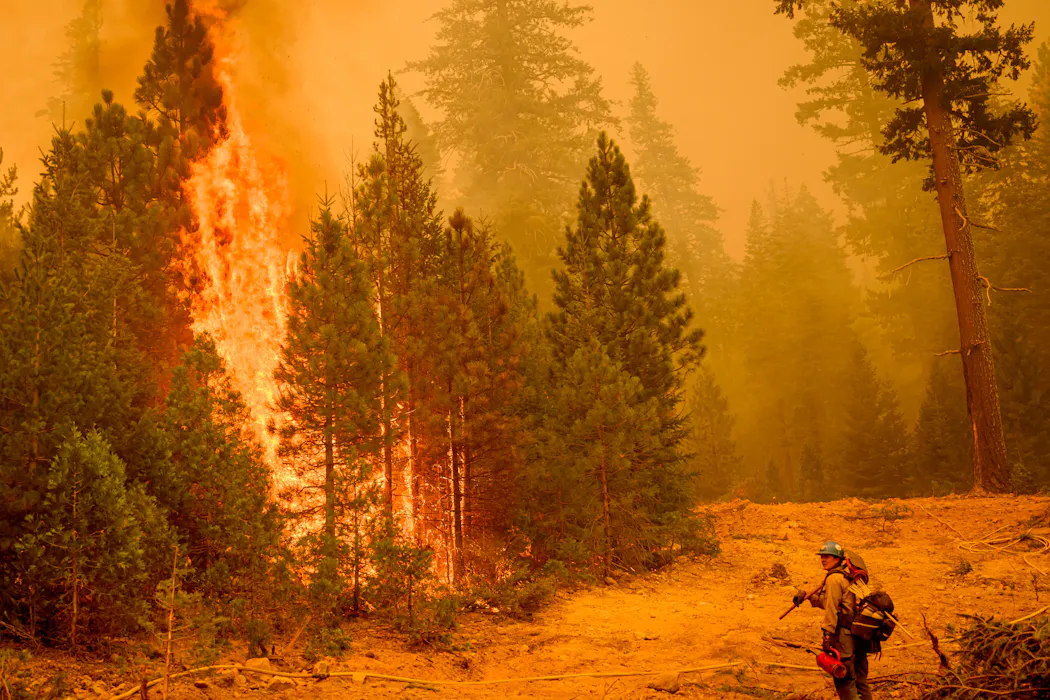
One of the problems with how America deals with wildfires is thinking there is one primary strategy that can end the nation’s wildfire crisis. Whether that’s detecting and putting out every fire fast, increasing logging and forest thinning, or allowing fires to burn under safe conditions, the default choice today is to pour more money and effort into the star approach of the moment.
But effective wildfire strategy in the face of worsening fire seasons demands a system of actions – interconnected pieces that reinforce one another.
Right now, those pieces mostly are not connected. Research groups, governments and organizations tend to separate into distinct camps, each promoting its own specific strategy. The result is a system that can’t keep up with the rising fire risk.
Our team of researchers, along with fire ecologist Jim Menakis, who recently retired from the U.S. Forest Service, has been looking at wildfires from social, ecological and risk-science perspectives to help forest and fire managers and communities in fire-prone areas turn research into practices that can reduce fire-related risks.
We have seen the pitfalls of current fire management approaches and also examples of what actually works.
Three separate camps
Wildfire strategy tends to break into three distinct camps today, each focusing heavily on one approach over the others.
One camp wants to double down on suppressing every ignition quickly and aggressively, contending that it’s the surest way to prevent immediate loss. The direction to put out every fire quickly has been a foundation of the U.S. government response to wildfires since the early 1900s, and persists despite attempts over the years to change it.

A second camp says the real problem is fuel: flammable vegetation that has been piling up for decades in forests and rangelands due to too much fire suppression.
This group’s solution is to scale up forest and brush thinning through logging and controlled burning. Calls for these actions span political administrations, from the U.S. Forest Service’s Wildfire Crisis Strategy during the Biden administration to the Trump administration’s 2025 executive order calling for the expansion of American timber production and rescinding protections for roadless areas of national forests. But while excessive fuel is a problem, particularly during dry periods, it isn’t the only issue.

A third camp says fire is coming regardless, and people have to live with it by accepting and promoting more fire, but allowing it to burn on our terms, when and where it’s safe. This is often called managed wildfire. It sometimes includes creating landscapes and communities that can survive and recover from fire.
Each camp tends to operate in isolation of the others, often with its own budget, workforce, practices and cultures. These silos can inhibit communication and coordination, which can make fire management less effective.
Success stories at the intersections
The question for fire management shouldn’t be “which of the three is right?” It should be “where do they reinforce each other?”
Successful fire strategies combine many approaches to lower the risk. If you look closely, you can see some of the ways these methods intersect.
Fuel treatments, such as prescribed burning of vegetation and thinning forests, used in the right locations, don’t stop fires on their own, but they can make suppression safer and more effective by lowering a fire’s intensity.

Using prescribed burns and forest thinning strategically can also make it safer for managers to allow lower-intensity fire to expand under favorable weather conditions, thereby dampening future fire risk and letting fire play its ecological role in renewing natural systems. A fire meant to spread still needs a safe edge to stop at, and fuel treatments serve this purpose.
And while suppression and the idea of living with fire appear to oppose each other, the same detection and real-time decision tools that let crews hit a fire hard and fast are exactly the tools needed to allow a fire to burn under safe conditions. Living with fire becomes credible only after fuel treatments have lowered risk to communities.
A place where everyone is working together
Wildfire activity has increased markedly across many parts of the U.S. in recent decades, resulting in destruction to communities, harm to water supplies and tragic fatalities. We believe that changing this trajectory requires a shift in thinking, from promoting a single “best” wildfire strategy to designing stronger connections between strategic options.
Building these connections has to begin long before a fire starts, continue while the fire burns and endure long after the fire has ended. It includes how fire research and fire-risk-reduction projects are designed and funded, how communities are brought into planning to build trust and support, and how communities can lessen their vulnerability to wildfires, such as home hardening, developing escape routes and updating land use codes.
Reducing fire risk isn’t solely the responsibility of a single government agency or private entity; all sectors of society must contribute.
This is already happening where people are willing to do the hard work.
For example, the Northern Colorado Fireshed Collaborative brings together federal and state agencies, local governments, water utilities and residents. They coordinate on reducing flammable vegetation across land ownership boundaries, prepare homeowners and communities through education and financial assistance for wildfire prevention measures, and organize response and recovery efforts as one connected system rather than separate ones.
Everyone has a role
The wildfire problem exceeds what any single entity can effectively tackle on its own.
Fire scientists, government agencies and local communities all play a role, which means you do, too. Check if your area has a fire collaborative or community wildfire protection plan. Show up to public meetings to stay informed, and start making an impact at home by clearing dry brush around your property and helping neighbors do the same.
The path to better strategies is built by people working together, not by policy on a page.
Tony Cheng receives funding from the Colorado State University System, National Science Foundation, and USDA Forest Service. He is affiliated with Colorado State University.
Matt Thompson receives funding from Colorado State University, Headwaters Economics, Vibrant Planet, and CWE Strategies for wildfire risk science and analysis.
Read These Next

Many drugs have mirror chemical structures, one helpful and the other harmful – a Nobel-winning disc
From thalidomide to resveratrol, molecules with the exact same chemical properties can have drastically…

Why your boss matters more than remote or hybrid work when it comes to burnout and job satisfaction
A return to the office can mean very different things to different workers, which is why this debate…

AI can help with academic research but doesn’t always get it right – here are some tips to check the
AI is quickly changing. These tips from university librarians can help people keep pace with the shifts…