Oil shortages escalate from wars in Iran and Ukraine, with few signs of relief
Cooking gas and diesel fuel are among the oil products whose supply levels have been affected already. Here’s why to expect long-term shortages.

The global energy crisis triggered by two wars is set to worsen, as Ukraine pummels Russia’s refining industry and Iranian attacks continue on Middle Eastern oil production and refining. Further, the nature of the destruction and the growing number of fronts and warring parties involved may herald a new era of extended vulnerability for countries that depend on imports for their energy.
Throughout most of modern history, wars have targeted energy infrastructure, including oil wells, refineries, pipelines, export terminals and power plants. But the latest weapons technology – autonomous drones and automated seafaring vessels – are defeating existing defense systems.
The resulting damage is increasing the threat that crucial oil shipping lanes around the world may be slowed or stopped for long periods of time, and not just in the Strait of Hormuz and the Bab el-Mandeb Strait, at the southern entrance to the Red Sea.
The world has been able to muddle through the first few months of the Iran war, but the earliest efforts to keep oil markets balanced are running out of time. First, there were shipments of Middle Eastern oil that had already moved through the Strait of Hormuz before it was closed, which arrived in ports across the world in March and April 2026. Then a group of governments released strategic stocks of oil to the market, while some countries adopted oil conservation policies such as shifting to remote work.
At the same time, refining capacity – the facilities that convert crude oil into products, such as diesel fuel and gasoline – has been extremely compromised. Goldman Sachs is estimating that globally, the refining deficit – including bombed Russian refineries and products that cannot exit the Strait of Hormuz or the Black Sea – totals 6.5 million barrels a day. Now, as more energy infrastructure gets destroyed, preventing a deeper crisis will be harder to achieve. And winter isn’t all that far away.

The growing war in the Middle East
Attacks by Iran and its proxies, often using aerial drones, have created widespread, lasting damage to Middle East energy infrastructure. For instance, more than 1.2 million barrels per day of oil refining capacity across the region is out of operation due to physical damage, according to J.P. Morgan.
The conflict continues to escalate. For instance, on July 27, drones reportedly launched from southern Iraq by Iranian-aligned militants hit crude processing towers at the critical Saudi oil production hub of Abqaiq. Similar attacks by Iran in 2019 sharply reduced Saudi Arabia’s ability to produce oil.
Saudi crude oil and refined petroleum product exports are also hindered by attacks on shipping through the Hormuz and Bab el-Mandeb straits. A U.S.-Saudi military response against the Iraqi militias raised tensions that the war might spread.
And on July 30, drone attacks on an Egyptian port on the Mediterranean Sea signaled that another area might be vulnerable to the widening war. Since early in the war, Saudi Arabia has depended on the Mediterranean for its oil exports, sending 5 million barrels a day through the Suez Canal and Egypt’s SUMED pipeline.
Ukrainian attacks inside Russia
In its war against Russia, Ukraine’s mastery of long-range drones has resulted in successful bombing of over 11 major Russian refining complexes, knocking out a significant share of Russia’s fuel-making capability. Estimates vary from somewhere between 30% and 50% to as high as 60% of the nation’s refining capacity.
Ukrainian drone attacks on Russia’s refining system are primarily intended to harm Moscow’s war effort by limiting military fuel supplies and war funding from exports of refined products. Yet online images show Russian drivers sitting in cars for hours waiting to get a few gallons of fuel.
The attacks have also led Russia to ban diesel fuel exports – which, before 2022, supplied half of Europe’s diesel.

Ripple effects, including hunger
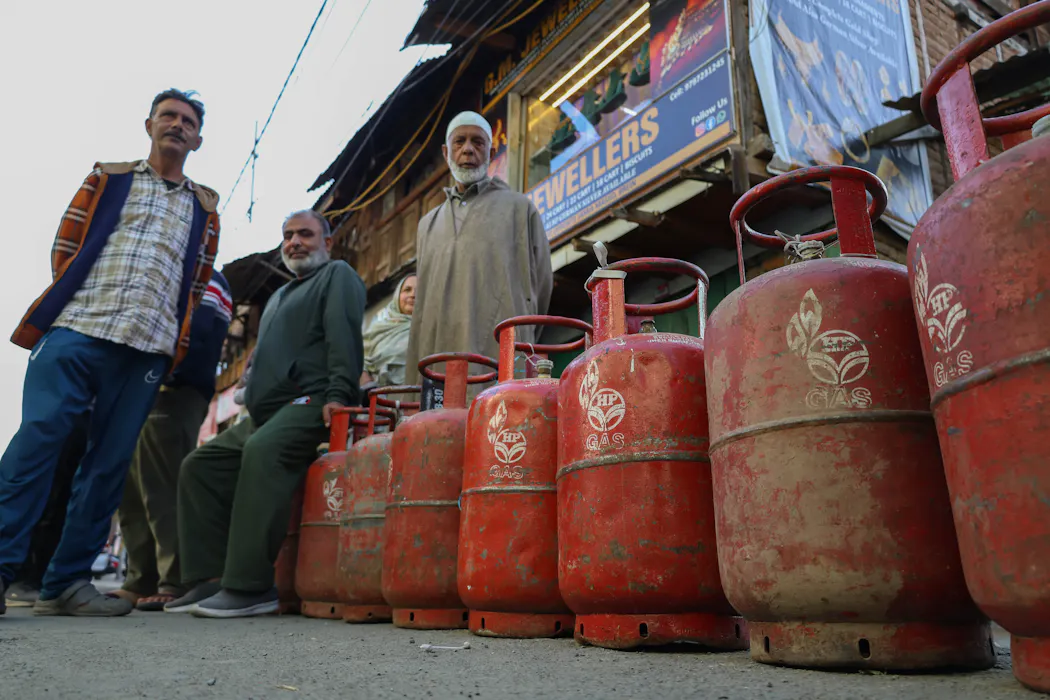
In addition to blocking crude oil shipments, the closure of the Strait of Hormuz has cut off the flow of about 20% of the world’s supply of liquefied petroleum gas. That is a hard-to-replace cooking fuel widely used in India and China, among other countries.
As far back as April 2026, people in India were having trouble finding and affording gas with which to cook, forcing them to skip meals. India is looking to increase the volume of liquefied petroleum gas it buys from the U.S. to ease shortages.
Other pressures are also closing in on the world’s petroleum supplies from other directions.
Seaborne drones launched by Ukraine in the Black Sea have at least temporarily blocked most crude oil exports from Kazakhstan, which needs that waterway to ship its oil to the Mediterranean Sea and beyond.
Houthi separatists in Yemen used aerial drones to close off the southern end of the Red Sea in the early 2020s, blocking a key alternate route for oil shipments around the Strait of Hormuz. They are reportedly set to do so again.
Those technologies and tactics are spreading to other oil-rich regions of the globe. For instance, separatists in Colombia used drones to attack oil production equipment in late July.

Possibilities for hope?
Since the Iran war started, China’s imports of crude oil and petroleum-related products have dropped by about 3.6 million barrels per day, roughly one-third of its prewar imports. In fact, Chinese refiners actually started reselling crude oil in global markets to earn money to make up for reduced activity in Chinese refineries.
One explanation is China is tapping its strategic oil reserves, but it is also possible that an economic slowdown, combined with the country’s massive build-out of alternative fuels and renewables, is curbing the need for imported oil-based fuel. Chinese petrochemical firms are also buying ethane from the U.S. to replace cut-off supplies from the Middle East.
On the supply side, in Brazil, production by government-owned oil company Petrobras is up 14% over 2025 levels and is operating refineries at full capacity. As a result, its import needs have dropped substantially, offering some relief to markets in the Americas.
Venezuelan oil production has risen from 937,000 barrels a day in 2025 to 1.2 million barrels a day in mid-2026. Most of that increase is from oil companies that were operating in Venezuela before the U.S. removed former President Nicolás Maduro. A few new deals to buy Venezuelan oil have been signed, but the flood of investment the Trump administration hoped for has yet to materialize. Venezuela’s laws and political instability are making companies wary, and some are still seeking repayments from when their assets were seized by then-President Hugo Chávez in 2009.

Risks of inflation and long-term vulnerability
For now, rising oil and gas production and refinery output in the United States has shielded Americans from significant petroleum shortages.
But there are many ways in which that situation could change. Worsening global supply disruptions could eventually translate into higher market prices on a wide range of goods and commodities, which would push U.S. inflation rates higher.
Ultimately, the new methods of drone-based warfare against energy facilities and shipping are a major national security concern for the U.S. and all major economies that rely on energy shipments and imports of other goods to underpin their economies.
Countries will now need to work toward energy security in a world with insecure global sea lanes, more extreme weather and expanded geopolitical conflict.
Having researched and tracked the geopolitics of global energy markets for decades, I expect that those efforts will focus on determining what energy sources each country has within its own borders. And given the geographical and geological limits of fossil fuels, I anticipate more countries will seek to accelerate the already speedy development of renewable energy like wind and solar power to minimize the risks of wars interrupting their energy supply.
Amy Myers Jaffe does not work for, consult, own shares in or receive funding from any company or organization that would benefit from this article, and has disclosed no relevant affiliations beyond their academic appointment.
Read These Next

Why your boss matters more than remote or hybrid work when it comes to burnout and job satisfaction
A return to the office can mean very different things to different workers, which is why this debate…
Missing ambassadors, inexperienced appointees – is Washington dropping the diplomatic ball?
Almost half of US ambassador jobs remain vacant. Meanwhile, political appointees are outnumbering career…

Columbus’ own writings reveal how tightly religion and conquest were intertwined from the start
The ‘Book of Prophecies’ shows how Columbus recast brutal colonization as a divine mission.