Fishing for DNA – how a cup of river water can reveal secrets about human health, pollution and biod
Environmental DNA contained in a small sample of water, sand or even air can reveal the presence of people, wildlife and pathogens, helping researchers track where they’ve migrated.

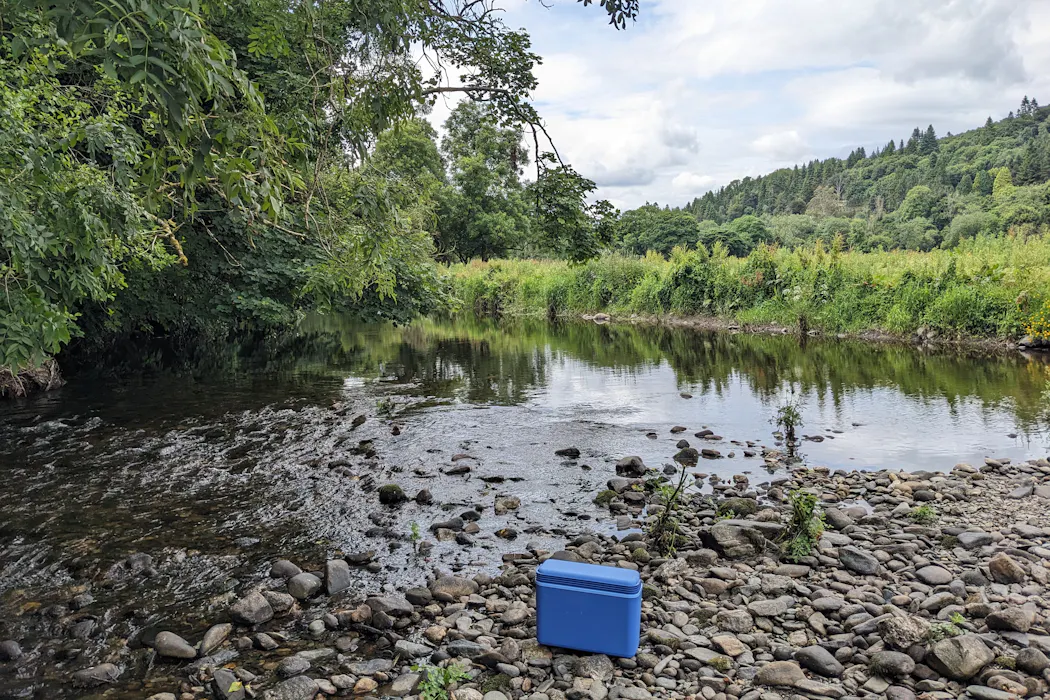
The DNA in a single cup of water can track wildlife, monitor pollution and survey pathogens in waterways and their surroundings, all at the same time.
DNA is contained in each cell of every plant, animal, fungus and microbe. It carries the genetic instructions needed for an organism’s survival, growth and function, and the DNA of each species is unique.
Organisms shed DNA into their environments. This environmental DNA, or eDNA, can come from cells shed from skin, spores and pollen blowing on the wind, or even just a cough or sneeze. It can provide huge amounts of information. Researchers can use it to assess biodiversity, monitor the spread of invasive species and detect pathogens.

Traditional monitoring methods, such as field observation or trapping, can be difficult, intrusive and time-consuming. Tracking an elusive species in the wild can mean hours or days without a sighting, perhaps in difficult terrain or remote locations. Trapping wildlife can be stressful for the animals and relies on expert knowledge to properly handle wildlife and position traps.
With eDNA, researchers can collect information about a species without ever needing to see or interact with it. Moreover, a cup of water, a few ounces of sand or even air sucked through a filter can hold enough information to determine what has been in the area, including people, wildlife and infectious pathogens.
Cracking the DNA code
Researchers sequence DNA fragments collected from sand, water or air to decode the order of the chemical building blocks that make up DNA. These sequences can be used to not only identify the species that the fragments of DNA came from, but also to narrow down the area where the organism originated.
Until recently, researchers typically used an approach called metabarcoding to sequence eDNA. This method creates many copies of specific, short genetic markers that researchers can use to identify particular species.
Although powerful, metabarcoding is selective by design. It finds only what it is designed to find – typically small but informative regions of DNA called barcodes – and ignores everything else. Because the DNA fragments are so short, it’s difficult to link these bits of information. A single barcode cannot cover all species in an area, and it cannot provide information about the genetic traits of species in the area.
My team at the Duffy Lab at the University of Florida took a different approach. Rather than focusing on one short region of DNA in a sample, we used a technique researchers call long-read shotgun metagenomic DNA sequencing, which reads each fragment of DNA in long, continuous sections. All the DNA and traits in one long fragment clearly come from the same individual. As a result, we can sequence all of the DNA from every species, from viruses to vertebrates and everything in between.
Compared to metabarcoding, shotgun sequencing is faster and requires less lab manipulation and processing. The “shotgun” portion of the name refers to how the DNA is fragmented, read in short stretches and then reassembled. This random, explosive fragmentation resembles the firing of a shotgun.
By comparing the results of shotgun DNA sequencing to large reference genome databases, researchers can figure out which species the DNA came from. This process provides an all-in-one DNA readout of everything in a single sample.
Rather than identifying the presence of particular target species, like the barcoding technique, shotgun sequencing is a broad snapshot of the ecological communities in a specific area. In a single assessment, researchers can detect microbes, fungi, plants and animals in as little as 24 hours.
River rich in species
To test our new method, my team and I collected water samples from the Avoca River in Ireland, starting from near its source in the Wicklow Mountains all the way down to where it enters the Irish Sea in Arklow town. We also collected sand samples from beaches near the river mouth.
These samples revealed a wealth of genetic information drifting through the river system.

The DNA we filtered from the water samples came from many organisms living in or near the water, including otters and oysters, foxes and fish, badgers and bacteria. Some of the species we detected were common and easily visible along the river (cows, sheep, dogs and humans), while some were more difficult to see (leatherback turtles and octopi). Some required a magnifying glass (biting midges, microscopic worms and viruses).
Researchers can also use environmental DNA to evaluate whether biodiversity restoration is working as expected. From our samples of the Avoca River, we detected DNA from organisms with major economic and ecological consequences: a fungus called Leptosphaeria maculans that affects crops and a fungus called Batrachochytrium dendrobatidis that has caused catastrophic declines in frog populations around the world. This is the first time researchers have detected B. dendrobatidis in Ireland.

Not only can eDNA show which species are present, it can also reveal their origins and help researchers understand how they migrate and disperse. For example, the blue mussel eDNA we recovered near the mouth of the Avoca River most closely matches the DNA of mussels found off the coast of Wales (84%) and France (16%).
Pollution mitigation
Human impact on the river was clearly reflected in the eDNA we collected.
The samples we collected upstream in a sparsely populated area had very little human DNA. By contrast, the samples we took near the town of Arklow in 2022 contained high levels of human DNA, consistent with untreated wastewater entering the river at that time.
Additionally, we found DNA from human-associated pathogens in river water and beach sand. These included bacteria such as streptococcus, parasites such as entamoeba, and sexually transmitted pathogens such as chlamydia, herpes and gonorrhea.

When we returned to collect samples in 2024, the human DNA signal had practically disappeared. This coincided with the construction of pipework leading to the new Arklow Wastewater Treatment Plant, diverting human waste from the river.
The ability to identify wildlife, human activity and pathogens all from one water sample highlights the potential for a wide-ranging One Health approach to environmental health surveillance. In principle, it is possible to use eDNA to simultaneously identify pollution sources and emerging pathogens, track invasive species and monitor environmental reservoirs of disease, nearly in real time.
All of nature in a nutshell
Environmental DNA offers a new form of ecosystem monitoring. Rather than carrying out environmental surveillance through the separate lenses of zoology, botany, microbiology and epidemiology, eDNA acts as a continuous genomic observatory.
This “all-in-one” approach to ecosystem monitoring is becoming ever easier as DNA sequencing costs continue to fall, technology advances allow longer DNA fragments to be sequenced, and computational power improves.
A single cup of water can unlock the incredible secrets flowing beneath the surface of the river. Biodiversity in and around the water, the effects of pollution and recovery, and the beautiful complexities of entire ecosystems are just waiting to be revealed.
Jenny Whilde does not work for, consult, own shares in or receive funding from any company or organization that would benefit from this article, and has disclosed no relevant affiliations beyond their academic appointment.
Read These Next

Ghost stories don’t just scare us – they remind us of historical injustices
From phantom ships carrying enslaved people to an apparition in a Maine lake, ghost stories have revived…

If Philadelphia Eagles quarterback Jalen Hurts can get dangerous blood clots, so can you – here’s ho
In the US, up to 900,000 people are affected by severe blood clots each year, and over 60,000 die from…
Why do people still get polio in some countries and not in others?
Polio can survive only where it finds kids who aren’t protected by a vaccine.