War-induced fertilizer shortage may be reducing US soil and water pollution
Decades of farmers using more fertilizer than they needed have quietly built up large reserves of nutrients in the soil.

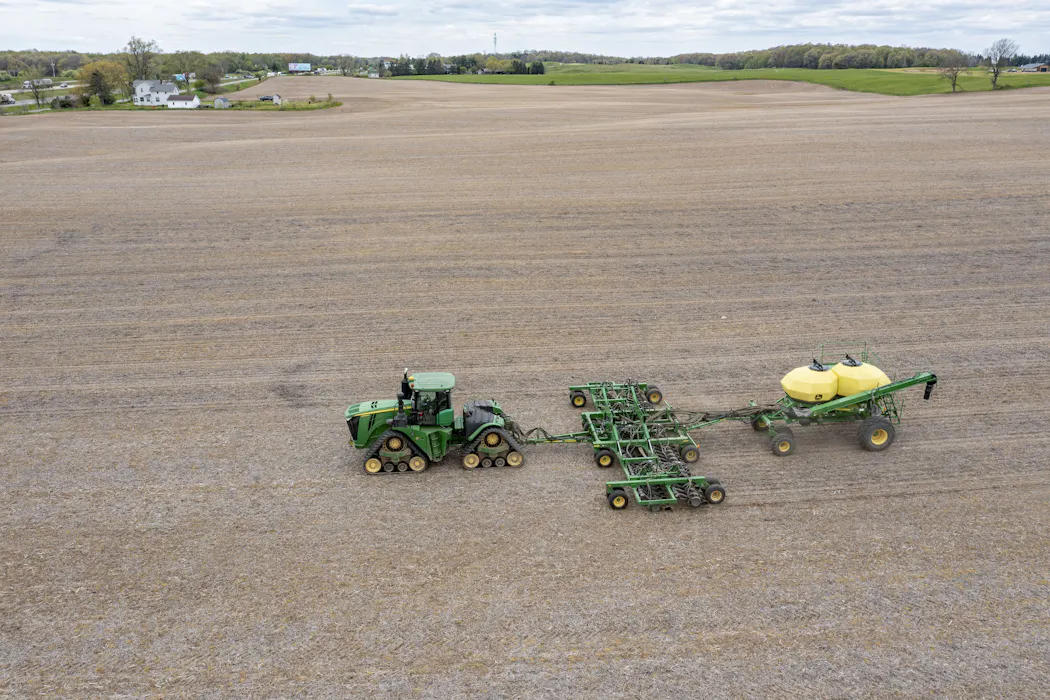
American farmers are expected to plant several million fewer acres of corn in 2026 than they did in 2025, as the closure of the Strait of Hormuz throttles a key fertilizer trading corridor, along with the energy and raw materials needed to produce and transport fertilizer.
The closure is disrupting deliveries of about one-third of the world’s traded agricultural fertilizers. Fertilizer prices are rising, and farmers worldwide are cutting back on fertilizer use or shifting to less fertilizer-intensive crops.
Corn is one of the most fertilizer-intensive and widely grown crops in the United States, but the disruption extends far beyond a single crop or a single nation.
These changes are often discussed as a threat to global food supplies – and they are.
But as researchers who study agricultural nutrient cycles and nutrient pollution of our waterways, we suspect that the picture is more complicated, and in some ways more hopeful, than the headlines suggest.
That is because decades of farmers using more fertilizer than they needed have quietly built up large reserves of nutrients in the soil, which crops can draw on, even when farmers aren’t applying fertilizer. Indeed, research has shown that in highly intensive agricultural systems, fertilizer application can be cut substantially with little to no effect on crop yields.
A legacy of overuse
For decades, farmers in the United States and around the world have steadily increased the amount of fertilizer they use, seeking to produce enough crops to feed a growing population. Despite several years of encouragement to apply less, farmers consistently apply more nitrogen and phosphorus than their crops actually need, our research suggests.
The nutrients that are not taken up by plants accumulate in soils, providing large stores of nitrogen and phosphorus long after they were first applied. They also leach into groundwater or run off into rivers and lakes, driving dangerous algal blooms, coastal dead zones and greenhouse gas emissions.
But in the current crisis, they may also serve an unexpected purpose.

Latent nutrients in the ground
As shortages and price hikes force farmers to use less fertilizer, crops may be able to draw on legacy nutrient reserves already in the ground.
Our analysis of phosphorus use across U.S. croplands found that in parts of the central Midwest and livestock-dominated regions in the East, soil phosphorus reserves are large enough to maintain crop production levels without as much new fertilizer.
In these nutrient-saturated systems, reductions in fertilizer applications can lower costs and reduce environmental losses without proportionately reducing production. Applying less also means fewer nutrients running off into rivers and streams.
Nutrient distribution
The current shortage may also help shift where farmers find fertilizer.
Livestock produce manure that is high in both nitrogen and phosphorus, which makes excellent fertilizer. It can even be processed into a slurry with an even richer mixture of nutrients in anaerobic digesters, which generate electricity as a byproduct of their chemical reactions.
Processing more manure in digesters, and delivering that slurry to crop farmers, could reduce the nation’s dependence on foreign fertilizer supplies.
The limits of resilience
The details are important. Not every farm or field has enough leftover nutrients to maintain yields with less fertilizer, and the buffers that do exist in some fields will not last indefinitely. In parts of the world where the soil is low in nutrients, such as regions of sub-Saharan Africa, improving access to fertilizers remains essential for increasing food production and supporting livelihoods.
In places where nutrients have accumulated over decades of intensive use, the soil may serve as a buffer against losses in yield, at least for some amount of time, though exactly how much will vary with each field. The current growing season may provide opportunities to discover how strong that buffer is, and whether reducing fertilizer applications improves downstream water quality.
Kimberly Van Meter receives funding from the National Science Foundation, the Environmental Protection Agency, and the U.S. Department of Agriculture.
Nandita Basu receives funding from Environment and Climate Change Canada, NSERC, World Bank
Read These Next
Chiricahua is the nation’s newest national park – what does that mean?
What comes next for Chiricahua, now that is has been officially redesignated as America’s 64th national…
El Niño is threatening California’s fragile coast again – the 1982-83 El Niño opened eyes to the ser
The destructive 1982-83 El Niño, then the strongest on record, eroded cliffs, leaving homes hanging…

Why the political ambition gap between men and women persists even at the local level
Women are less ambitious for local office than men, mirroring an ambition gap that exists at the state…