How everyone pays the cost for patents on seeds, and private companies get rich from keeping them se
When huge companies assert their patents, smaller businesses and public plant breeders are dissuaded from conducting research that might not be illegal at all.

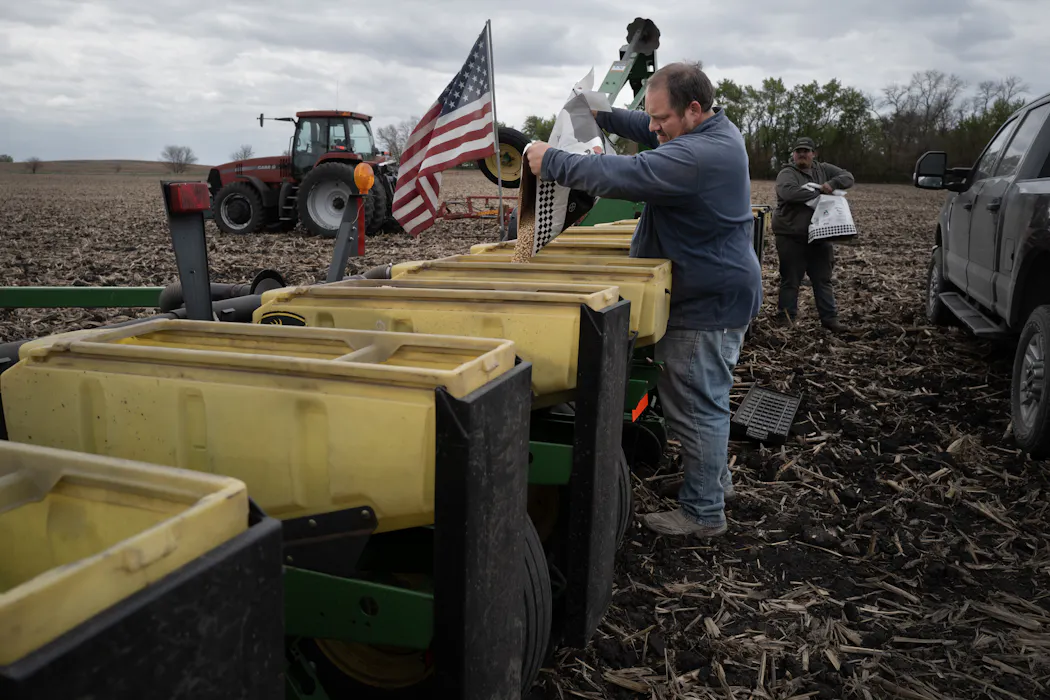
The United States is one of only a handful of countries that allows companies to hold patents on plant varieties. As a result, a small number of corporations can – and do – suppress competition in the seed industry, stifle innovation and turn taxpayer subsidies intended for farmers into corporate profits.
The U.S. Department of Agriculture has found that two companies control more than 70% of U.S. corn and soybean seed sales, and the top four cottonseed companies control nearly 94% of that market.
In a May 2026 court filing in a legal dispute between two U.S. seed companies, the Department of Justice said patents on seeds are obstructing competition and research in the agriculture industry.
As researchers who work on plant breeding and seed policy, we have seen how that plays out. When huge companies assert their patents, smaller businesses and public plant breeders who often lack the legal resources to fight back are frequently dissuaded from conducting research and development that might actually not be illegal at all.
And a lack of competition allows dominant companies – not always based in the U.S. – to collect large sums of taxpayer money that Congress allocated in hopes it would help farmers, not shareholders’ and executives’ bottom lines.
A shift in ownership
For most of human agricultural history, farmers freely saved, exchanged and planted seeds season after season, creating a diversity of crops suited to the places and people who grew them.
While some communities restricted the exchange of seeds for cultural or ceremonial reasons, seeds were broadly understood to be a shared resource. Even as recently as the 1970s, most plant breeding was carried out by public researchers at government stations and universities, while private companies focused on producing and selling those varieties at scale.
That diverse and decentralized system also served as an invisible insurance policy against disease and disaster: If one variety failed, there were plenty of others distinct enough to fill its place.
Beginning in the 20th century, though, governments began to grant companies patents on living organisms, beginning with a genetically engineered bacterium that broke down crude oil. Suddenly, chemical and pharmaceutical companies saw opportunities to earn money by engineering specific traits, such as herbicide tolerance, into key crop plants, including corn, soybeans, cotton and canola, and patenting those varieties.
Then they used those patent rights to prohibit other plant breeders, even university researchers, from conducting research and breeding with their seeds and to forbid farmers from saving their own seeds from one season to the next.
Those steps eliminated seed companies’ two most obvious sources of competition: other developers building on their work and farmers saving seed. The seed companies then had enough market power to set prices so high they took nearly all of farmers’ potential profits, while leaving them just enough of a margin to remain customers.
According to a report from the Department of Agriculture’s Economic Research Service, the price for genetically engineered seeds has more than quintupled since 1990, rising by 463%. But over that same period of time, the price farmers have received for their crops has increased only by 56%.
Subsidies get diverted
When the prices farmers receive for certain crops fall below a certain threshold, or when farmers suffer losses from bad weather or unexpected trade disputes, the Department of Agriculture has a multitude of programs that offer payments to make up the difference.
But that money tends to spend little time in farmers’ pockets.
An August 2025 study shows that when farm subsidies increase, seed companies respond by raising their prices, charging based on what farmers can afford to pay rather than their own cost of producing and marketing the seed. Specifically, for every 1% increase in farm subsidies, seed companies raise their prices by 0.5%.
And when farmers go to sell their crops to grain processors, those companies benefit from being able to purchase commodity grains, such as corn, soybeans and canola, at a predictable price, held low because subsidies help farmers produce an abundant supply at margins that would otherwise drive farms out of business.
Testifying at an October 2025 Senate Judiciary Committee hearing on competition issues in the seed and fertilizer industries, Iowa farmer Noah Coppess put it plainly: “The reality in farming today is we’re price takers rather than price makers. That’s especially true when consolidation limits our options. … I have concerns with our input and equipment supply chains and their ability to manipulate our costs.”
The result is a system in which public money intended for farmers is redistributed to the seed suppliers and commodity purchasers who profit on either side of them.
Limiting research
Dominant seed companies prevent competitors from developing new breeding programs through a complex web of patents and restrictive licensing contracts that make it nearly impossible to acquire enough genetic material to get started.
The patent system is built on the premise that applicants must completely disclose how their inventions were made in order to get protection. This allows the public to understand the scope of the invention, as well as to improve upon it.
Genetic analyses on the protected seeds would be required to understand how a variety was bred and the genetic traits it contains. However, seed companies have also threatened independent researchers with patent-infringement lawsuits. Those threats prevent independent researchers from studying the crops that make up the country’s supply of food, feed, fuel and fiber.
The result is that no one outside of the dominant companies, not even the U.S. government, knows which economically crucial crops, most of which are grown from patented seeds, might be vulnerable to emerging pests and pathogens. For years, plant breeders have been calling for genetic assessments of these seeds and the crops they grow; to date, no such studies have been conducted.

A shift in direction
But the May 2026 Justice Department court filing saying seed patents are blocking agricultural competition and research indicates the tide may be turning.
In 2023, multinational agrochemical company Corteva sued a genetic engineering startup, Inari, for infringing its patents by, among other things, obtaining samples of Corteva’s patented seeds from a public repository and analyzing their genetic makeup.
Though the Justice Department didn’t weigh in favor of either company, its court filing said companies should not be able to restrict the public from sequencing genetic material that was deposited as part of the process of securing patent protection.
Notably, the department’s court filing came from the Antitrust Division rather than the Civil Division, which usually handles intellectual property issues. That difference suggests that the government sees this extension of patent rights as an illegitimate way for a company to exclude other companies from competing.
The case is still winding its way through the legal process. But if the judge agrees, his decision could be consequential. For starters, competitors could begin to understand the strengths and weaknesses in seed varieties on the market and find ways to build on that innovation, which is precisely the type of activity the patent system was designed to encourage.
More competition in the market could provide an important check on seed prices, reducing the burden on American farmers and, thereby, taxpayers. Finally, researchers could conduct the studies that are needed to begin rebuilding the kind of genetic knowledge that was, for most of human history, held in common – an insurance policy in the best interest of us all.
Julie Dawson works for the University of Wisconsin-Madison and receives research and extension funding from the USDA and the State of Wisconsin. She was a co-author on the USDA More and Better Choices report. She worked on issues related to fair competion and intellectual property rights in seeds and other inputs in collaboration with the USDA from 2021-2025 as part of a cooperative agreement with USDA-Agricultural Marketing Service
Kiki Hubbard works as a part-time researcher for the University of Wisconsin-Madison and contracts with the Vermont Law and Graduate School to provide research support for projects related to competition and intellectual property in the seed industry. She has received research funding from the USDA and currently receives research funding from the State of Wisconsin. She was funded by a cooperative agreement with USDA-Agricultural Marketing Service from 2023-2025.
Paulina Jenney works for the University of Wisconsin-Madison and contracts with the Vermont Law and Graduate School to provide research support for projects related to competition and intellectual property in the seed industry. She receives research and education funding from the USDA and the State of Wisconsin. She is a co-author of USDA's More and Better Choices for Farmers report and was funded by a cooperative agreement with USDA-Agricultural Marketing Service from 2022-2025.
Read These Next

PHP is in the foundation of 70% of websites – here’s what it is and why a flaw in the software is a
A cybersecurity researcher explains how a flaw in widespread software makes millions of websites vulnerable…

Fear-based campaign ads can grab attention, but whether they win votes is less clear
Political campaigns often use fear to play on voters’ existing prejudices and stereotypes. What that…

Indian Gen Z ‘cockroach’ protesters aim to upend assumptions about democracy – and populism – in Mod
The protests challenge the government’s view of who “the people” are, what democracy means, and…