How local communities are challenging Big Tech data centers’ noise, pollution and rising electricity
Local needs, political tensions and corporate power all get involved in the democratic processes by which Americans govern their communities.

As the race to build data centers across the United States accelerates, local governments worry that the tech industry mantra of “move fast and break things” means their communities are at risk of being broken.
I’m a Harvard researcher studying the relationship between data centers and energy. I’ve closely monitored how local governments respond to proposals or even just concerns about the potential for data centers in their communities. What I’ve found is a complex story of community needs, political tensions and corporate power – all interacting with local, state and national democratic processes.
Promises and potential
Technology companies stay competitive by being ready to provide data and communications services even before customer demand rises. Data centers already power online communications, shopping and banking systems. Now, expanding demand for artificial intelligence has led to over 1,000 pending data center proposals across the country.
Federal actions also drive development. The Trump administration has identified data center build-out as a strategic priority. The administration has promoted data center capacity as a measure of American strength and signaled that federal regulations on data centers may be eased.
At the community level, technology companies claim that data centers bring jobs, economic revitalization, digital connectivity and economic growth to local communities.
Not great neighbors
So far, however, data centers’ benefits are overshadowed by more visible harms.
Nearby residents experience higher air pollution and excess noise. Data processing also uses a lot of water to cool the buildings and their equipment.

Simultaneously, electricity prices continue to outpace inflation, burdening families across the country. These trends reflect, in part, the costly infrastructure investments needed to power data centers.
The local movement
My research has found that local governments across the U.S. are trying to avoid or reduce these harms.
Some counties and cities that don’t have specific zoning rules and regulations for data center development are using short-term moratoriums. These pauses in data center permitting and construction give communities time to consider how to define new laws and regulations about the facilities’ location, electricity use, water conservation and noise buffering.
Speaking about his town’s decision to impose a one-year data center moratorium, Rick Bella, the town council president in Merrillville, Indiana, about 40 miles southeast of Chicago, stressed a desire to “evaluate real-world impacts and learn from a project developing right next door before determining what may or may not be appropriate for Merrillville.”
Other places want to block data centers altogether. In April 2026, for example, the Ypsilanti Community Utilities Authority near Detroit, Michigan, passed a yearlong halt to the “delivery, commitment, reservation, extension, or approval of water and sewer services” for data centers. The move blocks data centers, including one under development by the University of Michigan and Los Alamos National Laboratory, from getting the water they need to operate.
Separately, towns across Ohio, Wisconsin, Maryland, Nevada and California have put questions related to data centers on their local ballots. Through these referendums, voters can weigh in on construction bans, tax incentives and zoning ordinances.

Power struggles
While public attitudes around data centers have remained largely nonpartisan, local and state officials don’t always see eye to eye.
Officials in Hood County, Texas, for example, rejected a proposal for a six-month moratorium after a state senator urged the Texas attorney general to intervene and prevent the measure.
In 2025, West Virginia passed a bill that reduces local governments’ zoning and regulatory powers in relation to data centers and microgrids. A similar bill in New Hampshire’s legislature was defeated in May 2026.
Tech companies are also flexing their legal and financial muscles. For example, data center developers sued Saline Township, Michigan, and Chatham County, North Carolina, seeking to overturn their local zoning decisions, to be able to proceed with data center construction.
Changing tides
Local pushback comes at a pivotal moment for artificial intelligence technology itself.
As seen in objections to the internet’s expanding AI “slop,” backlash over AI-generated Super Bowl ads, worries about an AI-related financial bubble and complaints about Google’s pivot to AI-directed search, Americans are reckoning with AI’s role in society.
Further, many people are questioning the role of technology broadly. Increasing numbers of teens and adults are addicted to their smartphones, emotionally and psychologically dependent on their availability. Parents and teachers are questioning the usefulness of various types of digital technologies in classrooms. Even the pope has warned that technology must serve humanity – and not the other way around.
Americans are responding to this moment through the power of their voices and votes.

Technology companies may view moratoriums and new regulations as delays in project development. But the town hall discussions, community coalitions, public petitions and even farmers’ unions reflect American democracy at work.
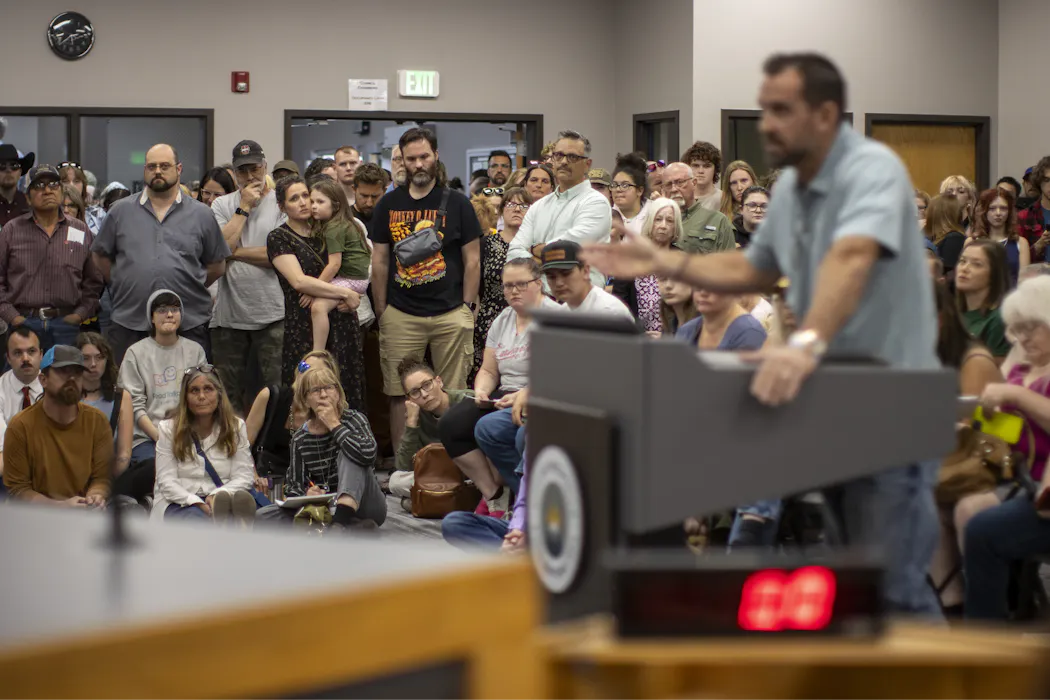
In Sunbury, Ohio, local officials considered a moratorium only after witnessing the scope of public protest over a proposed data center.
In April 2026, voters in Festus, Missouri, removed several City Council members after they supported a new data center despite resident pushback.
The question of whether a community wants or should have a data center does not have a universal answer. I believe it’s a question that deserves deliberate processes, transparency and consideration.
To me, these local-level actions reflect a desire to slow down. There is little question that data centers and AI will be part of our collective future. Today, communities are asking for a fair say in what their futures will be.
Rachel Mural does not work for, consult, own shares in or receive funding from any company or organization that would benefit from this article, and has disclosed no relevant affiliations beyond their academic appointment.
Read These Next

Ancestors all around – millions of dead people linger in Americans’ memories
The shadow population of deceased relatives is more than three times as large as today’s living population.

UN peacekeepers prepare to exit Lebanon after 70 years – leaving behind a worrying security vacuum
In August, the UN Security Council voted to end the decades-long peacekeeping mission in Lebanon. Blue…

PHP is in the foundation of 70% of websites – here’s what it is and why a flaw in the software is a
A cybersecurity researcher explains how a flaw in widespread software makes millions of websites vulnerable…