Formula 1 racing shows the hard part of reaching net-zero carbon emissions isn’t the engineering
Many Formula 1 innovations have made their way from the racetrack to regular roads. But technological improvements can only go so far toward limiting greenhouse gas emissions.

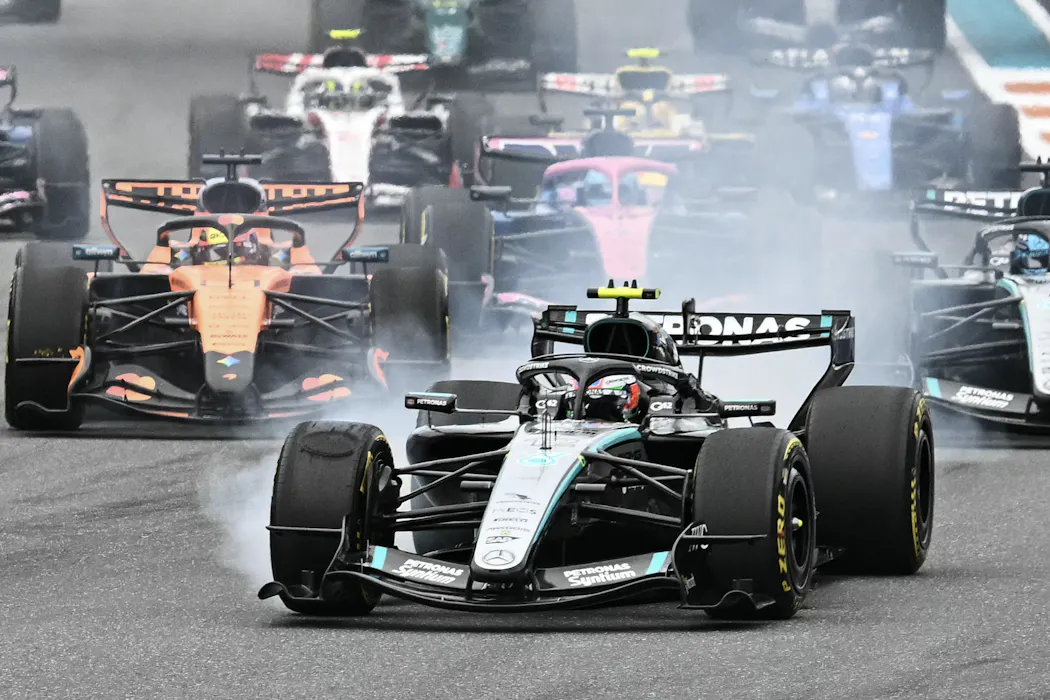
Formula 1 auto racing is one of the most energy-intensive and logistically complex sports on the planet. The events involve cars, of course, but also long-haul freight, international travel, temporary event infrastructure, and a global calendar that keeps people and equipment moving almost constantly.
Motorsports companies are not necessarily going to lead the transition to cleaner energy sources as the world seeks to limit the climate changes resulting from burning fossil fuels. But Formula 1 is a global operation with a large audience and a looming deadline for eliminating greenhouse gas emissions. It also has the same kinds of operational realities many industries face when trying to reduce their emissions: transportation, freight, energy use and the temptation to count the hardest remaining emissions as someone else’s problem.
F1 has pledged to reach net-zero carbon emissions by 2030 across its full operations. That means it will emit as little carbon dioxide and other greenhouse gases as possible, using methods that include shifting to the use of alternative fuels in race cars. The organization says it will balance any remaining emissions by capturing carbon back from the atmosphere or purchasing credits from organizations that capture carbon themselves. The organization publishes sustainability data updates to demonstrate its progress.
We used that data in an interactive computer model that lets anyone who wants to explore what it will take for Formula 1 to fulfill that promise in reality. Users can change various assumptions about fuel use, increase renewable electricity use and even change the racing calendar.
Our analysis finds that F1 racing could achieve substantial cuts in emissions – but getting all the way to net zero will still require carbon offsets. That leaves F1 with choices, gains, limits and then a final question about what counts as “zero.”

From the track to the road
Formula 1 racing has long provided opportunities to test technologies that later appear in everyday transportation. Hybrid systems that use gasoline and electric batteries to power the engine, regenerative braking that recovers energy when a car slows down, and energy recovery from exhaust heat all advanced through F1 before becoming common in everyday cars.
Starting in 2026, Formula 1 cars are set to run on 100% advanced sustainable fuel made from renewable or waste-derived feedstocks like municipal waste or forestry waste. The international governing body of auto racing, the Federation Internationale de l'Automobile, and F1 leaders have explicitly described that fuel mix as a drop-in technology that could directly replace fossil fuel gasoline, with potential use in everyday vehicles.
Significant room for improvement
Our analysis suggests the sport can make significant emissions cuts through concrete operational changes. Cars can use cleaner fuels; shipping and logistics can choose lower-emission options; and more buildings can use renewable energy.
Our model shows that one of the most effective options is to group races more tightly by geography. If all the races scheduled for Europe, for instance, took place in successive weeks, followed by several weeks of racing in Asia, people and freight would travel less over the course of a season than they do now, shifting back and forth across continents.
But the race calendar is not dictated solely by logistics. Commercial deals, weather, tourism efforts, host-country priorities and broadcaster demands all help determine which races happen in which cities on what dates.
Under realistic assumptions, our analysis is that F1 appears capable of cutting its direct emissions by at least 50% from its 2018 baseline.
But in our scenarios, even significant operational improvements won’t get F1 all the way to net zero by 2030. Under the scenario that includes the most aggressive operational cuts, about a quarter of F1’s yearly emissions still remain to be addressed.

Compensating for unavoidable emissions
To achieve net-zero emissions, Formula 1 will need to purchase carbon offsets to cover the remaining gap.
Buying carbon offsets, also called carbon credits, means spending money to make up for emissions a company can’t eliminate itself. For instance, a company could pay an organization to plant hundreds or thousands of trees, which would remove carbon dioxide from the atmosphere and store it in wood for many years.
The markets in which carbon offsets are bought and sold have faced years of scrutiny over whether credited benefits are real, whether the activities like tree-planting would have happened anyway, and whether they remove carbon from the atmosphere for a suitably long time.
Those questions matter for Formula 1 because the final step from deep emissions cuts to “net zero” depends not just on whether credits exist, but on what kind they are and whether they should count.

A corporate challenge
Other companies are also struggling with these questions about carbon offsets in their climate plans. For instance, Microsoft, one of the world’s largest buyers of carbon removal credits, announced in April 2026 that it was pausing some new carbon-removal credit purchases.
For Formula 1, announcing the target was the easy part. The harder part is deciding what to do when technology and operational improvements get most of the way there, but not all the way. At that point, climate strategy becomes less about innovation alone and more about governance, credibility and what people are willing to count as credit.
Americans will be watching: The Netflix documentary series, “Drive to Survive,” which debuted in 2019 and is now in its eighth season, has significantly boosted Formula 1’s audience in the U.S. The organization’s sustainability efforts are part of a public story about whether a global entertainment business can align a high-performance identity with changing expectations about climate responsibility.
The authors do not work for, consult, own shares in or receive funding from any company or organization that would benefit from this article, and have disclosed no relevant affiliations beyond their academic appointment.
Read These Next

Chiricahua is the nation’s newest national park – what does that mean?
What comes next for Chiricahua, now that is has been officially redesignated as America’s 64th national…

An AI model’s false tip to Philadelphia police reveals how digital agents can do as they’re told and
An expert on AI governance explains why these rare mistakes may soon be common, and with much higher…

Offering cash for votes is quite common – but here’s why it doesn’t work
Money or other material benefits are often not enough to override a voter’s preferences and partisanship.