Why the Persian Gulf has more oil and gas than anywhere else on Earth
For sheer abundance and ease of production of oil and natural gas, it simply doesn’t get any better than the Persian Gulf region.

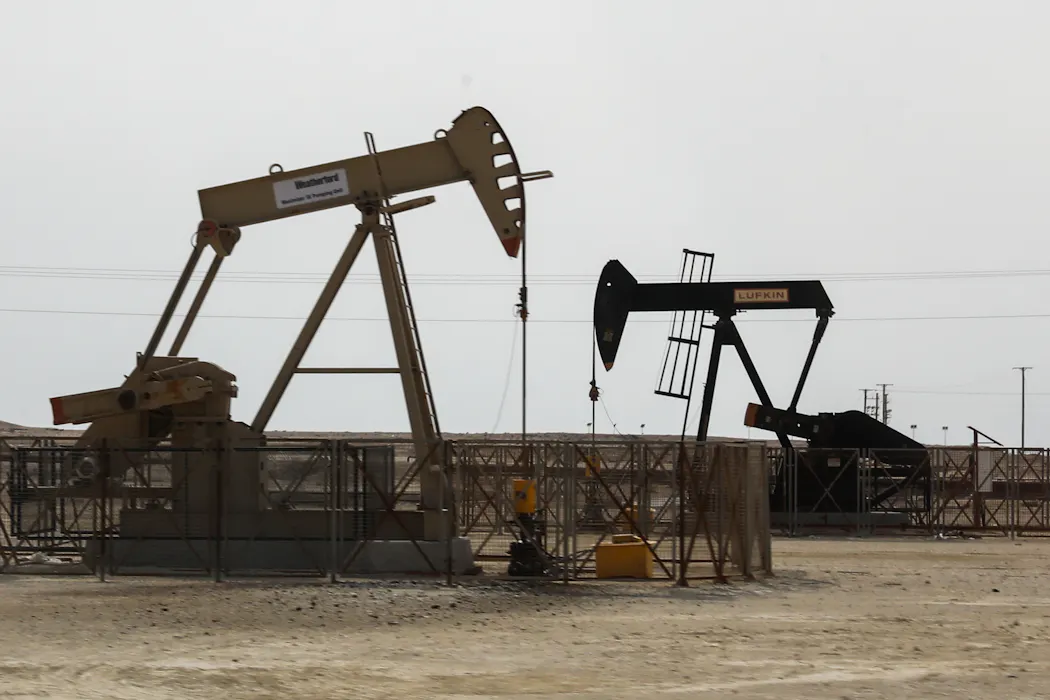
It has been said that Persian Gulf countries are both blessed and cursed by their vast oil and gas reserves. Geologic forces over millions of years have meant the region is an energy-rich global flash point, as it is now with a war underway that’s causing a global energy crisis.
As a petroleum geologist who has studied the region, I still find myself amazed at the size of its hydrocarbon endowment. For instance, there are more than 30 supergiant fields, each holding 5 billion barrels or more of oil, around the Persian Gulf. And wells in the region produce two to five times more oil each day than even the best wells in the North Sea and Russia.
Modern geoscience has identified several key factors of rocks that make a region particularly rich in petroleum, including their ability to generate and hold hydrocarbons. In the Persian Gulf region, all of these factors are at or near optimal levels.
For sheer abundance and ease of production, it simply doesn’t get any better than the Persian Gulf region.

A quick history
Humans knew about the presence of hydrocarbons in the area long before flooding created the Persian Gulf at the end of the last ice age, between 14,000 and 6,000 years ago. Natural seeps of oil and gas are common along rivers and valleys in many parts of the region. Thousands of years before the start of the Common Era people used bitumen, a form of heavy oil, for building mortar and to waterproof boats.
The first modern oil discovery came in 1908 at a known seepage site in western Iran. In the 1950s and ’60s, an era of rapid expansion in oil and gas exploration, it became clear that no other region on Earth was likely to have a similar abundance.
Other areas with huge volumes of oil and gas have been found, such as West Siberia in Russia and, more recently, the Permian Basin in the U.S., but none compare either with the scale of reserves or the high rates at which oil and gas can be produced in the Persian Gulf.
Geologic setting
The Persian Gulf region is located where two continental plates are colliding: the Arabian Plate to the southwest and the Eurasian Plate to the east and north. This collision has been happening for about 35 million years and has resulted in a dynamic setting where rock layers have been bent and broken and, at deeper levels, transformed by significant heat and pressure.
Geologic features differ a great deal between the two sides of the Gulf. On the Iranian side, the the Zagros Mountains stretch 1,100 miles (1,800 kilometers) from the Gulf of Oman to the Turkish border. Part of the great Alpine-Himalayan mountain system, the Zagros are made up of highly folded and broken rocks that formed over the past 60 million years from the collisions of Africa, Arabia and India with Eurasia.
On the Arabian side of the Gulf, that type of bending and fracturing didn’t occur. Instead, the compressive forces of collision warped a rigid platform of deep, hard rock known as “basement rock” into broad, dome-like structures of enormous size, extending for tens, even hundreds, of square miles.
Underlying the Persian Gulf itself is a basin filled with debris eroded from the rising of the Zagros Mountains. In its deeper portions, the basin was subjected to high temperatures and pressures necessary for the generation of oil and gas.
Overall, it is an excellent setting for generating and trapping hydrocarbons on a large scale.

Rocks that make oil
Oil and gas form from organic material such as marine zooplankton and phytoplankton, originally concentrated in shales, mud-rich limestones and other rocks exposed to elevated temperatures and pressures. When rocks are composed of at least 2% organic material, they are considered to be high quality for oil and gas generation.
The Gulf region has a particularly large number of layers of such source rocks, some of which are especially thick, widespread and organically rich. Examples are the Hanifa and Tuwaiq mountain formations on the Arabian side of the Gulf, which formed during the Jurassic period, about 200 million to 145 million years ago, and the Kazhdumi formation in Iran, which formed in the Cretaceous period, about 145 to 66 million years ago. These rocks have between 1% and 13% organic content, and even more in some places.
Oil and gas structures
The region’s bent and fractured rock layers, and its domes, are well suited for trapping hydrocarbons.
Folds of the Zagros, which are legendary for geologists due to their spectacular forms on satellite imagery, contain hundreds of billions of barrels of oil and cubic meters of natural gas. A glance at a map of oil and gas in the Persian Gulf region will show a northwest-southeast trend of long, sausage-shaped fields reflective of major fold structures. These features actually include hundreds of individual fields of varied size, reaching from southern Iran through northeastern Iraq.
On the Arabian Plate, the large dome structures have formed especially large oil and gas accumulations. These include Ghawar oil field in Saudi Arabia, the largest in the world, which could produce over 70 billion barrels of crude oil. The South Pars-North Dome gas field, shared by Qatar and Iran, could produce at least 1,300 trillion cubic feet (46 billion cubic meters) of gas – equivalent in energy content to more than 200 billion barrels of oil.
The most important reservoir rocks are limestones in which portions have been partly dissolved, enhancing the ability for oil and gas to move through them. In Zagros reservoirs, fluid flows through fractures created by the folding and faulting related to plate collisions. And in places such as the Arab-D reservoir at the Ghawar Field in Saudi Arabia and the Asmari limestone in many Zagros fields, these high-quality oil-storage rocks cover huge areas – hundreds and even thousands of square kilometers.
Nothing on this scale exists anywhere else on the planet, onshore or offshore, testifying to the unique petroleum geology of the Persian Gulf region.

Future possibilities
The combined result of these factors is that roughly half of the world’s conventional oil reserves and 40% of its gas lie beneath just 3% of the Earth’s land surface.
U.S. Geological Survey assessments suggest that, even after more than a century of drilling and production, large amounts of oil and gas remain to be discovered in the Persian Gulf region. In a 2012 report covering the Arabian Peninsula and Zagros Mountains, the agency estimated there could be as much as 86 billion barrels of oil and 336 trillion cubic feet of natural gas in the rocks, in addition to the amounts that have already been discovered.
More oil and gas could also be produced using the horizontal drilling and fracking techniques pioneered in the U.S. in the 2000s and 2010s. Saudi Arabia and the UAE are now trying those methods in their petroleum fields. It’s too early to say how successful they may be, but research indicates they could allow even more production.
Scott L. Montgomery does not work for, consult, own shares in or receive funding from any company or organization that would benefit from this article, and has disclosed no relevant affiliations beyond their academic appointment.
Read These Next
IceCube is built on decades of research into tiny ‘ghost particles’ – but it was the first to find n
IceCube looks for high energy neutrinos from space. It joins the ranks of complementary experiments…
I’m a physicist who worked on the Nobel-winning neutrino search – here’s how a cubic kilometer of An
The 2026 Nobel Prize in physics recognizes Francis Halzen’s vision in building an unusual telescope…
Columbus’ own writings reveal how tightly religion and conquest were intertwined from the start
The ‘Book of Prophecies’ shows how Columbus recast brutal colonization as a divine mission.