Global copper demand outstrips supply, threatening electrification and industrial growth
There’s lots of copper in the ground, but demand is already outstripping usable supply – and the shortfall is likely to get worse.

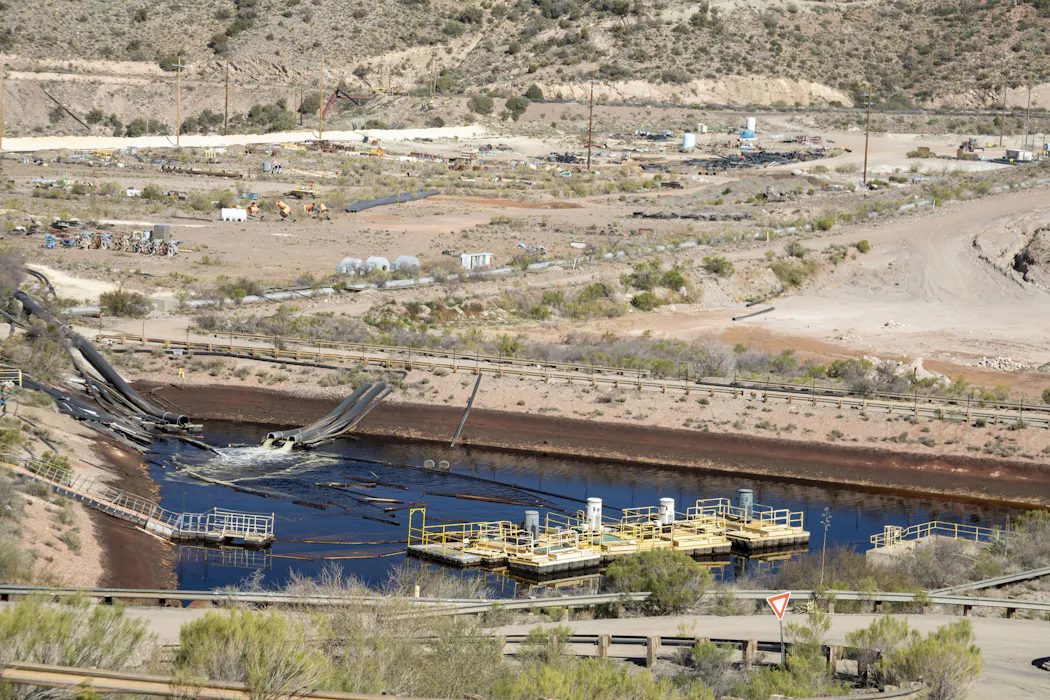
Demand for copper is surging because of demand from new technologies, but suppliers are struggling to keep up, and they are likely to fall further behind in the coming years, resulting in shortfalls globally. Even though copper prices are at historically high levels, the financial risk involved in mining means that prices will need to go much higher before mining companies see profit in addressing the supply shortage.
Those are the key findings from our March 2026 analysis of the global copper market.
Copper is an essential material that is used in generating and distributing electrical power; cables, wires, motor windings, transformers and cooling equipment in data centers; and advanced manufacturing of consumer and defense products.
It’s so important that in 2025, the U.S. Geological Survey designated copper as a mineral “vital to the U.S. economy and national security.”
Copper is abundant in the ground, but there’s not enough being extracted to be able to meet the demand. That’s because investors want higher and more reliable returns than copper mines currently offer, and the industry faces complex permitting processes and can’t find enough workers. Our analysis found that for new technologies to continue to develop, and for the global economy to continue to grow, even higher prices are ahead.
Few options other than mining
In the United States, the increased effort to build data centers for artificial intelligence systems has created a massive need for copper. Car manufacturers require some copper for internal combustion vehicles and four to five times more for the batteries and other parts of electric vehicles. In addition, as global temperatures increase, demand for power-hungry air conditioning in many emerging and developing economies has been growing, too, requiring copper inside the equipment and more wiring to power them.
Recycling existing copper could help reduce the amount needed from new mines, but it would not be enough to meet the rising demand. Even under generous assumptions, we found that recycling might provide 35% of the global copper supply by 2050, with mining producing the remaining 65%.
Substituting another material for copper won’t really work either – at least in the short-to-medium term. Copper has an unmatched combination of physical properties such as electrical conductivity, durability and flexibility – which is why it became popular for so many purposes in the first place.
Aluminum could replace it in some cases, but not all – and that would amount to only about 2% of total copper use.
Fiber optics can also replace copper at times. Their glass fibers can carry more data more quickly than copper wires, but they can’t also carry power. New copper substitutes, like ultra-conductive aluminum, carbon nanotubes, and niobium phosphide, are promising but still in their infancy.
Complicated circumstances
The only other way to get more copper is to mine more of it. But building a new mine can take 20 to 30 years – a period during which investors are spending money but not yet getting returns, and a time when costs can rise significantly from preliminary estimates.
If industrial and economic growth is to stay on track in the 2030s, new mines would need to be in the financing and permitting processes right now. But they aren’t.
Even Resolution Copper, which started decades ago trying to develop a mine in Arizona outside Phoenix, has more work to do before being able to start mining. Since 1995, the project’s developers have spent several billion dollars on planning, permitting and legal cases.
Once in place, it could meet as much as 25% of U.S. copper demand from a high-concentration body of ore located near existing truck and rail lines.
Evaluating the environmental and community effects of proposed mining projects is essential, but in many countries there are overlapping levels of review that have different, and variable, timelines. And many parts of the process can be appealed to courts by opponents or supporters. That increases costs and imposes time delays for mine developers – and means consumers will have to wait longer, and pay more, for copper-intensive products and services.
Yet even though copper prices are near historic highs – over US$13,000 per ton on the London Metals Exchange – the profit margins are still too low and price swings are too volatile for companies to forecast reliable returns on the risky investment of building new mines.

Global inequalities
Copper is produced in a handful of countries but used widely around the world.
That leaves copper vulnerable to national policies about imports and exports, leading to trade disruptions and price shocks.
Countries with low and middle per-capita income are likely to require substantial amounts of copper to grow their economies. Right now, wealthy countries like the U.S. and members of the European Union have about 440 pounds (200 kilograms) per person in existing physical infrastructure – electrical wiring, plumbing systems, architectural elements and transportation. But that figure is 20 pounds (9 kilograms) per person in Africa and less than 2 pounds (1 kilogram) per capita. in India.

Shortages are likely
To get a picture of what might be possible if there were a significant global effort to increase copper availability, we evaluated several optimistic scenarios. We looked at faster permitting for new mines, higher recycling rates and smoother mining processes than those currently in place. But even then, economic development drove demand to grow far faster than the available supply.
Existing mines will have decreasing amounts of ore available and will produce less copper in 2050 than they do in 2025. Yet even if all known copper deposits with known mine-opening dates go into production as scheduled copper supplies will not keep up with demand.
Our best-case scenario has global mine production at about 30 million metric tons of copper a year by 2050. But to keep pace with global economic development, the world will need 37 million metric tons of mined copper a year by then.
To meet that additional need, more mines will need to be opened, and extra production developed – including extracting residual copper from old mine debris that was previously viewed as having too little copper to be worth processing.

A role for government
We found that more copper could be made available more quickly if permitting were streamlined in ways that preserve environmental standards but offer companies proposing new mines some predictability for regulatory approval.
If society wants more copper, faster, then people must accept that higher, more stable prices are part of the solution. Speculative trading contributes to price volatility, which complicates financial projections that are central to deal-making and makes it more expensive to invest in the large, long-term and irreversible expenses that new mines require.
Higher copper prices will ripple through the economy, raising costs for construction, energy and technology. But pretending those costs can be avoided doesn’t make them disappear. Underinvestment across the supply chain from mines to processing today shows up as bottlenecks tomorrow, including delayed grid upgrades and constrained digital growth.
Adam Charles Simon is a co-founder of VectOres Science, Inc.
Morgan Bazilian does not work for, consult, own shares in or receive funding from any company or organization that would benefit from this article, and has disclosed no relevant affiliations beyond their academic appointment.
Read These Next

Fear-based campaign ads can grab attention, but whether they win votes is less clear
Political campaigns often use fear to play on voters’ existing prejudices and stereotypes. What that…

Indian Gen Z ‘cockroach’ protesters aim to upend assumptions about democracy – and populism – in Mod
The protests challenge the government’s view of who “the people” are, what democracy means, and…

Chiricahua is the nation’s newest national park – what does that mean?
What comes next for Chiricahua, now that is has been officially redesignated as America’s 64th national…