Why Philly has so many sinkholes
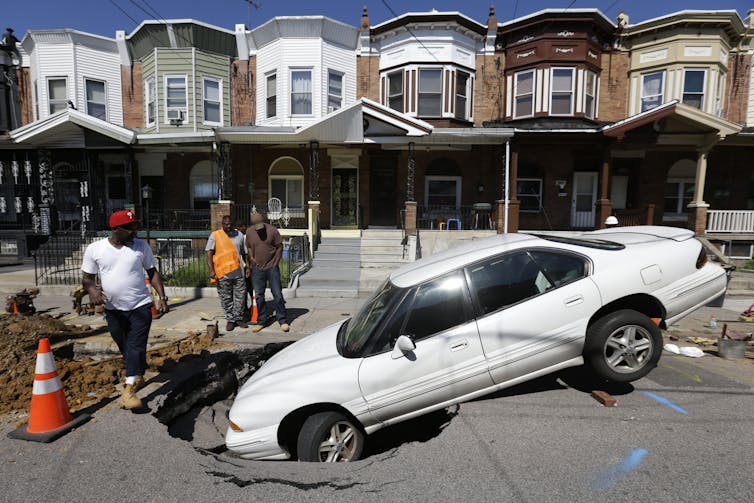
Sinkholes are fairly common in Philadelphia due to aging water lines that leak or burst, causing the surrounding soil to wash away.

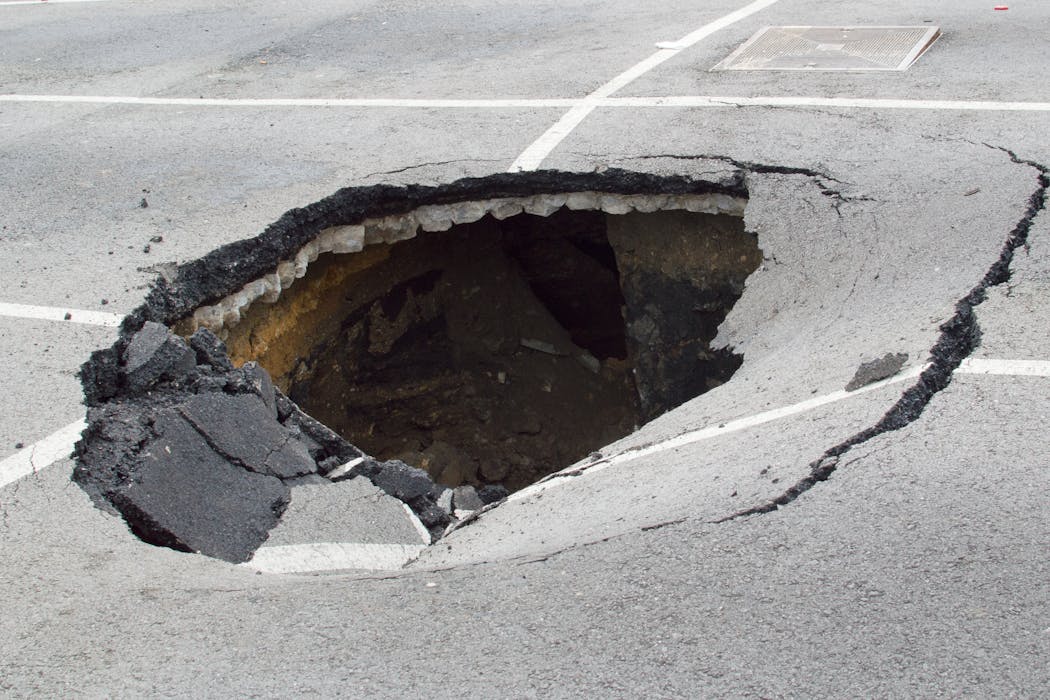
In early January, a giant sinkhole formed at an intersection in the West Oak Lane neighborhood of North Philadelphia after a water main break. Just two weeks earlier, the city reopened a section of the Schuylkill River Trail in Center City that had been shut down for two months due to a sinkhole. Last summer, some residents of Point Breeze in South Philly also waited two months for a sinkhole on their block to be repaired.
Laura Toran is a hydrogeologist and professor emeritus of environmental geology at Temple University. The Conversation U.S. asked her what causes sinkholes, whether Philly is particularly prone to them, and why repairs can take so long.
What are sinkholes and how do they happen?
A sinkhole is a hole that opens up in the ground due to some change in the subsurface.
There are two categories of change that create sinkholes. One type is associated with carbonate rock. This is a type of rock that can develop caves because the rock dissolves when underground water is even slightly acidic. When the bridge over one of these caves collapses, a sinkhole occurs.
The second type is associated with water supply or sewage pipes buried underground. The sediment next to the pipes can erode or wash away when there is a leak in the pipes. That leaves a gap, and if the collapse at the surface becomes big enough, it becomes a sinkhole.
What do we know about the sinkholes in West Oak Lane and on the Schuylkill River Trail?
West Oak Lane experienced two recent water main breaks. Debris from the flowing water made it hard to get to the leak.
Fixing a big leak is a complex job. You have to stop the leak, clear out the debris, get the parts for repair, do the pipe repair, then repair the road. This example also shows that repair teams need to look around to see whether other sections of pipe might be aging and repair them while they have a hole opened up, so you don’t want to rush the job.
The sinkhole on the Schuylkill River Trail late last year, which took two months to fix, was also the result of a pipe leak. The water department had to get involved in the repair, alongside the parks and recreation department. I should point out that the city has a limited budget for pipe repair. As one of the oldest cities in the country, Philadelphia has a lot of work to keep up with.
That said, I would rather try to fix a pipe leak than a carbonate rock sinkhole. With the cavities in carbonate rock, you don’t really know how big they are, and a typical solution is to fill them with concrete. Sometimes you have a much bigger cavity than your supply of concrete.
Is Philly prone to sinkholes?
The Philadelphia region has both types of sinkholes. Within the city, there isn’t carbonate rock present, but just outside the city, such as the King of Prussia area, we see carbonate rock that is subject to sinkholes.
The sinkholes that occur in Philly are where pipes leak and the surrounding soil gets washed away. Because we have the right geology for sinkholes in our region and we have an extensive water network that is aging, sinkholes are somewhat common.
Some regions have even more sinkholes than we see here, however. Florida is entirely underlain by carbonate rock, and sinkholes are quite common.
Can nearby residents know when a sinkhole is forming?
We have a map of carbonate rock in the state, but not all carbonate rock develops sinkholes. Where and when in the carbonate rock a sinkhole is likely to develop is unpredictable.
Sinkholes in Philadelphia tend to also be unpredictable because the driving factor is happening underground and out of sight. We don’t know when a pipe leak is going to occur. Sometimes there is a sagging at the surface before a bigger hole opens up. Sometimes we see the leak before the sinkhole occurs. But not all leaks or sagging ground will lead to a sinkhole, and there won’t necessarily be any warning.
That said, it is important to report leaks and sagging ground so that they can be investigated before getting worse. Report leaks to the Philadelphia Water Department by calling their emergency hotline at 215-685-6300.
If we could replace all the aging infrastructure in the city, we would have fewer sinkholes. However, that would be costly and disruptive, so it really isn’t practical. In the meantime, the city just has to fix new sinkholes as they occur.
Read more of our stories about Philadelphia and Pennsylvania, or sign up for our Philadelphia newsletter on Substack.
Laura Toran receives funding from the National Science Foundation (federal), the Pennsylvania Department of Transportation, and the William Penn Foundation (private).
Read These Next

2026 midterms could be the end of Pennsylvania’s split legislature, with effects on affordability, e
Pennsylvania has a split legislature, and both chambers are up for grabs in the 2026 midterms.

What Philly can – and can’t – do to reduce the number of people killed in car crashes
Philadelphia has more fatal traffic accidents than other big US cities, and they’re concentrated in…
‘Fountain’ might make you laugh or scowl but asks important questions – a Philly art historian expla
A version of ‘Fountain’ is part of the Philadelphia Museum of Art’s permanent collection and will…