How mountain terraces have helped Indigenous peoples live with climate uncertainty
As climate extremes intensify, adaptation debates favor new technologies. Terraces in the Philippines and Morocco show how people modified their landscapes to respond to past climate shifts.

Indigenous communities have lived with changes to the climate for centuries. Their adaptations over those many years are based on their close observation of weather, water, soils and seasonal change, and they have been refined through generations of learning.
That knowledge, though developed deep in the past, is increasingly useful in the modern world. As global temperatures rise, climate pressures are intensifying, with longer dry spells, stronger storms and more erratic rainfall. Terrace systems reflect Indigenous peoples’ long experience of living with environmental uncertainty in specific places and historical contexts. They offer ways of thinking about risk and long-term land use based on observation and intergenerational learning.
My research focuses on one particular strategy for adapting to a changing climate: terrace agriculture. It’s found in mountainous regions worldwide, where people have reshaped steep slopes into level steps that slow runoff and allow water to infiltrate the soil.
By slowing water without blocking its flow, terraces reduce erosion, keeping soil where crops can grow and preserving the moisture they need. They require constant maintenance, which leaves traces in the landscape, such as accumulated repair layers and sediment deposits associated with crops. I study those traces to learn how communities responded to environmental stress over time. The walls and soils are not only fertile agricultural land but also archives of adaptation, documenting past decisions about water, labor and crops.
Ifugao terraces and adaptation to wet and dry years
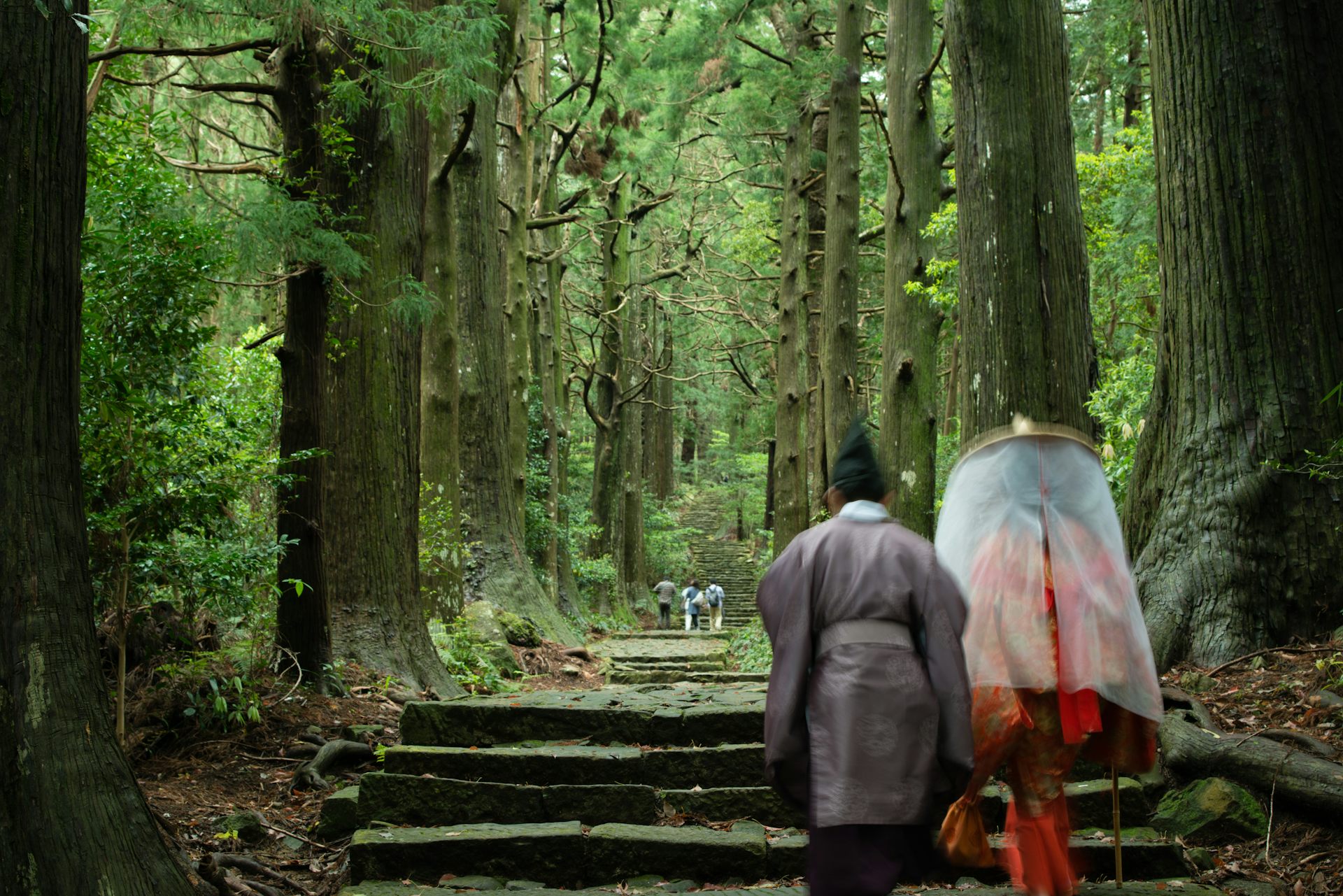
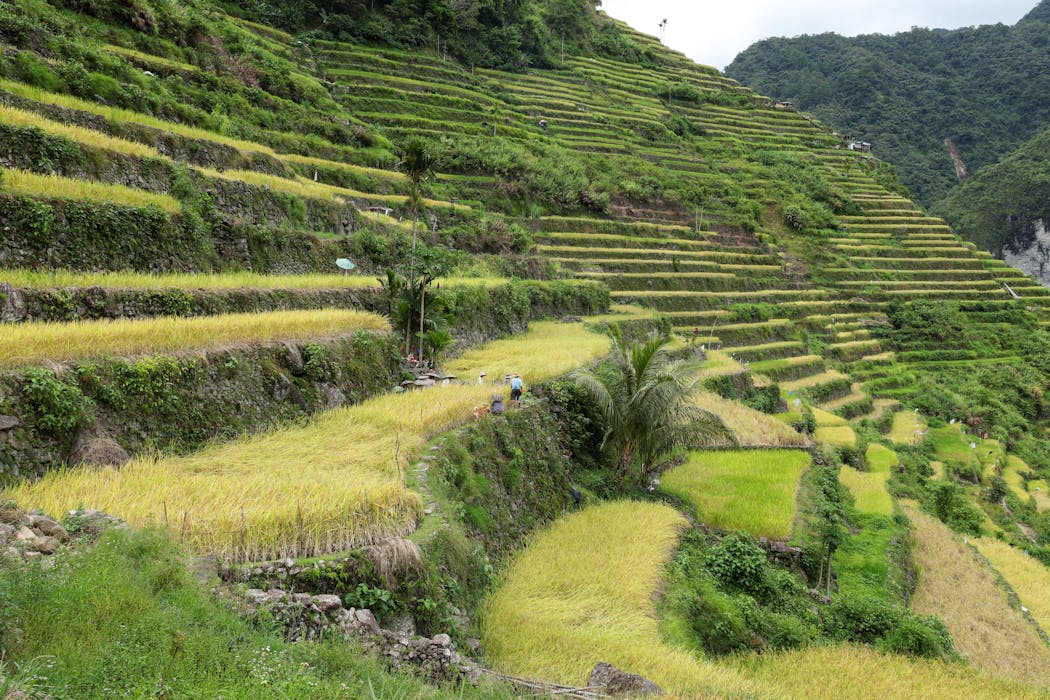
I have worked as an anthropological archaeologist in the Ifugao rice terraces of the northern Philippines for nearly two decades. These landscapes are often described as ancient and unchanging, but archaeological and historical research shows that most were constructed around the 17th century, during a period of political and economic pressure linked to Spanish colonial expansion. Highland communities modified their landscapes, expanded settlement and shifted rice farming to higher elevations, reconfiguring their societies to protect themselves.
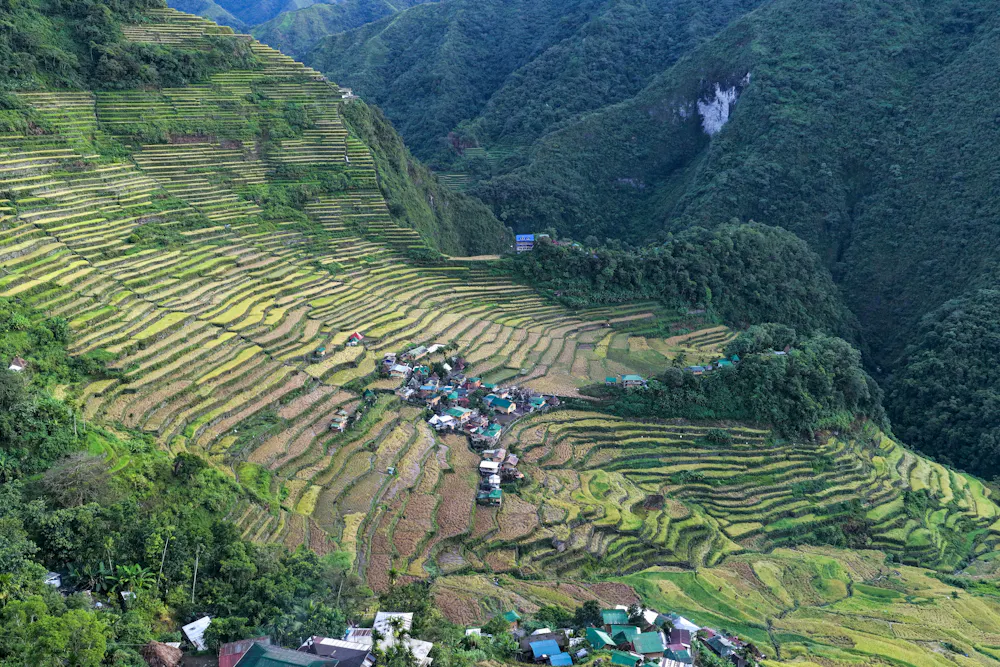
Rainfall in the Cordillera, the region where the terraces are located, varies widely. In some valleys, more than 6 feet (2 meters) of rain fall per year, while higher elevations commonly receive closer to 13 feet (4 meters). In both settings, rain comes down in short, intense downpours. Without intervention, water flows off the steep slopes in torrents, rapidly stripping away soil.
Terraces help avoid erosion by capturing rainfall on each level and allowing it to infiltrate gradually. Measurements contrasting terraced fields with nearby nonterraced soils find the terraces retain significantly more moisture – often 15% to 30% higher, and in some cases substantially more – than sloping fields. This increased moisture availability helps crops endure short dry spells between storms.
Crop choice is another example of adaptation. Ifugao farmers maintain multiple rice varieties suited to different microenvironments. One locally recognized group of traditional rice varieties, collectively referred to as Tinawon, is widely cultivated. The different farmer-selected tinawon varieties are adapted to varying elevations, temperatures and moisture conditions. Some perform better in cooler and wetter areas, while others tolerate shallow soils or brief dry periods.
By planting different, locally selected rice varieties on different terraces matched to specific conditions, farmers spread risk rather than relying on a single harvest strategy.
Farmers also read subtle environmental signals. When we talk with farmers, they describe year-to-year changes, such as springs flowing more slowly than usual in late winter and increased earthworm activity before the rains. These observations guide decisions about when to adjust terrace features – such as reinforcing walls, clearing canals or modifying water gates – or when to shift planting dates in response to delayed rains or shorter wet seasons. Over generations, these adaptations have allowed farmers to continue to grow crops despite difficult periods of flooding or drought.
Today, climate stress interacts with economic pressure. Major typhoons in 2018 and 2022 brought intense rainfall that damaged terraces across the Cordillera.
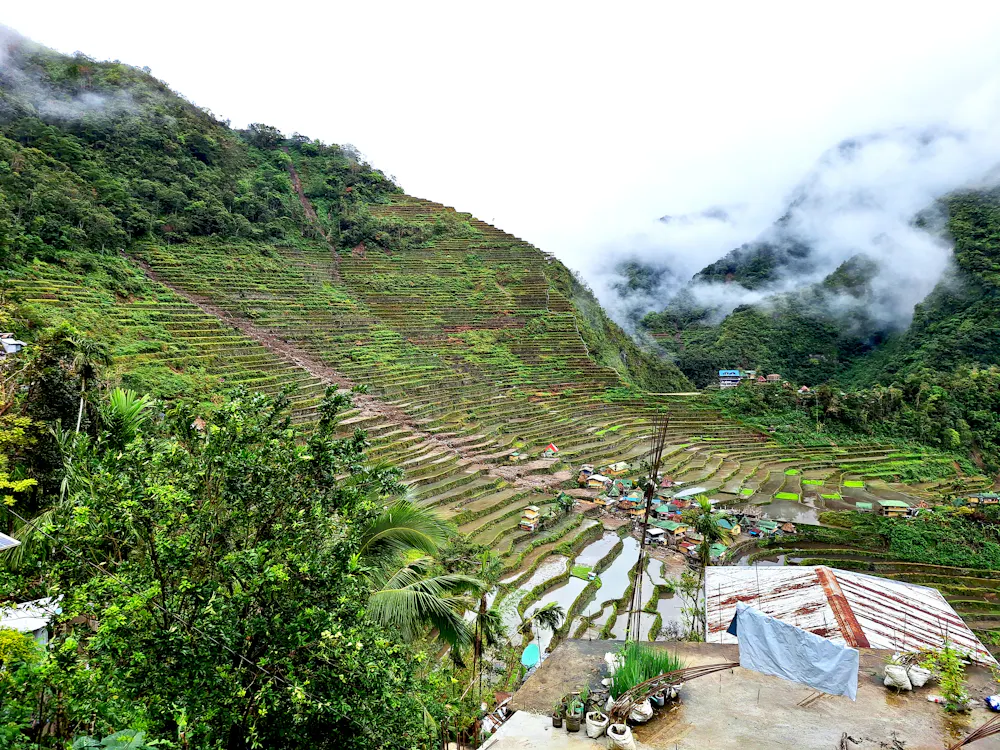
In the past, farmers responded to storm damage by adjusting water flow within irrigation canals and field-to-field outlet channels, and by staggering planting dates so that shared irrigation systems were not stressed all at once.
Today, fewer workers and a modernizing economy mean that government support has become increasingly important to sustain these systems, particularly funding for terrace and irrigation repair and programs that support farmer participation. Even so, these systems continue to show how coordinated water management and crop diversity can reduce risk under variable climates.
Climate history written into Moroccan terraces
New research in Morocco, which I’m working on with the Université Internationale de Rabat, focuses on terrace systems in the Anti-Atlas Mountains, where intermittent heavy rains and recurring droughts motivated people to build terraces to slow runoff and keep water in the soil.
Many of these terraces remained active from their construction in the late 16th to 17th centuries until the 20th century, when out-migration reduced the local labor force needed for routine maintenance.

Even partially abandoned terraces record past responses to climate changes. Stone walls and leveled platforms demonstrate how people slowed runoff and retained moisture in dry environments. Collapsed edges and eroded channels mark episodes of heavy rainfall. Channel layouts and their alignment with terrace walls and natural terrain indicate how scarce water was directed toward priority fields.
These physical traces correspond with well-documented drought cycles in Morocco, including multiyear dry periods in recent decades that have reduced reservoir levels and lowered groundwater tables. Former terraced landscapes show how earlier communities coped with similar pressures.

Crop selection was central to adaptation throughout the period when terraces were actively maintained, and it continues to shape farming decisions today. Farmers in Morocco relied heavily on drought-tolerant barley, which can germinate with limited moisture and mature before peak summer heat.
Research on barley varieties from North Africa and similar arid environments shows that these traditional variants can still produce a majority of their usual yields during severe droughts, while high-yield modern varieties, bred for irrigated or well-watered conditions and shorter growing cycles, often experience sharp yield declines or crop failure under the same conditions.

In oral histories and interviews, elders in these regions recalled collective maintenance practices, including annual cleaning of channels and coordinated planting after the first dependable rains. Communities adapted to the changing climate together, coordinating efforts and activities.
Lessons across continents
Although the Philippines and Morocco have different climates and histories, their terrace systems demonstrate common principles. In both regions, people focused on capturing water and minimizing the risk of soil loss or crop failure.
Where terraces remain intact, studies show they tend to retain more soil and moisture and produce more consistent harvests than nearby unmodified slopes.
At the same time, terraces show limits. As labor availability declines because younger generations leave rural areas for cities or overseas work, and economic priorities shift toward wage labor and other nonagricultural livelihoods, even basic maintenance becomes difficult.
These cases show that Indigenous strategies for living with climate uncertainty are often shaped by long-term observation and cooperation. They do not provide simple solutions or universal models, but they do demonstrate the value of designing systems that spread risk and prioritize durability over short-term efficiency.
Stephen Acabado receives funding from the Henry Luce Foundation.
Read These Next

Why the assault weapons debate is a culture debate
The Supreme Court’s decision to hear two assault weapons cases caps a multi-decade dispute over restricting…
What the law says about armed officers at polling places
What does the law say about armed officials at the polls? That’s one of four questions that a legal…

Leap seconds have helped keep clocks synchronized with Earth’s rotation, but their time may be over
If you think about leap years, it may seem like humans have a very odd way of measuring time. Sometimes,…