Iran’s president calls for moving its drought-stricken capital amid a worsening water crisis – how T
Iran’s sprawling cities and irrigated agriculture, along with tight market controls, have left the country vulnerable to drought. There are steps that would help.

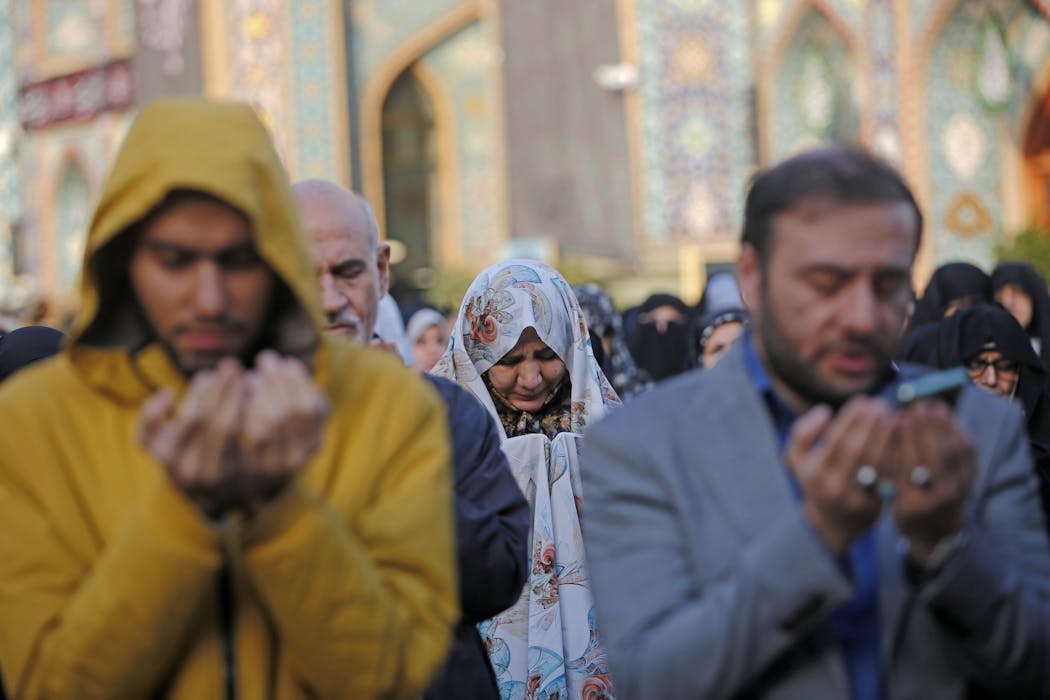
Fall marks the start of Iran’s rainy season, but large parts of the country have barely seen a drop as the nation faces one of its worst droughts in decades. Several key reservoirs are nearly dry, and Tehran, the nation’s capital, is facing an impending “Day Zero” – when the city runs out of water.
The situation is so dire, Iranian President Masoud Pezeshkian has revived a long-debated plan to move the capital from this metro area of 15 million people.
Previous administrations have floated the idea of moving the capital but never implemented it. Tehran’s unbridled expansion has created a host of problems, ranging from chronic water stress and land subsidence to gridlocked traffic and severe air pollution, while also heightening concerns about the city’s vulnerability to major seismic hazards.
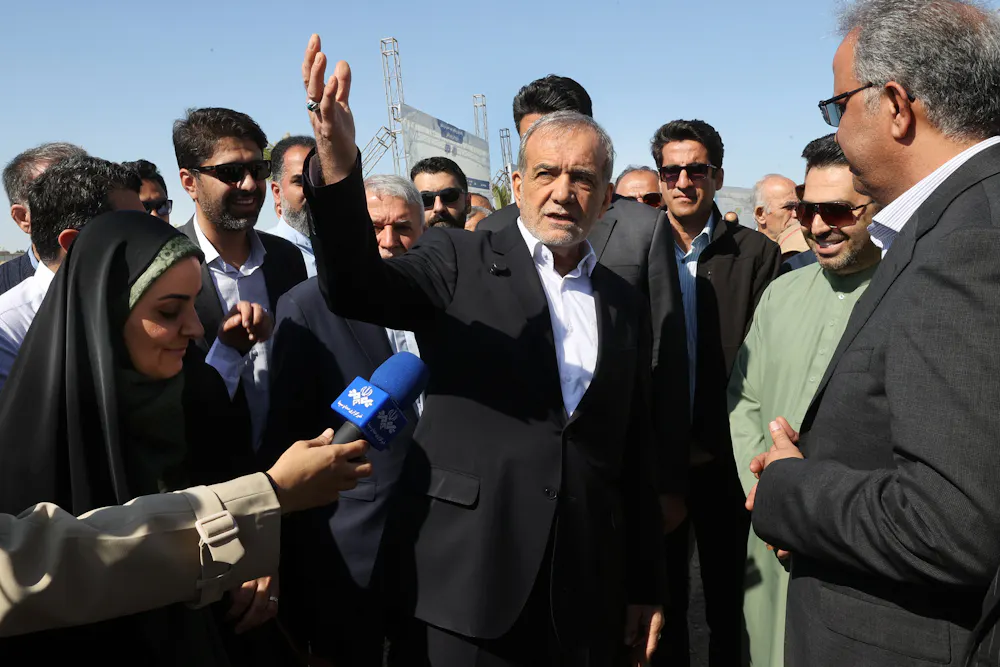
This time, Pezeshkian has framed relocation as a mandate, not a choice. He warned in November 2025 that if nothing changes, the city could become uninhabitable.
How Iran got to the point of water bankruptcy
Drought has been a concern in this part of the world for millennia. A prayer by the Persian King Darius the Great that was carved in stone more than 2,000 years ago asked his god to protect the land from invaders, famine and lies.
However, today, Iran’s escalating water and environmental problems are the predictable outcome of decades of treating the region’s finite water resources as if they were limitless.
Iran has relied heavily on water-intensive irrigation to grow food in dry landscapes and subsidized water and energy use, resulting in overpumping from aquifers and falling groundwater supplies. The concentration of economic activity and employment in major urban centers, particularly Tehran, has also catalyzed massive migration, further straining already overstretched water resources.
Those and other forces have driven Iran toward “water bankruptcy” – the point where water demand permanently exceeds the supply and nature can’t keep up.

Iran’s centralized, top-down approach to water governance has proven ineffective in ensuring the sustainability of its water resources and in maintaining a balance between renewable water supply and demand, a gap that has continued to widen.
Since the 1979 revolution, Iran has pursued an aggressive hydraulic mission, building dams and diverting rivers to support sprawling cities and expanding irrigated agriculture. Driven by ideological ambitions, the country’s focus on food self-sufficiency together with international sanctions and economic isolation, have taken a heavy toll on the nation’s environment, particularly its water resources. Drying lakes, groundwater depletion and rising salinity are now prevalent across Iran, reflecting dire water security risks throughout the country.
As water resource and environmental engineers and scientists, including a former deputy head of Iran’s Department of Environment, we have followed the county’s water challenges for years. We see viable solutions to its chronic water problems, though none is simple.
Falling water reserves leave Iran vulnerable
Experts have been warning for years that the lack of foresight to tackle Iran’s water bankruptcy problem leaves the country increasingly vulnerable to extreme climate conditions.
Iranians are again seeing those risks in this latest drought.
Precipitation has been well below normal in four of the water years since 2020. That has contributed to a sharp decline in reservoir levels. Fall 2025 has been the hottest and driest fall on record for Tehran since 1979, testing the resilience of its water system.
The city faces mounting stress on already diminished groundwater reserves, with little relief in sight without significant rainfall.
Shrinking snowpack and shifting rainfall patterns make it harder to predict how much water will flow in rivers and when. Rising temperatures make the problem worse by boosting demand and leaving less water in the rivers.
There is no quick fix to resolve Tehran’s water emergency. In the near term, only significantly more rainfall and a reduction in consumption can offer respite.
Panicky moves to increase interbasin water transfers, such as the Taleqan‑to‑Tehran water transfer to pump water from the Taleqan Dam, over 100 miles (166 km) away, are not only inadequate, they risk worsening the water supply and demand imbalance in the long run. Iran has already experimented with piping water between basins, and those transfers have in many cases fueled unsustainable growth rather than real conservation, worsening water problems both in the donor and recipient basins.

At its core, Tehran’s predicament stems from a chronic mismatch between supply and demand, driven by rapid population growth.
Whether relocating the political capital, as suggested by Pezeshkian, could meaningfully reduce the city’s population, and hence the water demand, is highly doubtful.
The sparsely populated Makran region in the country’s southeast, along the Gulf of Oman, has been mentioned as a potential option, touted as a “lost paradise,” though details on how much of the city or population would move remain unclear.
Meanwhile, other major Iranian cities are facing similar water stresses, highlighting the fact that this is a nationwide threat.
Water solutions for a dry country
The country needs to start to decouple its economy from water consumption by investing in sectors that generate value and employment opportunities with minimal water use.

Agricultural water consumption can be reduced by producing higher-value, less water-intensive crops, taking into account food security, labor market and cultural considerations. Any water savings could be used to replenish groundwater.
Becoming more open to global trade and importing water-intensive crops, rather than growing them, would also allow Iran to use its limited agricultural land and water to grow a smaller set of strategic staple crops that are critical for national food security.
That’s a transition that will be possible only if the country moves toward a more diversified economy that allows for reduced pressure on the country’s finite resources, an option that seems unrealistic under economic and international isolation.
Urban water demand could be reduced by strengthening public education on conservation, restricting high-consuming uses such as filling private swimming pools, and upgrading distribution infrastructure to minimize leaks.
Treated wastewater could be further recycled for both drinking and nonpotable purposes, including maintaining river flows, which are currently not prioritized.
Where feasible, other solutions such as flood management for aquifer recharge, and inland groundwater desalination, can be explored to supplement supplies while minimizing environmental harm.
Taken together, these measures require bold, coordinated action rather than piecemeal responses.
Renewed talk of relocating the capital signals how environmental stresses are adding to the complex puzzle of Iran’s national security concerns. However, without addressing the root causes of the nation’s water bankruptcy, we believe moving the capital to ease water problems will be futile.
Nothing to disclose.
Mojtaba Sadegh receives funding from the US National Science Foundation, NASA, and the Joint Fire Science Program.
Amir AghaKouchak and Kaveh Madani do not work for, consult, own shares in or receive funding from any company or organization that would benefit from this article, and have disclosed no relevant affiliations beyond their academic appointment.
Read These Next

Why the assault weapons debate is a culture debate
The Supreme Court’s decision to hear two assault weapons cases caps a multi-decade dispute over restricting…

Meet the ‘independent voters’ who will likely decide which party triumphs in the 2026 midterm electi
Republicans and Democrats need to make inroads with independent voters. But the themes that motivate…
AI is changing pilgrims’ journeys, but sacred journeys have always adapted to new technology
From the printing press to smartphone apps, technology has continually transformed the experience of…