State takeovers of struggling Texas school districts come at a high cost, with little evidence of su
The number of uncertified teachers rose, while enrolled student numbers dropped, following a state takeover of Houston. Data shows other uneven results across districts.

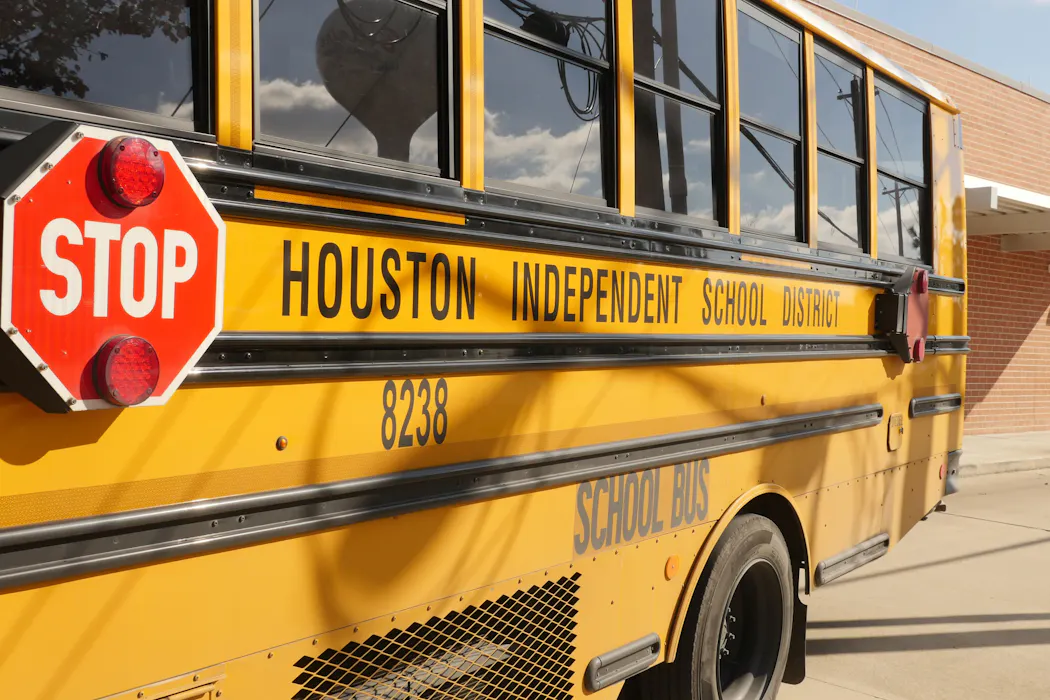
Local school boards and district administrators typically determine how public schools are run. If students are not meeting basic academic standards, though, state governments sometimes step in and take over the day-to-day operations of entire school districts.
Since 1989, state officials have been appointed to temporarily replace elected school boards and superintendents in more than 100 districts across at least 22 states.
Texas has used takeovers more than most. Since 2015, the state has temporarily stepped in to run eight districts. A Texas law allows the state to take over for at least two years if one or more schools within the district has poor academic performance for five consecutive years.
Fourteen additional districts in Texas are now at risk of a takeover.
As an education professor at the University of Texas at Arlington, I often evaluate educational policies and interventions.
As part of this work, I teach a class on evaluating evidence for whether initiatives live up to their claims. Based on my research, Texas taking over school districts is not always helping the students there.

A decade of Texas school takeovers
When a state takeover occurs, the state appoints a replacement school board, rather than holding an election. It also appoints a superintendent instead of allowing the district to hire one.
In October 2025, the Texas Education Agency announced that it was appointing a new school board and superintendent for Fort Worth Independent School District, one of the largest school districts in Texas.
Approximately 82% of students in this district live in poverty.
Marissa Sanchez, a mother with three children in Fort Worth public schools, told local station NBC 5 in October 2025, “these people that don’t know our communities, don’t know our students, what kind of representation will they bring, because we will no longer have a say in our local representative decision-making.”
Fort Worth’s school district had over 1,000 teachers announce their resignation during the 2025-26 school year after the announced state takeover – up 58% from the previous year.
It costs between US$11,000 to $20,000 for every new teacher to be recruited, trained and put in the classroom. That does not include salary, health insurance or other standard employment benefits.
State-run school districts skew poor, minority
Only 12% of Texas schools with 80% to 100% of the student population living in poverty achieved an A performance grade during the 2024-2025 school year. Meanwhile, 67% of Texas schools with a 0% to 20% poverty rate achieved an A grade, according to the Texas Education Agency.
Similarly, while 6% of students at schools with a majority-Black student population earned A’s, 16% of students at Hispanic-majority schools earned A’s. This compares with 35% of students at majority-white schools who received A’s.
At the eight Texas districts that the state has taken over – and the 14 currently at risk for a takeover – more than half of students who attend are eligible for free or reduced lunch.
And at the large districts that have been taken over, such as Houston and Fort Worth, more than 8 out of 10 students live in low-income households. A majority of students there are Black and Hispanic.
Negative effect on enrollment and staffing
When states take over school districts, student enrollment typically declines. Staff turnover, meanwhile, increases.
Teacher attrition – meaning teachers who left the profession – increased by 48% during the first two years after the 2023 Houston takeover compared with the five years before. Almost 5,000 teachers left during the first year of the takeover, and another 3,300 left in the second year.
Principal turnover also increased dramatically in Houston, with 177 changes across 274 schools since 2024.
In 2023-2024, less than a year after the takeover, Houston had over 1,000 teachers not certified to teach. A year later, it had over 2,000 uncertified teachers because of a state law that allows teachers to waive the requirement that all teachers are licensed in certain cases.
Since the start of the takeover, about 21,000 fewer students will attend Houston public schools in 2026-2027, costing the district about $190 million in state funding. Many of these students are simply attending nearby schools that are not part of Houston Independent School District.
Weighing the evidence
Takeovers work, according to Texas Education Commissioner Mike Morath.
“In every single intervention, the results were higher, or at least no worse after the board of managers was placed than before,” Morath told the Fort Worth Report in September 2025.
But national evidence suggests otherwise.
A recent study of school takeovers nationwide concluded that takeovers, on average, do not improve student achievement. Rather, they are usually immediately disruptive to students’ reading achievement.
But is Texas different?
University of Texas at Arlington graduate students Veronica Erives, Nasja Aude, Jaclyn Foster and Cole Davis and I examined two Texas school districts, Shepherd and Marlin, in the spring of 2026, in forthcoming research.
Uneven results after the takeover
Marlin Intermediate School District, a small-town district in central Texas, has about 800 students, 99% of whom live below the poverty level. Approximately 61% of the students there are Black, 31% Hispanic and 6% white.
The state took over Marlin schools in 2017, following five consecutive years of failing performance grades. In 2019, Morath extended state oversight of Marlin following continued low academic performance.
At the time of its takeover a few years later, in 2020, Shepherd Intermediate School District served approximately 2,000 students across four rural campuses in southeast Texas, with 71% of students considered economically disadvantaged.
The district’s student population was approximately 56% white and 35% Hispanic, making it one of the few predominantly white districts in Texas to experience a state takeover.
In both Shepherd and Marlin, teacher turnover continues to be a problem years after the takeover.
Comparing year-to-year performance at these districts is difficult, due to a redesign of the state’s standardized testing program in the 2022–2023 school year.
The Texas Education Agency explicitly notes that scores from 2023 onward cannot be directly compared to older test data.
There is a way, however, to sort of standardize the “approach grade level” percentages by comparing them to the state percentages. This has the effect of controlling for yearly changes in the tests.
For Marlin, my analysis shows, the percentage of third graders who approached grade level for reading in 2016 – one year prior to the state takeover – was 41%. This compares with 73% of third graders in Texas who were reading at this level in 2016. For third grade math, Marlin’s score in 2016 was 29%, compared with 75% for the state that year.
By 2019, two years into the takeover, 44% of third graders were approaching their grade level for reading, and 51% of them were doing the same for math, compared with the state averages of 78% on reading and 78% on math.
And in 2025, while 55% of third graders in Marlin schools were reading at grade level, just 40% were completing math questions at grade level. This compared with the state’s 74% and 74% averages that year, respectively. So, slight improvement in reading, none in math, and still way below the state averages.
For Shepherd, 56% of third graders approached grade level for reading in 2018, one year prior to the state takeover. This compared with the state average of 77%. For third grade math, 57% of Shepherd students were approaching grade level, compared with the state’s 78% average in 2018.
By 2025, the percentages for third grade reading and math were 56 and 50, compared with the state’s 77 and 71, respectively. No gains to speak of.
Similar trends exist for seventh grade reading and math.
Our study shows little evidence of student achievement improvements to support takeovers. When weighed against the costs of declining enrollments, teacher and principal turnover, and monetary costs, one has to ask if takeovers are worth it.
Daniel H. Robinson does not work for, consult, own shares in or receive funding from any company or organization that would benefit from this article, and has disclosed no relevant affiliations beyond their academic appointment.
Read These Next

US inequality is getting worse in ways you might not expect
From tax policy to gas prices and tariffs, a mix of new factors is making inequality in the US more…

How governments worldwide are shaping what AI can say about politics
Some governments use legitimate AI concerns as a pretext to control political discussion, particularly…

Are partisan politics even changing up our accents? They just might be, y’all
Vowels have become the latest players in partisan politics, a barometer of how beliefs and values fit…