
Students from military families are often misunderstood in US public schools – a retired military of
Students from military families have specific experiences and needs that require support from their schools.

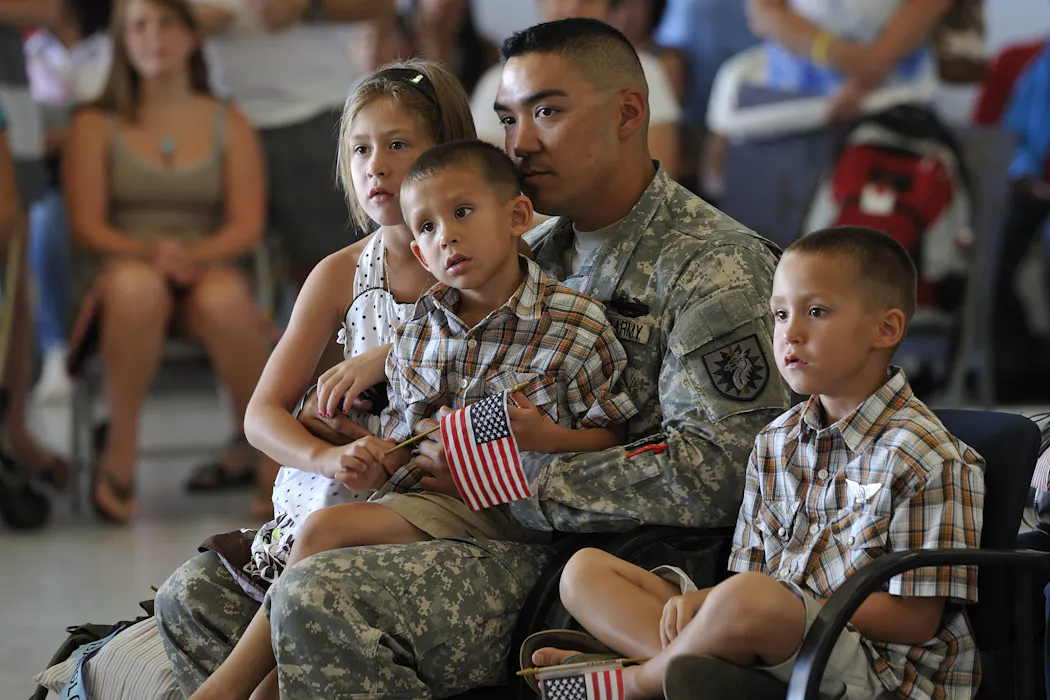
Over 1.4 million children had a parent or caregiver who served in the U.S. armed forces in 2024.
Among active-duty families, 2.4% of military children had both parents serving in the military. Another 4% lived in single-parent households.
More than 90% of these children attend U.S. public schools. Over 67,000 attend Department of Defense schools located in the U.S. and foreign countries. Military-connected students have a unique set of experiences and academic and emotional needs, including support with school transitions and developing a sense of belonging at their new school.
Because only 6% of Americans have served in the U.S. military, some educators may not understand the experiences of military children and the challenges of military life.
As a retired U.S. Army lieutenant colonel and military behavioral health expert, I think there are a few key ways that school districts can better support these students through school transitions.
Some strategies include identifying military-connected students during enrollment and training educators about military life.

Benefits and drawbacks of military life
The military lifestyle creates both unique opportunities and challenges for children and teenagers whose parents are military service members.
Military children often travel and have opportunities to live in multiple cities across the U.S. and other countries. They are also exposed to different cultures, new traditions and opportunities to learn foreign languages.
These children are resilient and adaptable. They may also display increased independence, personal growth and pride because of their parent’s military service. Many are thriving in school because of these traits.
Military children are also twice as likely to serve in the military as their civilian peers.
But military life can also be stressful for children.
Many children with parents in the military move frequently. They often live in more cities and attend more schools than their civilian peers – an average of two schools during high school, and for most, six to nine different schools between kindergarten and 12th grade.
They experience their parent being away from home for various periods of time, ranging from a few weeks at a time to a year or more.
They also fear that their parent might be hurt or killed while serving in the military.
As a result, military children and teenagers may experience social withdrawal, angry outbursts and mental health problems, including depression and anxiety. These challenges might also cause them to miss school, struggle to complete school assignments and have difficulty making new friends.
Recent research found that military-connected students were more likely to be disengaged in school and repeat a grade than their civilian peers. Other studies found that multiple parental deployments and longer parental separations affected children negatively. Examples include greater family stress and behavioral problems.

A stressful experience
Children’s responses to military life vary, depending on how old they are and their level of maturity. Children 5 and younger often have limited language skills to express their feelings. As a result, they may act out behaviorally in response to changes in caregivers and daily routines.
Elementary school students may have tantrums, be clingy, have toileting accidents, engage in uncontrollable crying or become less talkative as a result of changes in schools, homes and caregivers.
Middle school students and preteens, ages 8 to 13, are likely aware of how their lives are different from their civilian peers.
These students may have experienced multiple moves and attended multiple schools over their relatively short lives. They may respond to changes in schools and household routines with angry outbursts, irritability, anxiety and social withdrawal.
They may also have fluctuating grades, peer conflict, problems completing their homework and disciplinary problems at school.
Boys and girls may express their stress differently. Boys may exhibit more anger and aggression, whereas girls might demonstrate sadness, depression and self-harm.
Military adolescents and high school students, typically 14-18, have heightened risk for anxiety, depression and suicide due to military-related stressors, especially during parental deployments.
They may experience mood changes, anger and social withdrawal. They may also disengage from school activities, perform poorly in school and choose to skip classes. Many are also high achievers despite the challenges of military life.
Military adolescents are also at risk for substance use.
My prior research from 2019 found that military adolescents had frequent emergency department visits and hospitalizations for substance use problems during the Afghanistan and Iraq wars.
How schools can support military-connected students
Military-connected students transitioning to a new school often need help early in the process to ensure they have adjusted well to their new school.
As a licensed clinical social worker and former child therapist for military children, I think brief check-ins with a school counselor or social worker are necessary to identify concerns early. These check-ins can help avoid behavioral or academic difficulties and prevent a problem from becoming worse.
U.S. public schools are required to identify students with an active duty military parent, typically by asking about military affiliation during enrollment.
Some school districts also include children of veterans and those with parents in the National Guard and Reserves in these records.
Research has consistently shown that the impact of military life continues after parents leave military service.
An estimated 2.3 million children under 18 reside with a veteran who is disabled. These children often assume caregiving responsibilities for siblings and their veteran parent.

Identifying schools that support military-connected students
State education departments can give schools a Purple Star School designation, indicating that the school is committed to assisting with the academic, social and emotional needs of military-connected students. These schools maintain a list of military students, help students with school transitions and train school personnel about the challenges of military life.
Currently, there are over 4,100 Purple Star Schools in 44 states across the U.S.
The proportion of military-connected students in U.S. public schools depends on the military and veteran population of each state and school district, as well as the geographical location of military installations.
Texas, California, Florida, North Carolina, Georgia, South Carolina and Virginia rank among the 10 states with the most military families that have children attending public schools.
Schools can help military-connected children and their families by creating a welcoming school climate, maintaining open communication with students and parents, and developing student groups and peer-support programs.
Frequent school guidance counselor, nurse or social worker visits may also be needed. High schools can develop peer-mentoring programs and suicide prevention, mental health awareness and anti-stigma campaigns.
I think it is also important for schools not to rush to identify behaviors as a disciplinary problem when family stress is the root cause.
Although military-connected students face unique challenges to success in school, I think schools should intervene early and often to meet their needs. Helping these students ensures every child has an equal chance to succeed in school.
Nikki R. Wooten, PhD, LISW-CP previously received research funding from the National Institute on Drug Abuse. Dr. Wooten retired as a lieutenant colonel from the U. S. Army after over 33 years of military service. The statements wherein are the author's and do not necessarily represent the official position of the U.S. Department of War, U.S. Department of Veterans Affairs, or the U.S. Government.
Read These Next

When abortion and surrogacy law collide, contracts can’t answer the hardest questions
A custody battle over a newborn with a heart condition raised a question courts have rarely faced: Can…

The oil market that sets today’s gas prices was invented in western Pennsylvania
A historian traces how Oil City brokers, then John D. Rockefeller, then futures exchanges decided what…

Why faculty diversity at universities still lags far behind the changing demographics of college stu
College faculties have become more diverse since the 1970s, but college faculty of color still often…