Florida’s school choice program offers universal vouchers but cannot show systemwide academic improv
What has the Sunshine State learned from 27 years of school choice?

The Florida Department of Education cannot account for US$270 million it has spent through its school choice program. That’s according to a November 2025 state audit of the department.
The same audit shows the department also doesn’t know which schools – if any – more than 30,000 K-12 students in the state attend.
During the 2026 legislative session, which ended March 13, 2026, state Sen. Don Gaetz, a Republican and an advocate for school choice, introduced legislation that would have tightened the reins on how Florida’s Family Empowerment Scholarship program distributes funds. The program allows any family in Florida, regardless of income, to use state funding to pay for private or parochial school for its K-12 children – or even to homeschool them.
The Florida House voted down Gaetz’s proposed reforms, and so the problems found in the audit remain unaddressed for now.
Florida hasn’t always taken such a laissez-faire approach to its school choice program. The state has been in the school choice game since 1999, and its program has evolved significantly since then.
Today, Florida operates one of the most expansive school choice systems in the U.S. I’m a researcher in education, public policy and law, and I’ve been investigating the evolution and educational results of Florida’s school choice program.
I’m seeking to answer a critical question: After 27 years of school choice, has Florida shown that using public funds for private education helps students achieve better results academically?
A history of school choice
Florida’s use of public money to expand school choice and vouchers to attend private and parochial schools began in 1999 as two targeted programs for special needs and low-income students.
In 2006, the private school voucher allowance for low-income students was nullified by the Florida Supreme Court in Bush v. Holmes. The court held that the program violated provisions of the state’s constitution, which requires that the state provide public education for all, but allowed the public school transfer option to remain intact.
School choice advocates learned from this ruling. Beginning in 2010, they began pushing legislation to extend and diversify the Florida Tax Credit Scholarships program. The program’s evolving designs and funding mechanisms in Florida were created to avoid the constitutional concerns of Bush v. Holmes while expanding school choice throughout the state.

School vouchers for all
The biggest change to school choice in Florida by far came in March 2023, when Florida House Bill 1 was signed into law. This law converted existing scholarship programs into universal education savings accounts, while at the same time removing income eligibility limits.
The law effectively gives a $9,000 per year voucher – the equivalent of what the state spends on each public school student – to any Florida K-12 student, regardless of disability status or family income. Most significantly, it allows funds tied to students to be redirected away from public schools into accounts families can use for private tuition, curriculum, tutoring and other approved expenses. These include everything from school supplies and dance lessons to televisions and trips to Disney World.
Funding and enrollment in Florida’s school choice program have grown dramatically since Florida’s House Bill 1 was signed in March 2023 and went into effect on July 1, 2023. As of February 2026, more than 500,000 students are reportedly participating in these programs, which also means that many students have opted out of public school.
Show me the money
Critics of the policy have always argued that redirecting per-student funds into education savings accounts reduces resources for districts’ public schools, because funding follows students out of the public school system. Supporters of the policy counter that school choice will improve student achievement and parental control.
State estimates and independent analyses project multibillion-dollar annual shortfalls in public education funding in the state since universal expansion.
Analysts believe more Florida families will opt for education savings accounts in the future. Meanwhile, Gaetz’s questions about accountability for funding and students are still looming.

A question of results
But has the use of school choice and vouchers led to greater student achievement in Florida? At best, the evidence is mixed and inconclusive.
While Florida’s expansion of vouchers and other comparable programs coincided with large increases in private school enrollment and growth in choice options, there is limited research connecting these programs to systemwide gains in student achievement.
For example, one 2020 report highlights research showing modest gains for public school students in standardized test scores and pass rates. But the effects vary by context. Within individual subgroups, results are mixed and don’t show uniform, systemwide gains.
The research shows that after voucher expansion, public school students’ standardized test scores improved slightly. During that time, there were also nonacademic improvements, such as lower absenteeism and suspension rates, in some public schools. However, the gains were larger in areas with more preexisting private school options and for lower-income students, with other districts seeing little or no benefit.
Local analyses of districts throughout the state, such as Miami-Dade, document who uses vouchers, patterns of movement between public and private schools, and demographic differences. But these analyses by themselves don’t show that vouchers enhance student achievement in Florida.
Students who use vouchers differ from those who remain in public schools, based on indicators such as family income. Vouchers benefit more students from middle class families – students with a prior record of achievement and motivation to achieve academic success. This is because even with a voucher, students from low-income families often still struggle financially to attend private and parochial schools and experience logistical challenges, such as transportation, to attend these schools. Moreover, more students from middle-class backgrounds use vouchers.
These differences make simple score comparisons between students receiving vouchers and those who remain in the public school systems misleading. In short, richer and higher-achieving students tend to opt out of public school.
Limited data nationwide
The case of Florida reveals some of the structural limitations with K-12 education data and measuring student academic achievement. Many children in Florida attending private, parochial or homeschool programs do not take the Florida Assessment of Student Thinking, or FAST, test, which is used by Florida’s public school districts to measure students’ achievement. This means there’s no apples-to-apples comparison of how they’re doing academically.
And Florida is not alone in this: No U.S. state currently has a single assessment test taken by all students in all schools that might allow clear, statewide comparisons.
Where less descriptive studies exist nationally, the effects of voucher programs through school choice vary by program design, student subgroups and local context. This is the main reason national results regarding the effectiveness of voucher programs in improving student achievement can’t be generalized to the case of Florida. A 2024 report by the RAND Corporation reveals the challenge of generalizing national results regarding the effectiveness of voucher programs and education savings accounts to individual states like Florida.
After 27 years of school choice, Floridians should know that there are no uniformly positive systemwide gains in achievement.
Kendall Deas does not work for, consult, own shares in or receive funding from any company or organization that would benefit from this article, and has disclosed no relevant affiliations beyond their academic appointment.
Read These Next
Human rights could improve – or worsen – based on how nations use the UN treaty against cybercrime
If the treaty enters into force, responsible nations will have to carefully monitor how other countries…

Horror’s monsters find new meaning with queer and trans audiences – how ‘Teenage Sex and Death at Ca
Horror as a genre has traditionally been rife with transphobia and homophobia. But LGBTQ+ fans love…
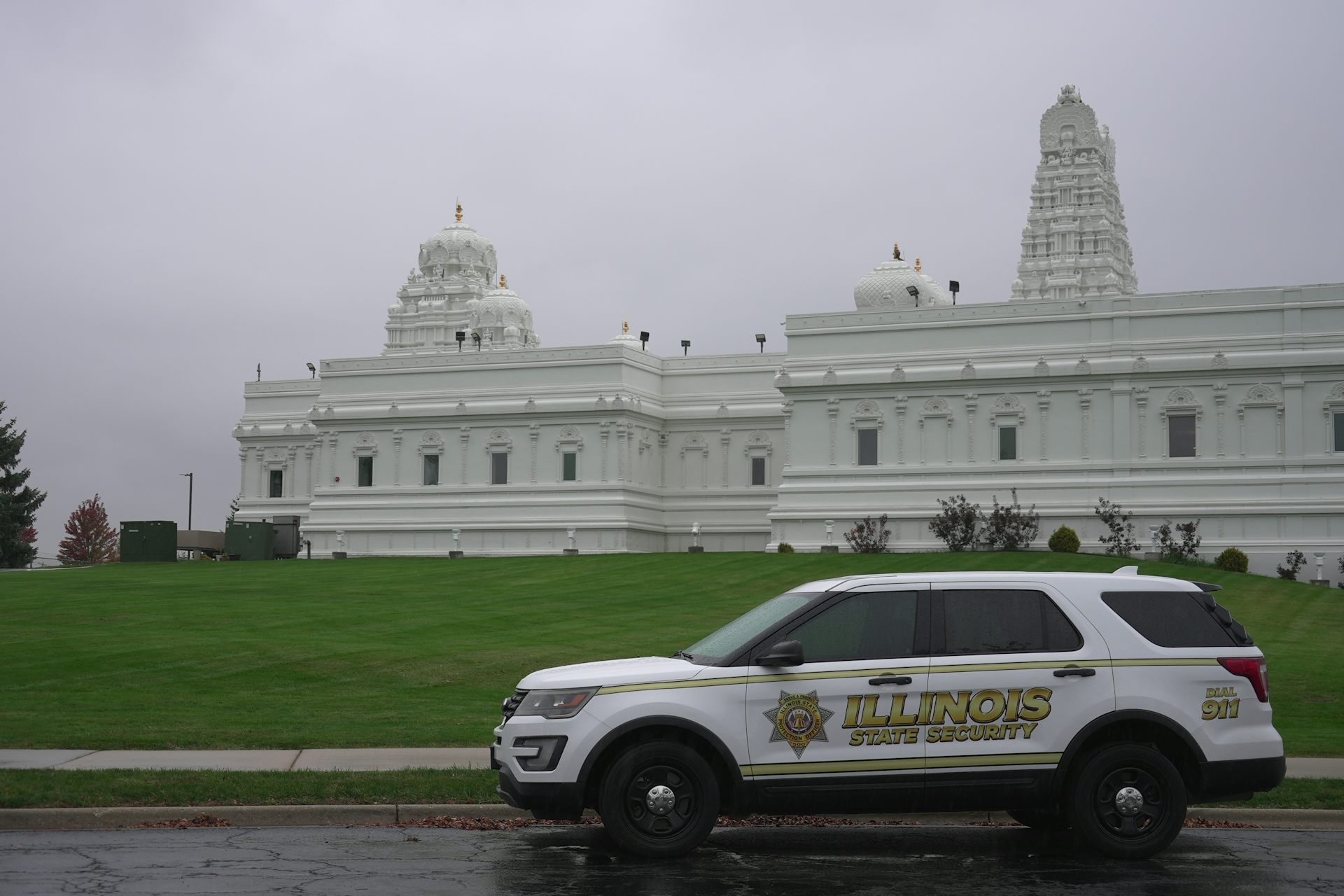
What the failed attack on an Illinois temple reveals about anti-Hindu hate in the United States
Hostility toward Hindu worship practices draws on a long history of prejudice portraying the faith’s…