Philadelphia plans to close 17 neighborhood public schools – here’s what went wrong when it shuttere
Nearly one-third of Philadelphia schools closed in 2013 still sit vacant while cyber charters banked millions in revenue.

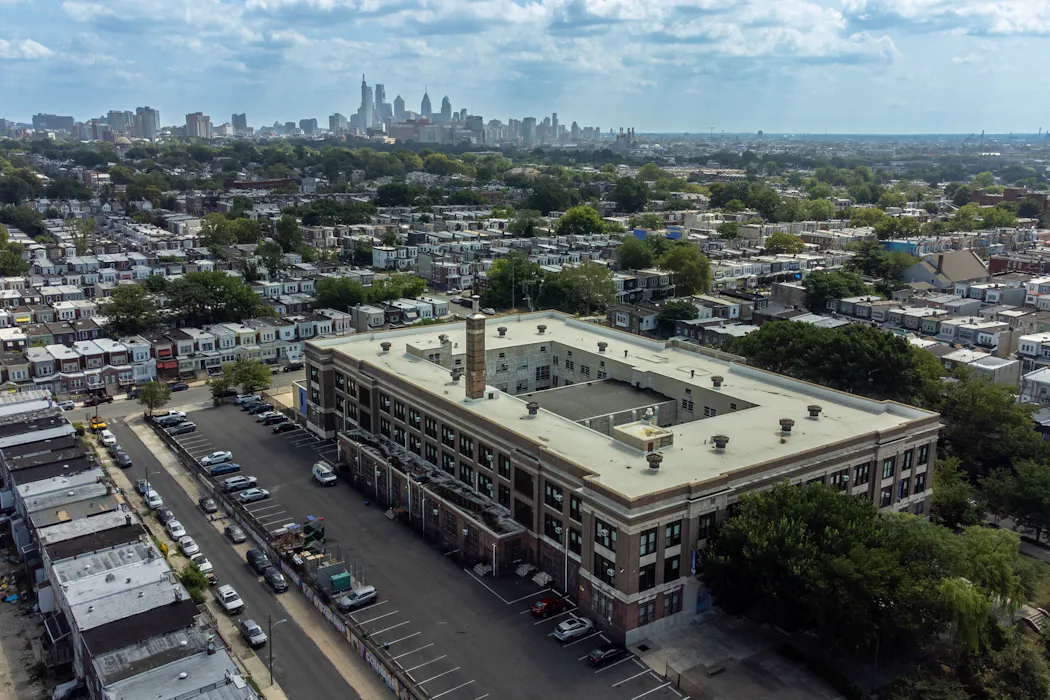
The Philadelphia School Board voted in May 2026 to close 17 of its 218 schools. Seven are elementary schools, five are middle schools and five are high schools. Additionally, three other high schools will move into existing schools and share buildings.
I am an educational anthropologist and co-author of “Schools for Sale,” a forthcoming book that examines what happened during Philly’s last wave of mass school closures, when the district closed 30 of its 249 public schools between June 2012 and June 2013.
My co-authors and I are often asked by citizens, academics and stakeholders whether the School District of Philadelphia’s stated goals for closures – cost savings and reinvestment in existing schools – are achievable. People also want to know whether the current planned closures are similar to or different from 2013.
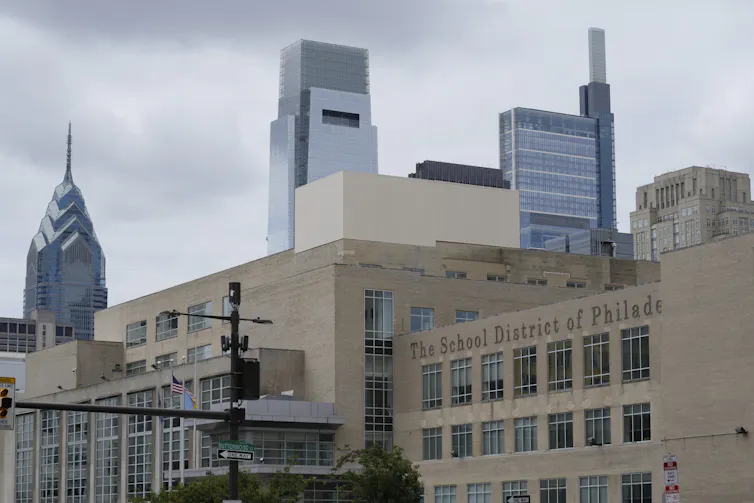
Why schools closed in 2013
The wave of public school closures 13 years ago in Philadelphia also swept other major American cities, including Chicago, New York and Washington, D.C. These cities, like Philadelphia, decided to close traditional neighborhood schools in order to consolidate underused buildings as the number of students enrolled in their districts dwindled.
In 2013, Philadelphia’s public schools were grappling with roughly 70,000 empty seats, in a district designed for 195,000 students.
This was the cumulative result of a decade of federal and state policies, including No Child Left Behind, passed in 2001, and Race to the Top, in 2009. Both policies tied school funding to standardized test performance, meaning that schools that failed to meet testing benchmarks were recommended for closure and charter conversion. These policies fueled rapid charter school expansion in Philadelphia and nationally.
Between 1999 and 2014, approximately 80 charter schools opened in the city. The share of Philadelphia students enrolled in charters leaped from 2% to 36%, and funding to support them followed the same path.
At the same time, the district faced mounting financial pressures after federal stimulus funds that the city received following the 2008 recession expired. Meanwhile, the costs of maintaining a parallel charter sector continued to grow.
A state law passed in 1997 requires all Pennsylvania districts to remit 70% of per-pupil funding to the charter each child attends instead of a public school. This drove up payments to charter schools by more than 3,000% from 1999 to 2014 and diverted funds away from district schools that still needed to maintain fixed costs, such as utilities, staffing and building improvements.
By early 2012, the district faced a US$300 million budget deficit. The district laid off more than 300 teachers and support staff the following year.
The district hired large consulting firms from out of state in 2010 and again in 2012 to evaluate which schools would meet the criteria for closure. The consultants considered building quality, building use and academic performance. They even created a way to measure school safety based on suspensions and violent incidents. One thing they didn’t do was visit the schools or communities. Ultimately, they listed 60 potential schools for closure.
This number narrowed to 30 after rounds of community meetings and a vote by the School Reform Commission, which at the time was a partially state-appointed, partially mayoral-appointed board.
Six public schools shuttered in June 2012 and another 24 in June 2013. The closures displaced nearly 10,000 students. Many went on to a new public school assigned to them; others went to charters or left the district altogether.

Why schools are closing in 2026
Now, Philadelphia – along with other cities, including Baltimore, St. Louis, Houston and Atlanta – is planning a new wave of school closures.
As in 2013, officials cite underutilized space and the goal of redirecting savings from closures into long-deferred capital improvements for the district’s aging facilities. The average school building in Philadelphia is 75 years old.
Declining enrollment – there are approximately 20,000 fewer students in district-run schools than a decade ago – drives these vacancies, but the underlying dynamics of enrollment have also shifted.
Enrollment at in-person charter schools remains stable, having increased just 3% between 2017 and 2022. However, enrollment at cyber charter schools, where students attend classes virtually, more than doubled over the same period, thanks in part to the pandemic. Cyber charters now serve about 13,400 students districtwide.
A decline in enrollment at Philadelphia public schools reflects broader national trends. These include smaller kindergarten cohorts, declining birth rates, more people moving out of cities post-pandemic and recent federal immigration restrictions that have reduced the number of immigrant children enrolling in public schools nationwide.
Overstated savings, still-vacant buildings
In 2013, The School District of Philadelphia projected $28 million in cost savings from its closure plan. However, a report released later that year from the city controller predicted that the projected savings were overstated in the 2012 facilities plan and, in practice, did not materialize.
The report pointed to underestimated costs associated with students moving to new schools, the ongoing expenses of maintaining vacant properties and the relatively modest scale of the projected $28 million savings in the context of a roughly $300 million annual deficit.
Attendance rates and academic performance dropped both for students who transitioned from closed schools as well as for students at the receiving schools.
After the 30 schools closed, there was not a long-term facilities planning process to meaningfully invest in the school buildings that remained open. This lack of planning exacerbated many of the very conditions the current plan now seeks to address, a reflection of both lack of funds to maintain schools but also a lack of process by district facilities’ managers to meaningfully address building conditions after the 2013 closures.
My colleagues and I determined that nearly 30% of the Philadelphia schools that closed in 2013 have remained vacant or unsold in the 13 years since. Only 28% were repurposed for public educational use. The rest were converted into charter schools, demolished for university development or redeveloped as market-rate housing.
Meanwhile, cyber charters increased their revenue by $425 million and reserves to cover unexpected expenses by 144% between 2020 and 2023, with support from school choice advocates such as cyber charter leaders and advocacy organizations.
A performance audit by the Pennsylvania auditor general in February 2025 raised concerns about cyber charter administrators’ potential misuse of these funds, including spending on bonuses for staff and leadership, gift cards for donors, and real estate investments that did not pertain to educational purposes.
Clarity and accountability build community trust
We think that outsourcing closure planning to consultants – as happened in Philadelphia in 2013 and is happening again in 2026 – while offering limited opportunities for meaningful engagement beyond “community updates” that did not integrate public feedback, undermines parents’ and communities’ trust in the public education system.
In 2013 there was a lack of clarity from district officials around the intended outcomes of the school closures. The large transfer of public funds to more privatized schooling options such as charters occurred despite limited evidence of improved performance by charters, selective enrollment policies and ongoing concerns about their use of public funds. This shows that weak oversight allows problems such as empty seats and poor building conditions to persist. At the same time, students are being moved into a separate charter system that the district pays for, while neighborhood schools receive less funding and become more likely to close.
Today, more research supports alternative approaches to closing and selling schools. These include repurposing closed schools for community and educational purposes while retaining public ownership of the buildings. A reckoning with the expansion of both in-person and cyber charters has also been called for recently by The Philadelphia Inquirer’s editorial board.
Ongoing facilities master planning that focuses on capital investments and integrates community ideas into the future of existing buildings can minimize disruptions and build trust with communities affected. Yet despite the success of these alternatives in other cities, the current school closure process in Philadelphia continues to rely on much of the flawed logic of 2013.
Read more of our stories about Philadelphia and Pennsylvania, or sign up for our Philadelphia newsletter on Substack.
Julia McWilliams received funding from the Spencer Foundation.
Read These Next

Chiricahua is the nation’s newest national park – what does that mean?
What comes next for Chiricahua, now that is has been officially redesignated as America’s 64th national…

An AI model’s false tip to Philadelphia police reveals how digital agents can do as they’re told and
An expert on AI governance explains why these rare mistakes may soon be common, and with much higher…
Offering cash for votes is quite common – but here’s why it doesn’t work
Money or other material benefits are often not enough to override a voter’s preferences and partisanship.