Universities returning Native American remains and artifacts isn’t just about physical objects – it’
Congress passed a law in 1990 mandating the return of all Native American items that federally funded institutions took without consent. Progress since then has been slow.

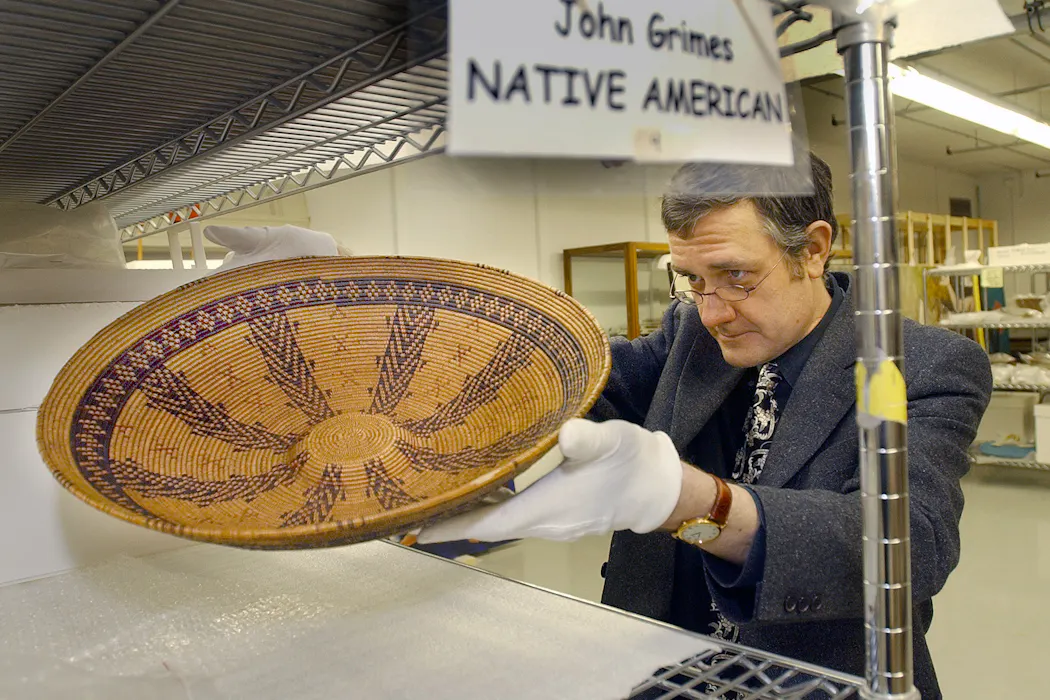
Many universities and museums in the U.S. have long held Native American burial artifacts, other sacred objects and even human remains.
Most of these collections were acquired in the late 19th and 20th centuries. They came from grave excavations, anthropological research and other practices carried out without the consent of Native American communities.
In 1990, Congress passed the Native American Graves Protection and Repatriation Act, or NAGPRA. This law requires federally funded institutions, including museums and universities, to identify Native American artifacts, consult with tribes and return them to descendants, tribes and Native Hawaiian organizations.
Some institutions, like the University of California, have publicly committed to returning Native American artifacts and remains to the proper communities, in a process known as repatriation. But progress has been slow, and many sacred objects and remains are still held in collections.
As a scholar of Native American genocide, memory and justice, I think repatriation is about more than merely returning items taken without permission.
It’s about how universities and other institutions are confronting the histories that produced these collections in the first place.

The case of the University of California
The University of California is not the only institution confronting this issue of repatriation. But it is one of the country’s most visible university systems, with 10 campuses across the state.
The University of California has publicly stated in a detailed policy document and other places online that it is “committed to the repatriation of Native American human remains and cultural items.” It publicly tracks its work on returning Native American items and remains via a searchable database.
As of February 2026, the university repatriated 9,303 human remains, 476,592 items used for burials, and 140,443 other cultural items, among other objects, according to its database.
Between 2020 and 2024 alone, the University of California campuses completed 100 repatriations involving thousands items, according to the California state audit released in April 2025.
However, the university is facing criticism from tribal leaders and state auditors for moving too slowly.
The 2025 audit found that the University of California still holds the remains of thousands of Native American individuals, along with hundreds of thousands of cultural items. The university’s own database confirms this analysis.
The audit also found gaps in the repatriation work. Some campuses are still discovering new collections that they did not initially document. The University of California’s office of the president does not systematically track this recovery effort, the audit found.
At the university’s current pace, some of its campuses could take more than a decade to finish repatriation.
Earlier state audits in 2019 and 2021 reached similar conclusions. They pointed to weak oversight, delayed planning and limited funding to make good on repatriation promises.
Although the president of the University of California required all campuses to create repatriation plans, many still lack full timelines or other clear steps to solve complex situations.
At the University of California, Santa Barbara, for example, some items were loaned to other institutions and have not been returned.
At the University of California, Davis, 30 items believed to be part of Native American collections were stolen from a display case in 2022. In this case, the university was not sure whether the stolen items initially came from Native communities or not.
A deeper meaning for Native Americans
For Native American communities, ancestral remains are not specimens – they are relatives.
Some of these artifacts were placed with the dead as part of burial practices. These sacred and cultural objects carry ceremonial, historical and communal meaning that does not disappear when they enter a university or museum collection.
Some tribes believe their ancestors’ spirits cannot rest until they are properly reburied, as California’s audits note.
When institutions hold on to Native people’s bodies and belongings for decades, fail to track them fully and then delay their return, the issue is not only administrative. It is also a matter of authority and respect.
This question is especially urgent in California, where many Native American tribes are not federally recognized.
In 2001, California created its own repatriation law, CalNAGPRA, to include these tribes in repatriation work.
However, changes to federal rules in 2024 have made it harder to return certain ancestral remains and cultural items to nonfederally recognized California tribes.
That conflict between federal and state law has made an already difficult process harder.
A widespread issue
This problem is not limited to California.
Across the country, a small number of universities, museums and government agencies hold a large share of the Native American remains and cultural items that have not yet been returned.
Harvard University and Indiana University, for example, are among the schools working to repatriate Native American ancestral remains and cultural items.
Some institutions have interpreted the 1990 law narrowly. In some cases, they have discounted tribal knowledge and labeled ancestral remains as “culturally unidentifiable,” meaning no clear tribal affiliation could be determined.
Moving beyond symbolism
Repatriation at the University of California is part of a broader reckoning. Universities and museums across North America and Europe face the same question: How will they move beyond symbolic statements and address the legacy of colonialism in their collections?
The University of California says campuses are updating plans, budgets and reporting in response to the 2025 audit. It has pledged to return all items by 2028.
I think that these are important steps. But a larger question remains: Will this action lead to more accountability and a quick return of all Native American items and ancestral human remains?
Repatriation is not only about correcting the past. It is a test of how universities serve the public, including Native American communities.
The University of California has adopted policies that include language of repair. The challenge now is to match that language with meeting self-imposed deadlines, and holding true to promises and the federal law in a timely matter.
Kerri J. Malloy does not work for, consult, own shares in or receive funding from any company or organization that would benefit from this article, and has disclosed no relevant affiliations beyond their academic appointment.
Read These Next
Offering cash for votes is quite common – but here’s why it doesn’t work
Money or other material benefits are often not enough to override a voter’s preferences and partisanship.
El Niño is threatening California’s fragile coast again – the 1982-83 El Niño opened eyes to the ser
The destructive 1982-83 El Niño, then the strongest on record, eroded cliffs, leaving homes hanging…

Horror’s monsters find new meaning with queer and trans audiences – how ‘Teenage Sex and Death at Ca
Horror as a genre has traditionally been rife with transphobia and homophobia. But LGBTQ+ fans love…