District school boards have become political hotbeds for book bans and more – here’s what they actua
School boards have gained attention for taking on controversial issues, such as transgender students participating in sports, but much of their work is administrative.

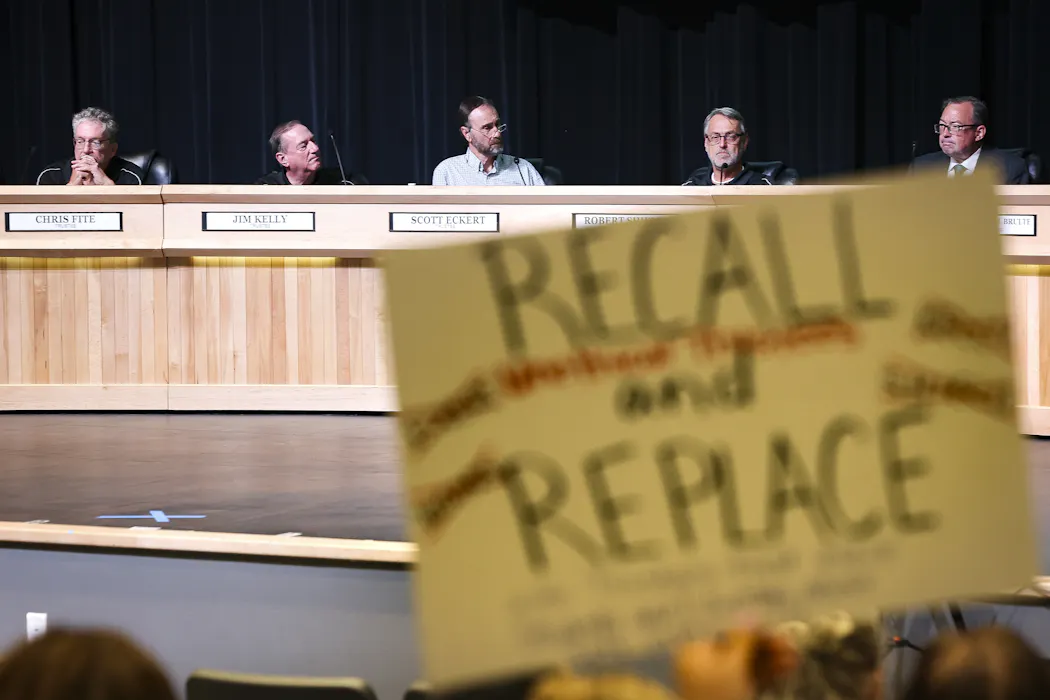
Election races for local school boards have become hotly contested in many states as they have become forums for debates over gender-identity discussions, immigrant students and even prayer at school events.
Liberal candidates largely swept school board elections on April 7, 2026, in politically contentious districts in Wisconsin, Missouri, Alaska and Oklahoma, where book bans, gender identity and prayer during school events were on the table.
Amy Lieberman, the education editor at The Conversation U.S., spoke with Carrie Sampson, a scholar of educational leadership and policy with an emphasis on school boards, to understand what school board members do and why these local elections carry weight for many parents, teachers and students.

What are district school boards?
School boards are the governing organization for local school districts. There are typically anywhere from five to 21 members of a school board in a district. On average, there are seven to nine members on a school board.
Overall, there are approximately 13,000 school districts and about 90,000 local school board members in the United States.
School board members are typically elected, but sometimes they are appointed by mayors or other local or state officials. They are representatives of their local communities, as well as trustees who make governing decisions about school district budgets, hiring and other issues like a school district’s educational priorities.
School board elections typically have relatively low voter turnout. Research shows that nearly 40% of school board elections go uncontested.
The majority of school board members are unpaid, but some receive a small stipend for their work. A handful of school boards, like in Los Angeles, for example, receive a relatively large salary.
What does a school board member’s day-to-day work look like?
School boards typically meet twice a month, often to deliberate over issues such as budget or policy decisions.
One of a school board’s major jobs in most districts is hiring and firing a district superintendent, who effectively acts as the CEO of the district.
In terms of fiscal decisions, a school district administrator often presents what budget allocations should be for schools, and a school board votes to approve or disapprove that.
Most school boards create agendas and vote on a range of issues that are not particularly controversial, like whether the district will adopt an after-school program.
Why does a school board’s work matter?
School boards can make some critical decisions that impact the lives of students, parents and teachers. Many school districts are dealing with issues around school closures. Ultimately, school boards decide whether they are going to close a school in a district.
Many school districts are experiencing declining student enrollment, in part because of birth rate declines. People also have more and more school options to pick from, be it private schools, charter schools or homeschooling.
Within the past few years, school boards have also gained a lot of attention about whether they should ban particular books from districts, and whether they should ban or approve certain curriculum.
What other controversial issues have they taken on in the past few years?
Years before COVID-19, school boards in some conservative communities took on questions about which bathroom transgender students in public schools should use. Another big issue is whether schools should allow transgender students to participate on gendered sports teams.
During the pandemic, a rising number of communities began to see school boards as critical decision-makers. School boards were often making decisions about whether to close or reopen schools. They were also voting on requirements related to mask mandates or vaccines. Even people who didn’t live in certain school districts showed up at board meetings to advocate for certain COVID policies.
During the Black Lives Matter protest movement in 2020, some conservative communities started to speak out against critical race theory and their fear that it was being taught in K-12 schools. Most teachers don’t actually instruct on critical race theory.
Around this time, two major school advocacy organizations emerged nationwide: Moms for Liberty and Defending Education, formerly known as Parents Defending Education. These groups tried to elect conservative school board members to take on issues like book bans – and in some cases did so successfully.
My colleague Gabriela Lopez and I wrote a research paper in 2024 about people’s attempts to recall school board members. In 2021, we found, there was an all-time high of 545 school board members who faced recall, mostly because of mask mandates and other COVID-related issues.
Another trend was that police arrested or charged at least 59 people due to unrest at school board meetings from May 2021 through November 2022.

Are school boards taking on more controversial issues than they used to?
Every era has a point at which these controversial issues come to the school board level.
School boards made critical decisions around school desegregation in the 1950s through the 1970s. My research with colleagues on this topic shows that while many districts were legally mandated to desegregate schools, it was often school boards that voted on how these schools would be desegregated. Some school boards voted on policies that placed the burden on Black children and their families. One school board in Virginia even temporarily closed the schools completely to avoid desegregation.
Twenty to 30 years ago, many school boards faced tension over whether and how schools should teach sex ed.
Today, a lot of the political controversy about school boards is more widely known, for a few reasons. First, more communities have access to school board meetings, since many are video recorded. Second, social media has amplified what school boards do. There are also more outside organizations, such as local chapters of Moms for Liberty, that have been involved with school boards.
School boards taking on controversial issues are more likely to be in suburban and racially diverse school districts, compared to their rural or urban counterparts.
A report in 2024 found that the cost of conflict among school boards nationwide in 2023-24 was nearly $3.2 billion, when considering the amount of turnover or security needed for school board meetings.
Carrie Sampson does not work for, consult, own shares in or receive funding from any company or organization that would benefit from this article, and has disclosed no relevant affiliations beyond their academic appointment.
Read These Next
Indian Gen Z ‘cockroach’ protesters aim to upend assumptions about democracy – and populism – in Mod
The protests challenge the government’s view of who “the people” are, what democracy means, and…

Chiricahua is the nation’s newest national park – what does that mean?
What comes next for Chiricahua, now that is has been officially redesignated as America’s 64th national…
Offering cash for votes is quite common – but here’s why it doesn’t work
Money or other material benefits are often not enough to override a voter’s preferences and partisanship.