When US fights in the Middle East, American Muslim students often face discrimination
The war on terror is among the Middle East conflicts that sparked a rise of anti-Muslim and anti-Arab discriminatory incidents in the US.

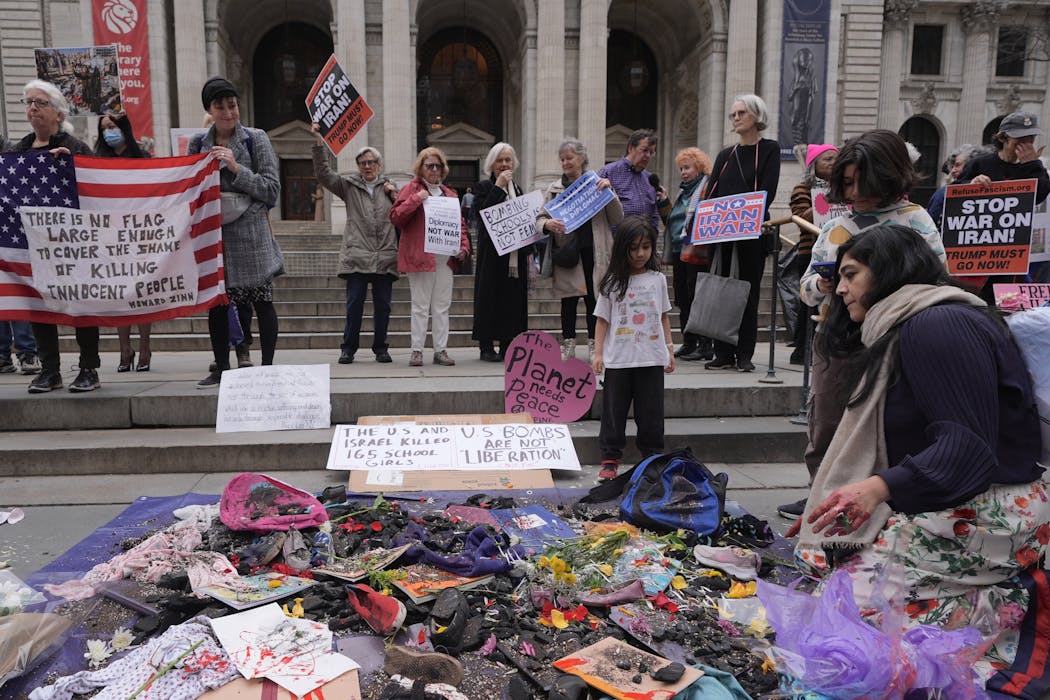
The war in the Middle East is rapidly expanding across the Gulf countries, including Iran and Lebanon. The conflict has already targeted the region’s civilians, natural resources, tourist destinations and U.S. military bases.
Some Muslim community leaders in the U.S. warn that people far from the conflict could experience backlash. They say Muslim and Arab communities in the U.S. may face increased hostility as the war intensifies.
Fouad Berry, a board member at the Islamic Institute of Knowledge in Dearborn, Michigan, said that the community center and mosque is heightening security because of the war.
“We get threatening calls all the time, especially when things like that happen in the Middle East,” he recently told WXYZ, a local ABC News affiliate. “And we’re anticipating that.”
The risk of violence is likely furthered by some national political leaders spreading anti-Muslim rhetoric. On March 9, 2026, Rep. Andy Ogles, a Republican from Tennessee, wrote on the social media platform X, “Muslims don’t belong in American society.” Rep. Randy Fine, a Republican from Florida, also recently wrote on X that the choice between dogs and Muslims is not a “difficult” one.
Anti-Muslim and anti-Arab discrimination was already on the rise in the U.S. before the Feb. 28 airstrikes on Iran by the U.S. and Israel.
Iran is not an Arab country. Most of its population is Persian and speaks Farsi. Still, some people may conflate Iran and Iranian Americans with Arab countries.
In 2025, 63% of Muslims in the U.S. said they experienced religious discrimination, according to the Institute for Social Policy and Understanding, a research organization that focuses on Muslim Americans. That percentage was comparable with what the Council on American-Islamic Relations, a Muslim civil rights and advocacy organization, reported in 2024 as the highest number of discrimination complaints received since it began recording.
This would not be the first time a conflict involving Muslim-majority countries led to increased discrimination against Muslim and Arab communities in the U.S.
I study Muslim and Arab student experiences in American public schools. My research shows that global conflicts in the Middle East tend to provoke Islamophobia, meaning hatred and fear of Muslim people, in the U.S.

A ‘war on terror’ reaches students
Days after the Sept. 11, 2001, terrorist attacks, President George W. Bush declared a “war on terror,” primarily targeting al-Qaida and the Taliban in Afghanistan.
In 2002, Bush helped establish the Department of Homeland Security, a new federal agency to prevent terrorism. As part of this work, the department began monitoring Americans’ phone records and other personal information, disproportionately monitoring Muslims.
Public attitudes also shifted quickly after the attacks. A Gallup poll conducted three days after Sept. 11 found that 3 out of 10 Americans had heard negative comments about Arabs since al-Qaida’s attack. More than half of those surveyed supported increased security measures aimed at Arab Americans.
Nine weeks after Sept. 11, the American-Arab Anti-Discrimination Council, an organization that advocates for Muslim and Arab Americans, reported an unprecedented number of anti-Arab discriminatory incidents, including cases involving students at schools.
In 2002, the FBI published hate crime statistics showing an increase in racial and religious hate incidents. The report did not specifically break down findings about particular religious or ethnic groups.
According to NPR, the FBI’s Uniform Crime Reporting Program did not specifically track statistics on Muslims and Arabs from 1992 through 2015.
A 2007 mental health study of Muslim American youth was among the other findings that revealed heightened discrimination and bullying toward Muslim students.
A fixed trend
This pattern of anti-Muslim and anti-Arab discrimination has continued since then.
In her 2016 book, “The 9/11 Generation,” scholar Sunaina Marr Maira explored how California students who were from communities targeted by the war organized to promote human and civil rights. They wanted to challenge stereotypes they often heard about Muslims and Arabs being violent and prone to terrorism.
In 2020, 51% of American Muslim families reported that their children experienced religious-based bullying at school, in the form of insults or physical assaults.
In 2021, mental health researchers documented lingering effects of 9/11 backlash. Students continued to describe facing discrimination at school, which resulted in anxiety, depression and post-traumatic stress disorder.
My own research from 2021 found that Muslim and Arab students tended to experience a spike in hate and bigotry during lessons on Sept. 11, when some educators and students conflated terrorism with Islam and Muslims.
Students I spoke with described being called terrorists and other Muslim and Arab tropes.
These findings likely only capture part of the problem, because anti-Muslim and anti-Arab hate crimes are often underreported.
After Hamas’ Oct. 7, 2023, attacks on Israel and Israel’s subsequent war in the Gaza Strip, Arab and Muslim students in the U.S. faced a spike in discriminatory and hateful incidents, according to Vision of Humanity, a project of the think tank Institute for Economics & Peace. In November 2023, three Palestinian students were shot in Vermont.
What teachers can do
The current, rapidly shifting war in the Middle East is sharply distinct from the war on terror. For starters, the U.S. in the early 2000s mainly fought against terrorist groups like al-Qaida and the Islamic State group, not a sovereign country like Iran.
But some elements are similar – including the fact that both wars have involved countries with majority Muslim populations.
It is not easy for educators to anticipate how this conflict may impact Muslim and Arab students.
But the war on terror offers some lessons that may help educators protect students and minimize anti-Muslim and anti-Arab hate.
My research shows that teachers create unsafe classrooms when they teach inaccurate narratives of international conflicts. Students can feel more isolated, and even targeted, if lessons replicate stereotypes. Teaching current events during times of war is difficult in K-12 classrooms. In many cases, teachers do not have up-to-date curriculum materials that they can use. But I still think it is necessary.
Some educator guides recommend teaching media literacy, including people’s firsthand experiences. Teachers could also help students learn about how to find reliable media sources to understand complex issues like U.S. foreign policy.
Next, I think classrooms can create safe and caring environments for students impacted by war. Muslim and Arab students with deep emotional and cultural ties to the Middle East could still experience trauma, even if they are not physically close to the war.
A 2025 Muslim community poll by the nonprofit research group Institute for Social Policy and Understanding found that educators and teachers are responsible for 1 of 3 reported incidents of anti-Muslim bullying, which could reflect their own biases.
But educators remain the best line of defense against anti-Muslim and anti-Arab bullying.
Teaching against Islamophobia and enforcing policies that prohibit discrimination can help build safe and supportive environments for Muslim and Arab students.
It is not clear what the future will bring to the Middle East, or to Muslim and Arab people in the U.S. But these lessons might help make schools and classrooms safer for Muslim and Arab students.
Amaarah DeCuir does not work for, consult, own shares in or receive funding from any company or organization that would benefit from this article, and has disclosed no relevant affiliations beyond their academic appointment.
Read These Next
Offering cash for votes is quite common – but here’s why it doesn’t work
Money or other material benefits are often not enough to override a voter’s preferences and partisanship.
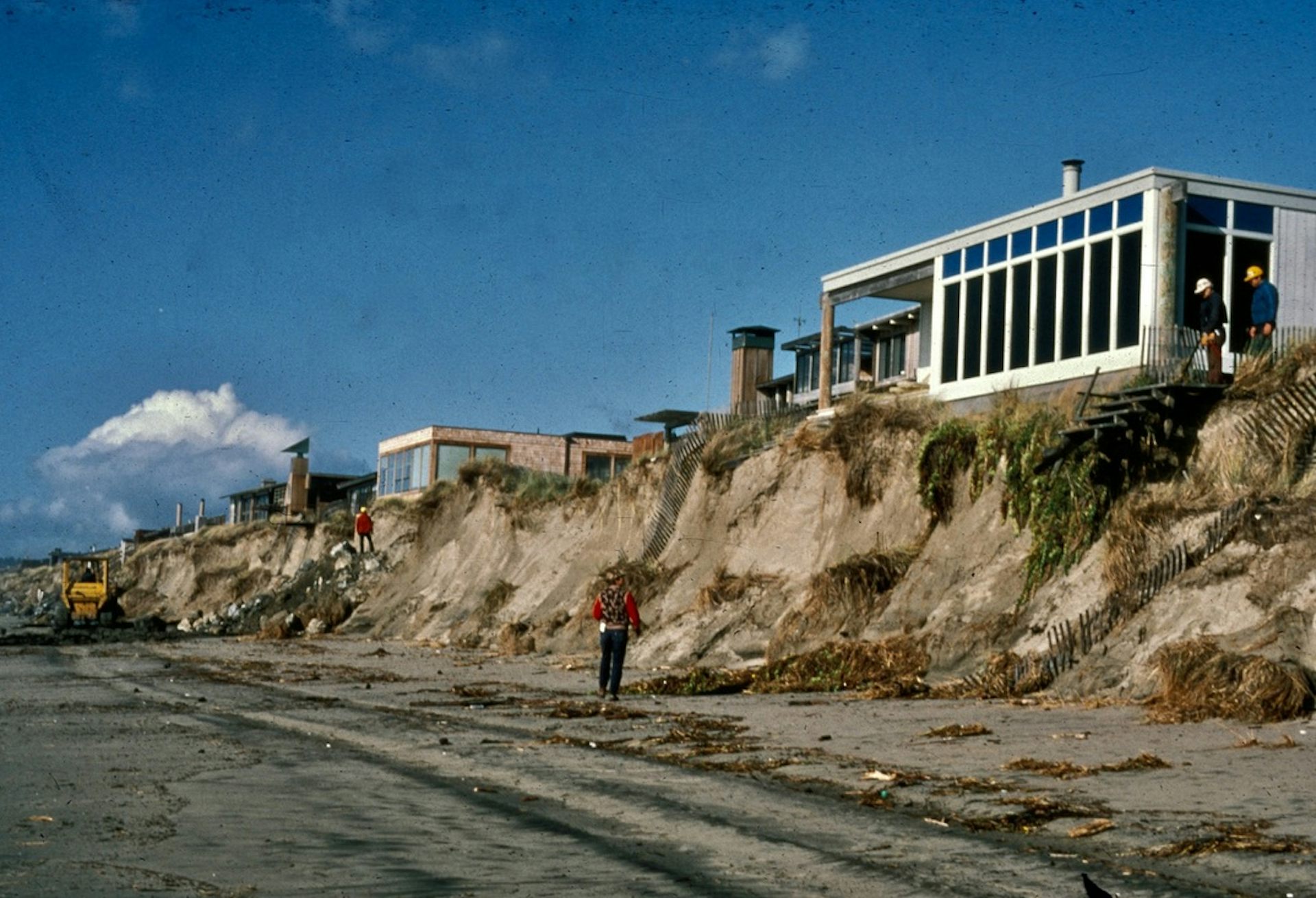
El Niño is threatening California’s fragile coast again – the 1982-83 El Niño opened eyes to the ser
The destructive 1982-83 El Niño, then the strongest on record, eroded cliffs, leaving homes hanging…

Horror’s monsters find new meaning with queer and trans audiences – how ‘Teenage Sex and Death at Ca
Horror as a genre has traditionally been rife with transphobia and homophobia. But LGBTQ+ fans love…